This was One of 90 Fire Lookouts that Once Protected NH State Forests
Mount Cardigan Fire Tower, Orange New Hampshire


- Categories:
- New Hampshire
- Fire Watchtower
History of the Fire Tower
The Mount Cardigan Fire Tower is one of 15 active fire towers owned and operated by the State of New Hampshire, through the New Hampshire Division of Forests & Lands, as part of a statewide fire tower system. Mount Cardigan is notable for its exposed granite summit, which is the result of a massive fire in 1855. The fire burned all the vegetation, leaving the summit exposed but benefiting surrounding farmland. Prior to its use for fire prevention and observation, Mount Cardigan (also Cardigan Mountain) was a popular hiking destination for summer tourists in the late nineteenth to early twentieth centuries. Agriculture and mica mining was the primary industry in the region until the late nineteenth century. The region's rugged terrain, prominent peaks, and abundance of ponds made it a popular destination for summer recreation in the late nineteenth century. Summer tourism prompted the construction of seasonal homes, hiking and skiing trails, and other recreational facilities. The mountain was also used as a quarantine or health retreat for the perceived benefits of clean air and its isolated location. Although Cardigan Mountain had been used by sightseers and tourists since earlier in the nineteenth century, its development for recreational use occurred at the turn of the twentieth century.Cardigan Mountain was also used in the late nineteenth and early twentieth century for fire detection and land survey by the United States Geological Survey (USGS). A wooden tower or platform may have been constructed on the summit about 1903 for fire detection. This structure and its remains are no longer extant. Mount Cardigan State Forest (originally Mount Cardigan State Reservation) was established in 1918 when the state acquired 700 acres. Cardigan Mountain State Park is a smaller area within the state forest that fell under the jurisdiction of the Forestry Commission. By 1921, an additional 1,000 acres, including the summit of Mount Cardigan, were added to the state land holdings. The New Hampshire Forestry Commission, in 1927, held a forestry camp to educate forestry students on surveying, mapping, and timber estimating.
The growing popularity of alpine skiing in the 1920s and 1930s led the Appalachian Mountain Club (AMC) to make Mount Cardigan part of its winter program events in 1927. By the 1930s, the club sought to establish a permanent outpost at the mountain. The AMC, in 1934, hired Duke Dimitri von Leuchtenberg, described as a noble of Russian lineage, to lay out the ski trails on the east side of Mount Cardigan. The AMC took over the remains of a mid-nineteenth-century farmstead and established the Cardigan Reservation. Additions were made to the farmstead to support its use as a lodge, but the Club quickly outgrew the space. In 1939, AMC built the Cardigan Lodge at the foot of the mountain.
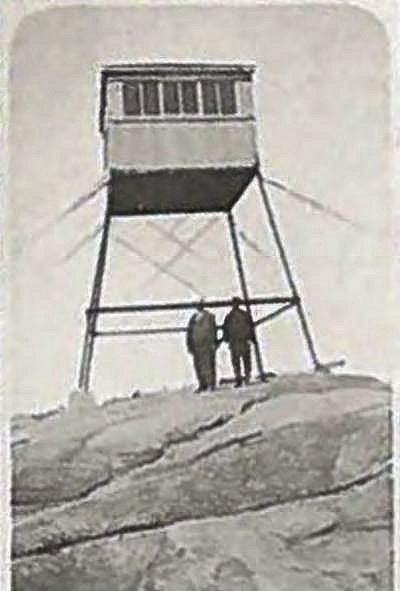
The New Hampshire Fire Commission built the Cardigan Mountain Fire Tower in 1923-1924. It was the state's first fire tower not purchased from a commercial tower manufacturer. The steel structure was fabricated in-house and consisted of a 15-foot, one-tier skeleton frame on concrete footings and anchored with steel cables. It had a 15-foot ladder to access the 10-by-10-foot observation cab. A 10-by-12-foot log cabin was built a half-mile from the tower for the watchman. By 1930, the log cabin was replaced by a new cabin 1,500 feet closer to the summit.
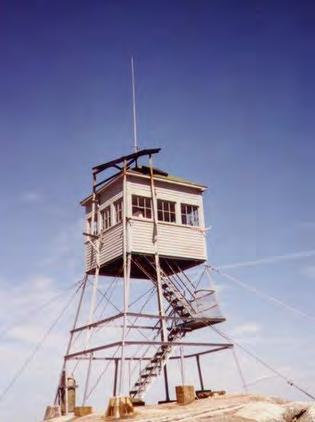
The ladder was replaced by stairs in 1930, two years after the request was placed by the watchman. In 1931, a lightning strike severely damaged the tower, requiring extensive repairs and improvements. Using Works Progress Administration (WPA) unemployment funding, a road was built from the Orange-Grafton highway to the trail to the summit. Mica waste from a nearby mine was used as road fill, and a parking area was added. Other improvements in the 1930s included installation of lightning rods on the cabin in 1935 and construction of a garage in 1938.
In the 1930s, the Civilian Conservation Corps (CCC) developed a network of alpine ski trails on the east side of the mountain (west side of the state forest). The CCC was a federally funded work program established during the Great Depression to aid in employment efforts. The CCC 126th company that worked on Cardigan were housed at Camp Cardigan (or Cardigan Forest Camp) in Danbury. Projects on Mount Cardigan included a new road, log bridges, a rustic shelter, trails, and other circulation and recreation features for the state park. The CCC crews widened and improved Burnt Hill Road, which leads from East Grafton to Cardigan. Clyde F. Smith (b. 1909) served as the Cardigan fire watchman from 1933 to 1942. In addition to his station duties, Smith built many of the reservation's trails and was recognized for his hand-carved trail signs. He lived in nearby Grafton and Bristol, NH. After the end of his service, Smith worked as a carpenter at a tourist camp in the mountain range.
In 1940, a new tower cab was built, and minor repairs were made to the tower. The cabin burned in 1955 and was rebuilt by the watchman the following year. The new Watchman's Cabin and a Storage Building were built in the same location as the previous cabin. The cab was replaced, yet again, in 1960-1970. In the 1990s, a telecommunication building was constructed within the base of the tower. The current (as of 2022) cab had new windows installed in the 2010s.
Fire Towers in New Hampshire
A national concern and effort to prevent forest fires and conserve natural woodland resources emerged in the late nineteenth century. Timber harvesting, especially in the Northeast and Great Lakes regions, boomed between 1850 and 1900, when lumber production increased nearly ten-fold. In the Northeast, unsustainable woodland management and the abandonment of farms left land prone to fire and subsequent erosion and landslides. Recognizing the need for public forestland and oversight of the timber industry, the U.S. Department of Agriculture established the Division of Forestry in 1881. In 1907, this agency became the U.S. Forest Service (USFS). While the USFS was well-equipped to manage federal forestlands, it initially lacked the ability to acquire private land without congressional approval until passage of the Weeks Act in 1911 (see below).On March 29th, 1893, the state formed the New Hampshire Forestry Commission (NHFC). The NHFC's primary objective was "to investigate the extent and character of the original and secondary forests of the state…the damage done to them from time to time by forest fires; and any other important facts relating to forest interests…" The Commission focused its efforts on creating a robust network of fire wardens across the state and cooperating with existing private lookout stations. In the early 1900s, a series of major fires burned approximately ten percent of the White Mountains Region forests, attributed to prolonged droughts, railroads, and abusive land use activities. After this uptick in fires and subsequent damages to forests, the state began a focused effort on fire prevention and protection of remaining forests.
Fire lookouts (aka fire towers) had been used in western United States and in Maine and New York prior to the twentieth century but were not yet widely in use in the Northeast around 1900. The first fire towers in New Hampshire were built in response to the increased fire risk from the intensive logging of the White Mountains. Clear-cutting operations left a thick layer of slash (tree limbs removed from logs), which when dried became an ideal source of fuel for wildfires. During an unusually dry spring in 1903, massive fires burned large sections of forest in the White Mountains and threatened several towns. One of the blazes threatened a resort hotel owned by the Mount Pleasant Hotel Company, which constructed the first fire lookout in the region in 1904. The State of New Hampshire began funding fire tower construction in 1909, and others were built by private organizations, including the Society for the Protection of New Hampshire Forests (SPNHF) and the New Hampshire Timberland Owners Association (NHTOA). The New Hampshire Timberland Owners Association (NHTOA) was established in 1910 to provide fire detection and protection of privately held timberland. Membership fees were based on the acreage of timber tracts members owned and funded the establishment of lookouts over these tracts of forest. These early lookouts were wood construction on mountain summits, such as Mount Pleasant, Mount Rosebrook and Croydon Peak, to provide 360-degree views of the surrounding forests. The same year NHTOA was established, timberland owners and the NHTOA contributed $4,100 toward the immediate building of lookout towers across the state. As a result, ten lookout towers were established, most of which were constructed in the summer of 1910. Their locations were chosen based on their proximity to valuable timberland and places of manufacturing that were more prone to fires.
On March 1st, 1911, the U.S. Congress passed the Weeks Act, allowing for the use of federal funds to purchase forest land for conservation purposes. The legislature was championed by and named in honor of Representative and later Senator John Wingate Weeks (1860-1926) of Massachusetts, who aptly presented public forestlands as beneficial rather than detrimental for the private timber industry. Through the Weeks Act, 6 million acres of land in the eastern United States was acquired with $9 million in federal funds. By June 1912, over 70,000 acres were acquired to form the White Mountain Region (later known as the White Mountain National Forest). By 1915, the forest consisted of over 100,000 acres of land. The USFS formally established the White Mountain National Forest on May 16th, 1918, once it reached an adequate size to be managed as a national forest, including the construction of fire towers. The Weeks Act, passed a year after 85 people were killed during wildfires that burned more than 3 million acres of land in Idaho, included a provision that allowed federal agencies to cooperate with the states in controlling forest fires. Through a $200,000 federal allocation, New Hampshire was the first state to benefit in funding for fire protection from the act. The USFS subsequently worked with the State of New Hampshire and the NHTOA to develop a system of fire lookouts with overlapping coverage in the White Mountains, leading to the construction of dozens of lookouts and hundreds of miles of telephone lines to provide communication by the mid-twentieth century.
By 1912, New Hampshire had 12 state-owned and managed lookout stations and an additional six operated by the NHTOA. The NHFC continued to construct and operate mountain-top fire towers and employ watchmen and patrolmen. During dry weather, temporary fire lookout stations were established at various elevated locations. In 1913, the number of fire towers in the state grew to 26, including those established that year at Belknap Mountain, Blue Job, Kearsarge South, and Pawtuckaway, all four of which remain active fire tower locations. By 1914, all permanent fire towers and station were equipped with panoramic maps for identification of fire locations. After the NHFC assumed responsibilities for the NHTOA lookouts in 1917, the number of lookouts managed by the state increased to 29.
Watchmen were a critical component to the state's fire towers system. Early on, watchmen were often timber company woodsmen who took on fire watchman duties during the fire season. They were typically responsible for the construction and maintenance of the fire tower developments and construction of their own cabins and outbuildings at the tower sites. Watchmen were equipped with field glasses, maps, compasses, and rangefinders. A telephone line connected the fire tower and the local fire warden for quick communication in the event of a fire. The watchmen were also tasked with educating the public about forest fire prevention, and access to the towers was almost immediately sought out by outdoor recreators in the state.
Initially, fire lookouts were built exclusively of wood, consisting of either braced structures or platforms built in trees. The first steel tower was constructed on the summit of South Pawtuckaway Mountain (in present-day Pawtuckaway State Park) in 1914, followed by steel towers topped by enclosed cabins (also referred to as cabs) constructed on the summits of Blue Job and Belknap mountains the following year. Steel towers cost slightly more than wood towers to construct, but were more resistant to the elements and deterioration than wood towers and provided better shelter for the watchman. The steel was usually painted black and the cabins were painted dark green, to better blend into the setting. The NHFC's 1924 report stated the necessity for enclosed cabs and considered it standard design for towers built moving forward. At that time, New Hampshire had 12 steel enclosed towers, two wood enclosed towers, eight wood open towers, three cabins on bare summits, and one cabin below the summit. Over the next two decades, wood towers were replaced with steel-framed towers. Various fabricators were contracted to design and supply these steel towers. Example manufacturers include the New Hampshire Structural Steel Company; the Aeromotor Corporation of Oklahoma, which supplied the Kearsarge (south) fire tower; and International Derrick of Ohio, which supplied towers during the late 1930s. In 1939, the state purchased five towers from International Derrick: Warner Hill, Pack Monadnock, Craney Hill, Smarts Mountain, and Sam's Hill. Improvements to telephone lines and lightning protection were often completed when towers were replaced.
During the 1930s, the state invested in outdoor recreational facilities and saw an increase in hiker visitation to the fire towers. At this time, original ladders that remained were replaced with internal staircases that were easier for watchmen and visitors to ascend and descend when accessing the cabs. A New Deal Program, the Civilian Conservation Corps (CCC) operated between 1933 and 1942 to provide work for young men and support the development on state and federal lands. Within New Hampshire, over 20,000 men served in the CCC among the 28 camps across the state, mostly within the White Mountain National Forest and state parks and forests. The CCC planted trees; built fire breaks, served as firefighters when needed; and constructed and maintained roads, bridges, and dams. The CCC also constructed much of the state's parks and forests infrastructure and visitor amenities. In support of the state's fire tower system, CCC crews built and improved access roads and trails, laid new telephone lines, and built watchman cabins and outbuildings at various tower locations.
Following the Hurricane of 1938 that impacted the Northeast region, the need for widespread fire detection and prevention in New Hampshire was significant. The storm caused tremendous damage across the region, destroying approximately 2 billion trees, littering New England forests with deadwood and debris. CCC crews assisted the region's recovery from the storm, including with infrastructure repair and timberland cleanup. The state dispatched numerous crews to remove and operate temporary sawmills to remove the downed timber from the forests. This cleanup effort lasted for over two years and stocked papermills in the region for nearly a decade. To support fire prevention efforts in New Hampshire following the hurricane, 11 new fire towers were built in 1939 and 1940 on state and federal lands.
During World War II, the state, like the rest of the country, was unable to staff many of the fire lookouts with male state personnel. Fire detection relied heavily on surveillance by aircraft during the war, in addition to women staffing some of the state's national forest lookout towers through the USFS's Women Observers on the Forest (WOOF) program. Some of the state's towers were used by state or federal agencies for aircraft detection, requiring alterations to towers. After the war, the towers were staffed again by state watchmen, and most of these alterations were removed. In the 1960s, most towers were staffed six days a week from 8am to 5pm, which increased to seven days from 8am to 8pm during periods of hot, dry weather, when fire risk was highest. By the late twentieth century, most of the state fire towers were 40 to 60 years old. To keep the steel towers structurally sound and functional, the state added additional bracing elements, structural struts, and tension cables. If raising the tower height was necessary, the new cab was exclusively constructed of wood to avoid use of conductive metal in case of electrical storms. By 1980, the state operated 22 fire towers, in addition to three aerial detection routes.
More than 90 fire towers were constructed across New Hampshire on state, federal, and privately owned lands during the twentieth century as part of a statewide fire prevention system. Majority of these towers are not extant. However, remnants such as concrete footings, wood and steel structural pieces, or ruins of former structures, endure at many of the former tower locations. As of 2017, 13 towers remained standing, but inactive for fire prevention purposes. Some of the inactive towers remain accessible for outdoor recreation, while others are inaccessible. As of present (2022), 16 towers remain active for fire prevention purposes, consisting of 15 owned by the state and one owned by the Town of Moultonborough (Red Hill) and operated in coordination of the state and Lakes Region Conservation Trust. Active towers are staffed on weekends and during times of high fire danger, April to October. Across two state regions, the New Hampshire Division of Forests & Lands operates the extant fire towers, oversees 9 ranger districts, and employs two Regional Rangers and 7 District Forest Rangers, who oversee wildland fire control and enforce laws pertaining to timber harvesting and forest protection. Fire watchmen operate autonomously at each lookout and coordinate with mobile fire patrols and over 2,000 appointed Forest Fire Wardens and Deputy Wardens during high-risk of fires and active fires.
Property Description
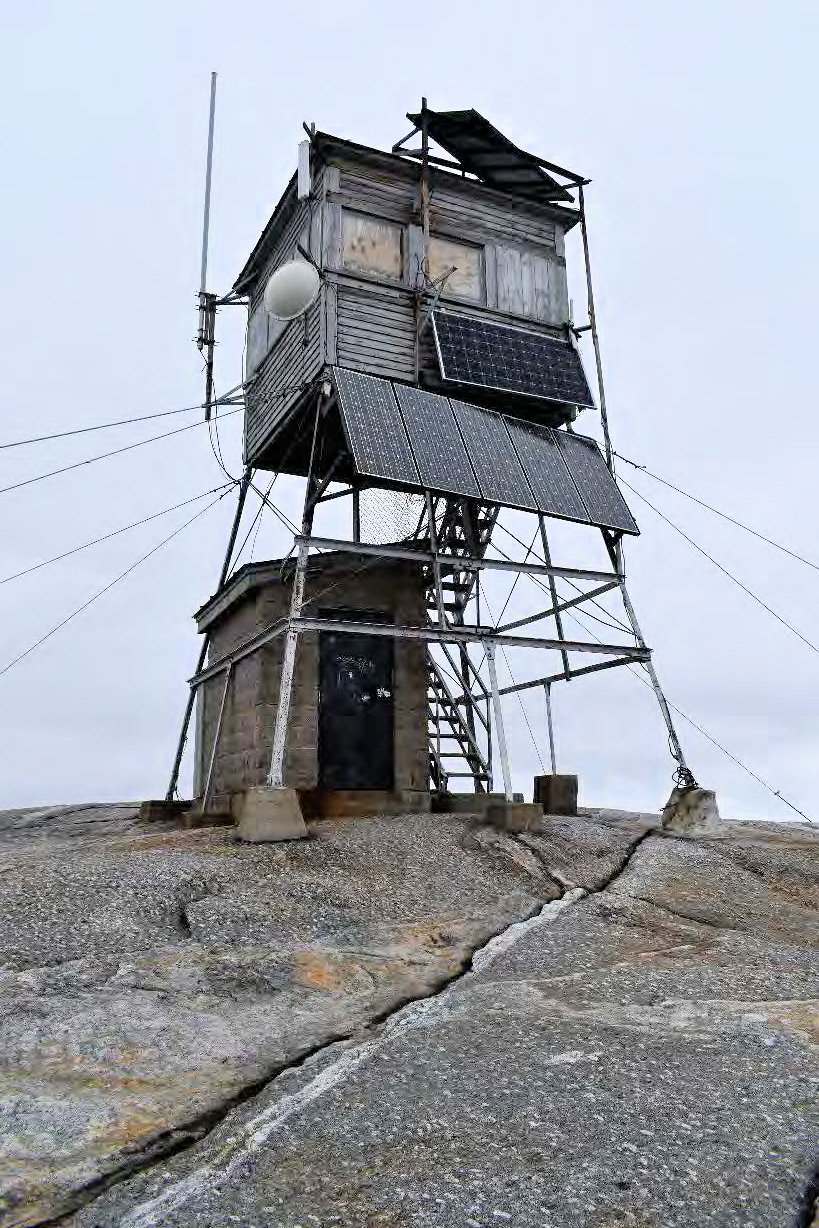
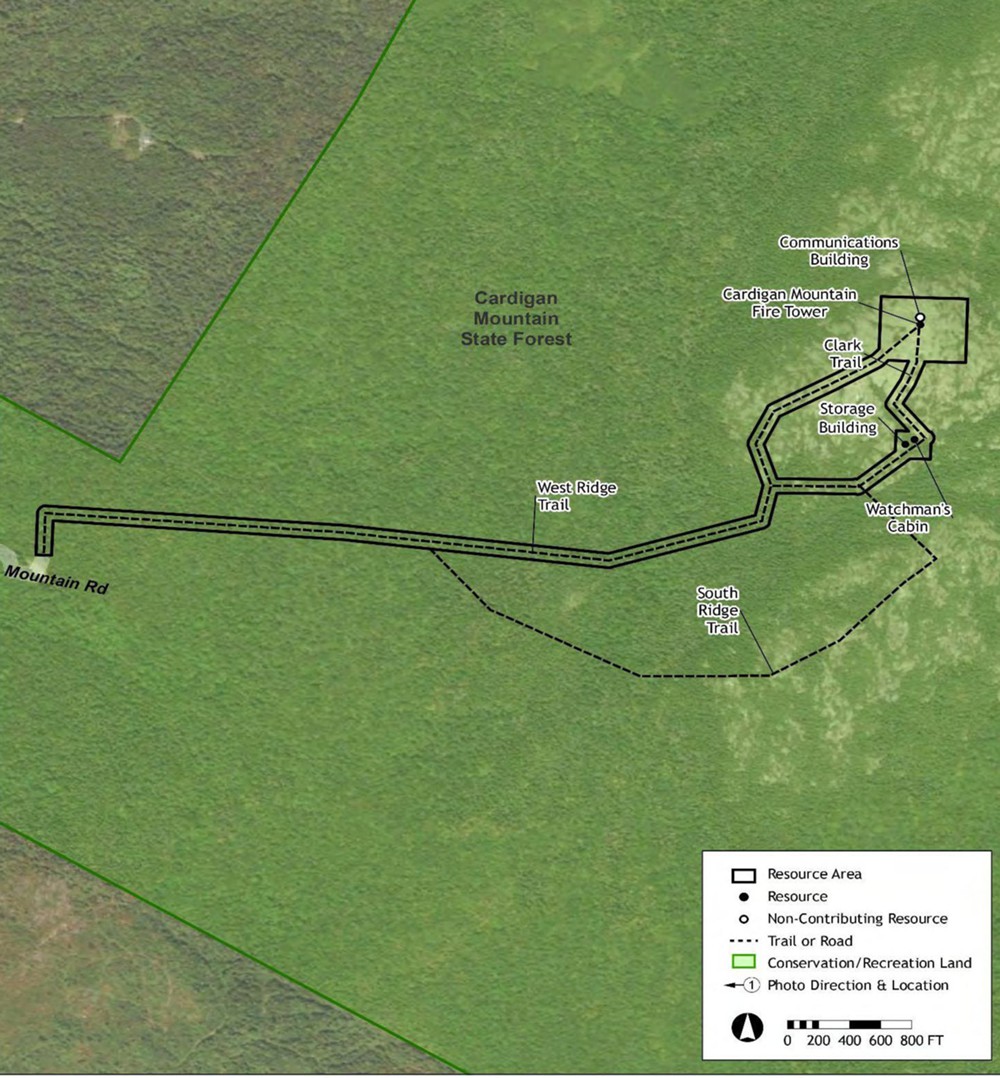
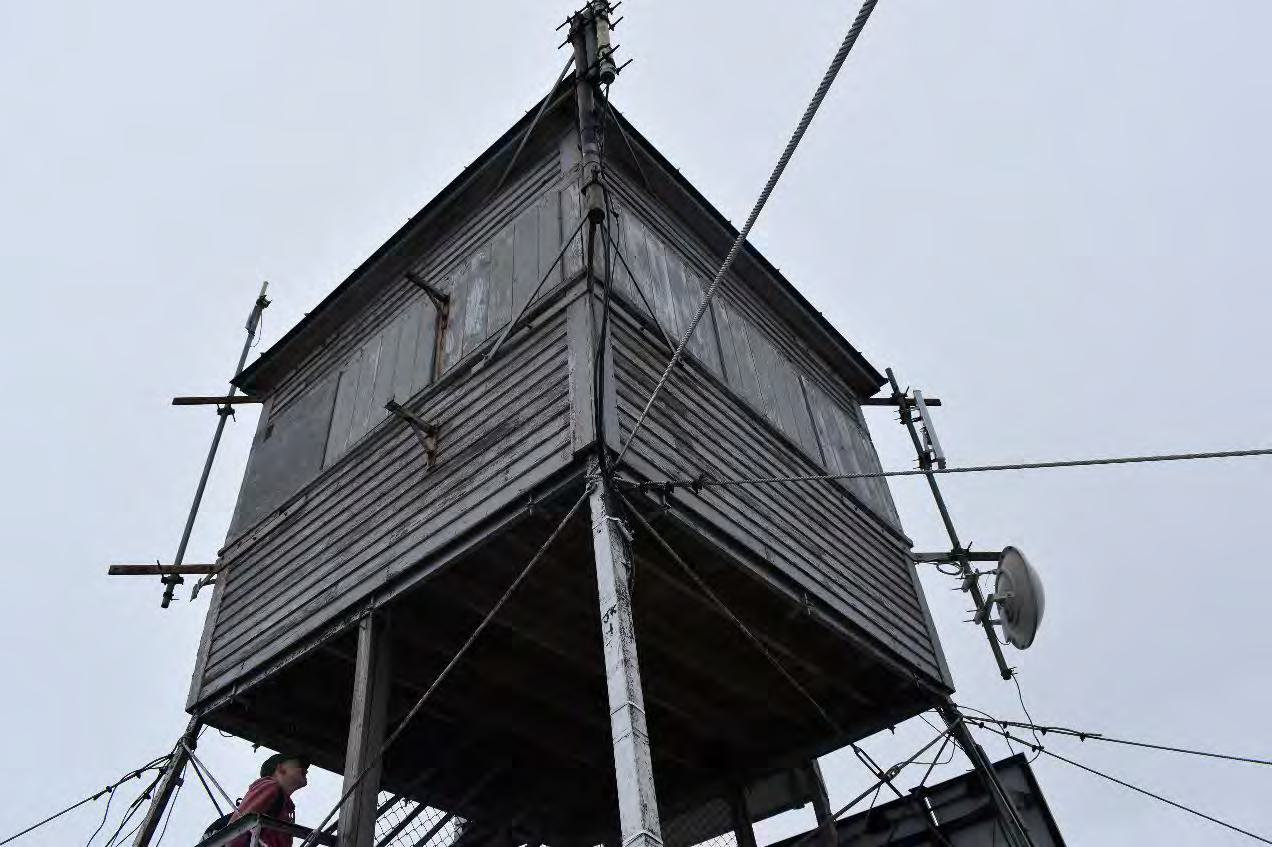
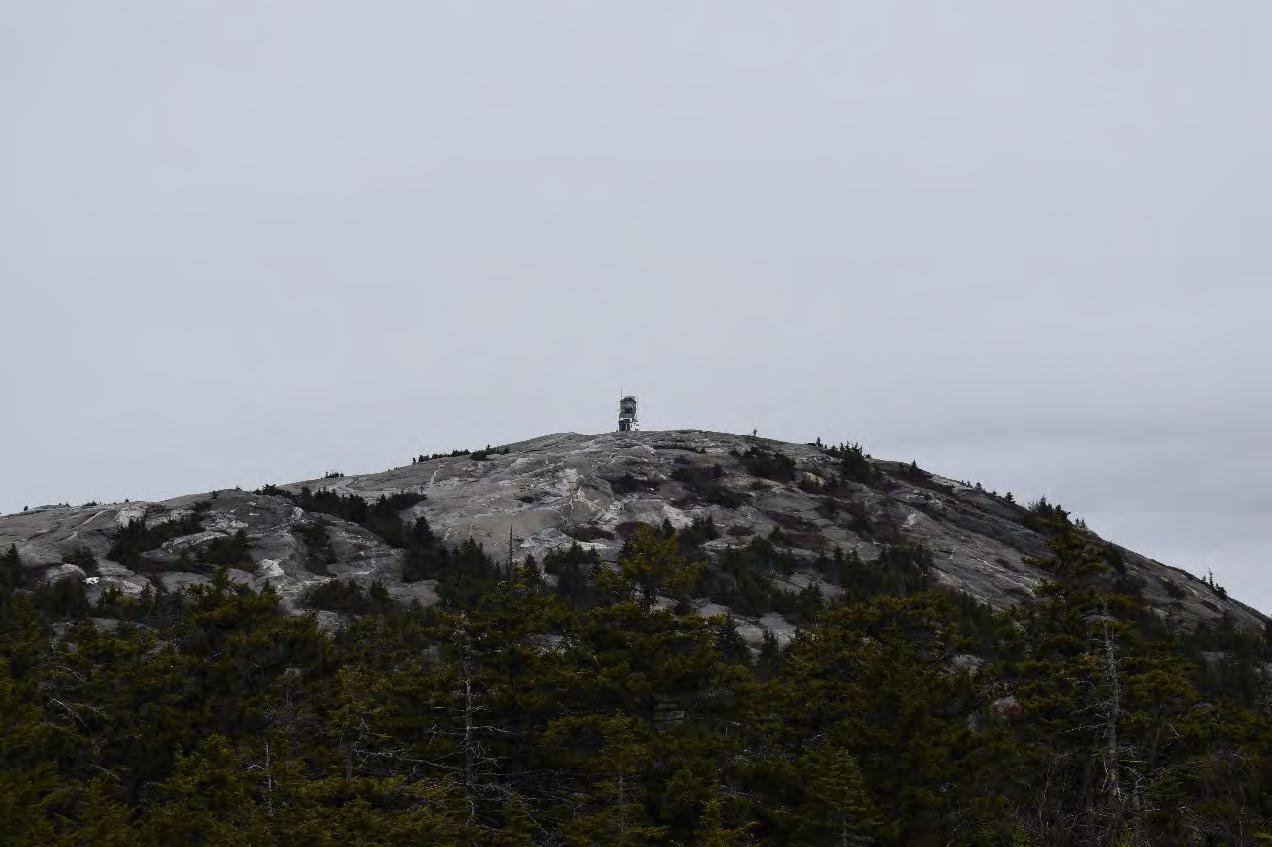
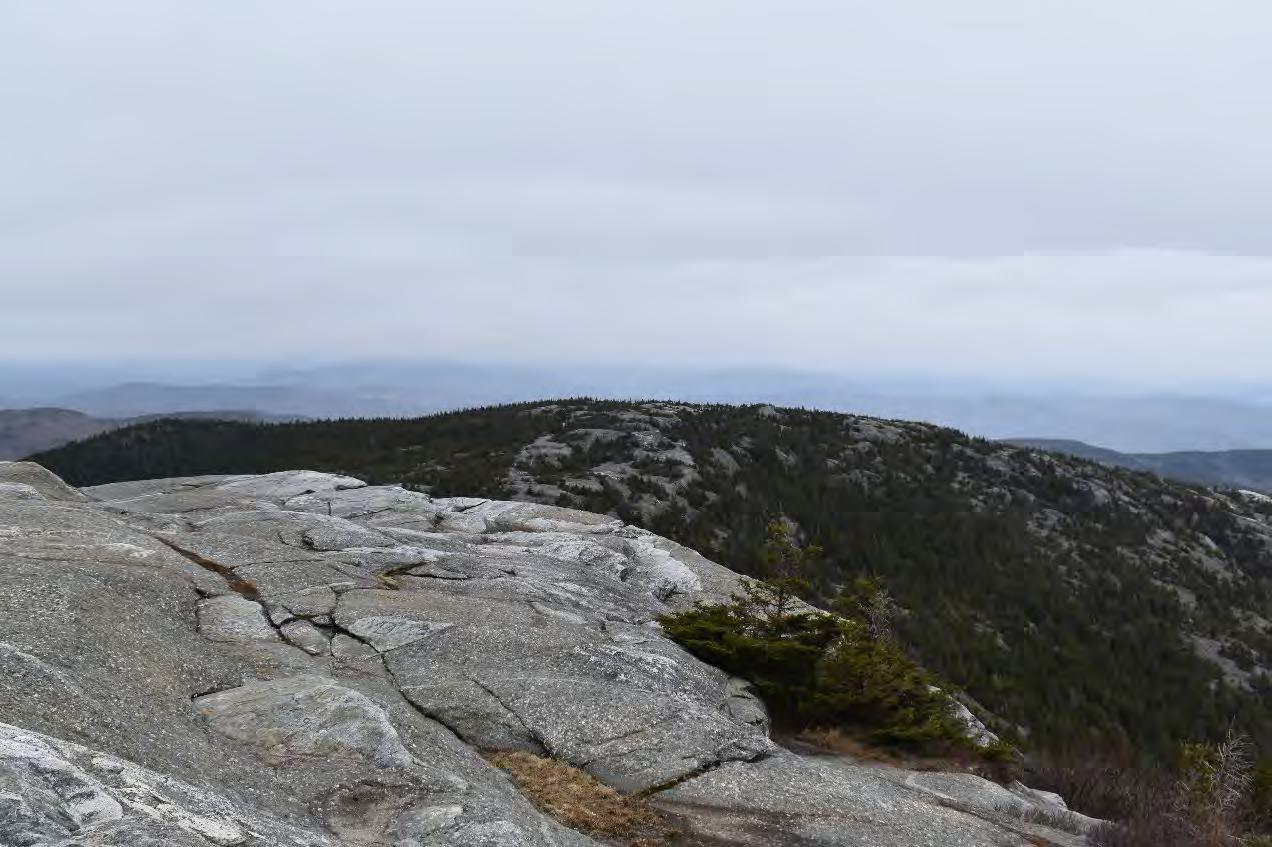
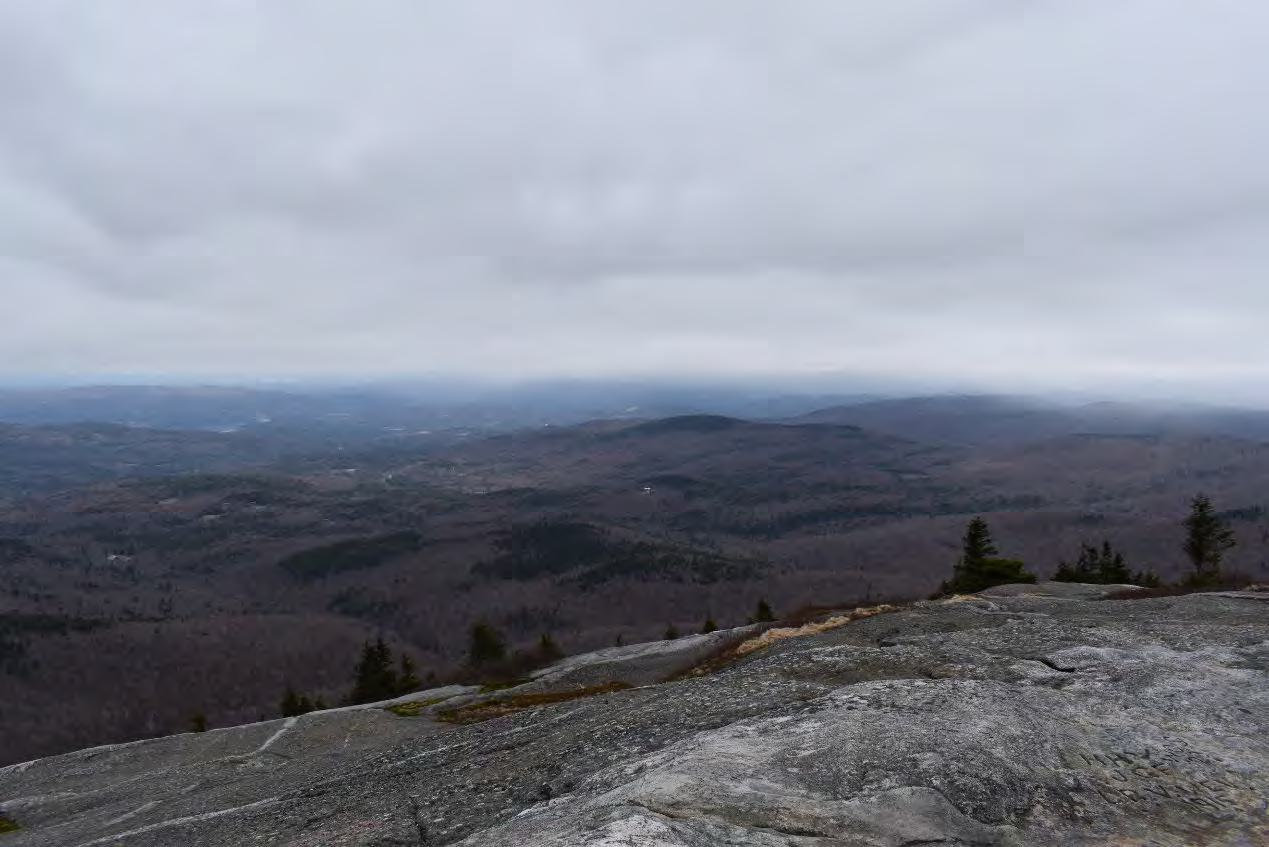
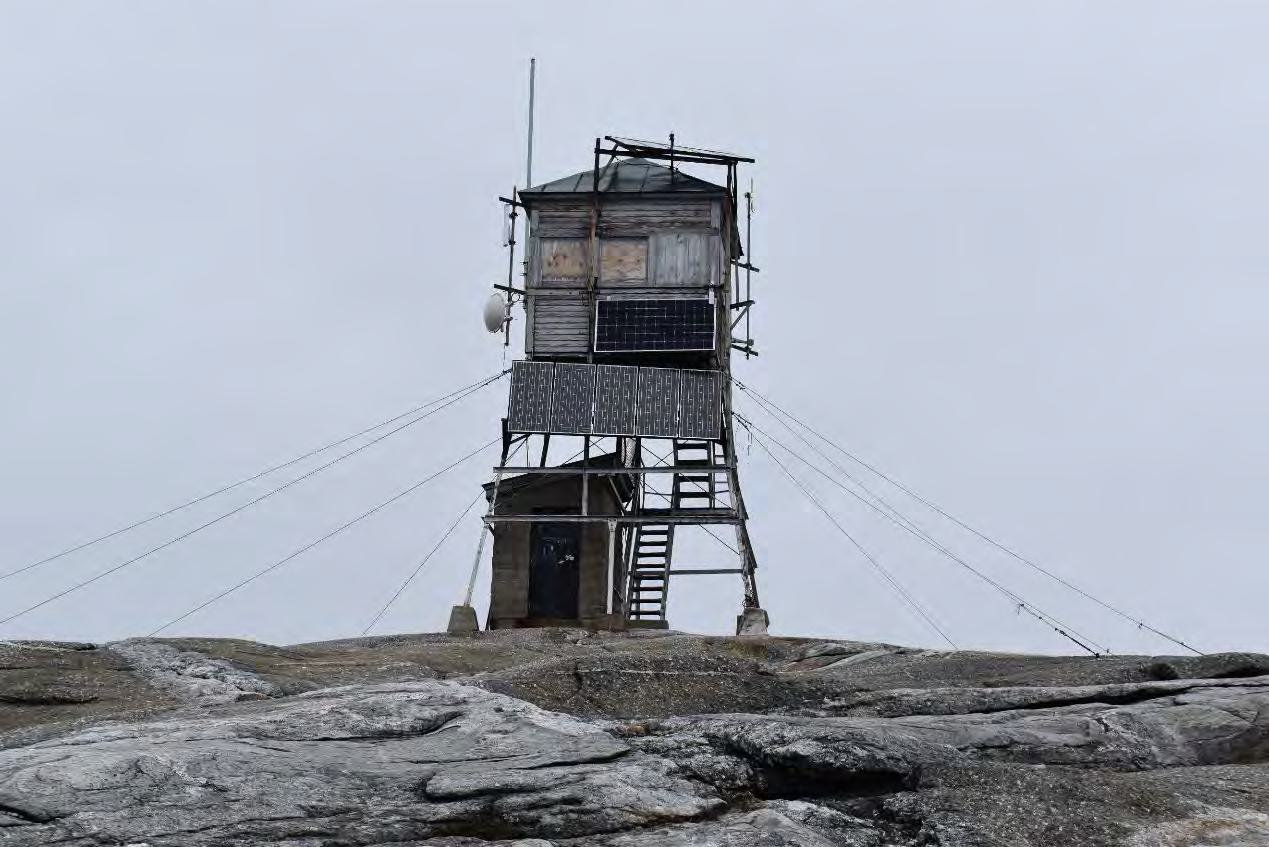
Mount Cardigan Fire Tower and its associated buildings and structures are located in Cardigan State Park and Forest in Orange and Alexandria. Mount Cardigan has an elevation of 3,121 feet. While Cardigan State Park and Forest covers 5,655 acres, the Fire Tower area is approximately 29.5 acres containing the fire tower, associated watchman buildings and structures, and an access trail. The fire tower is only accessible by a 1.5-mile, maintained trail (West Ridge Trail) that ascends 1,200 feet from West Ridge parking lot. South Ridge Trail, which splits from West Ridge Trail, offers a slightly longer route to the summit. The last half-miles of both trails are marked with stone cairns. The parking lot has a trailhead, a picnic shelter, a storage building, and pit toilets that are for State Park visitors and are not associated with the fire tower. West Ridge parking lot is accessed by a 0.6-mile, gravel road (Cardigan Mountain Road) off Burnt Hill Road, a gravel road. Cardigan Mountain Road is gated at Burnt Hill Road, where there is an additional parking area. The area is heavily forested, with mixed deciduous-coniferous cover at the parking lot and primarily coniferous at the upper elevations. The fire tower is located on a bald, granite summit. Historic graffiti is visible carved into the granite ledge at the summit.Mount Cardigan Fire Tower is a 23-foot-tall, single-tiered, steel-frame tower with a square, hip-roof, wood-frame cab. It was built in 1923-1924 as a fire tower by state crews. The tower's painted steel frame sits on four, deteriorated, poured concrete piers on bedrock. The tower structure consists of 3-inch, L-profile vertical steel columns with horizontal struts and tensioned-cable cross-bracing. The legs and single tier are tapered from fifteen feet on the ground to ten-feet-square at the cab base. The steel structure measures fifteen feet in height. Additional, mid-strut posts and concrete piers have been installed and bolted to the frame. Additional secondary struts have been added on the south, east and north elevations. Guy wires from the cab base anchor it to the bedrock.
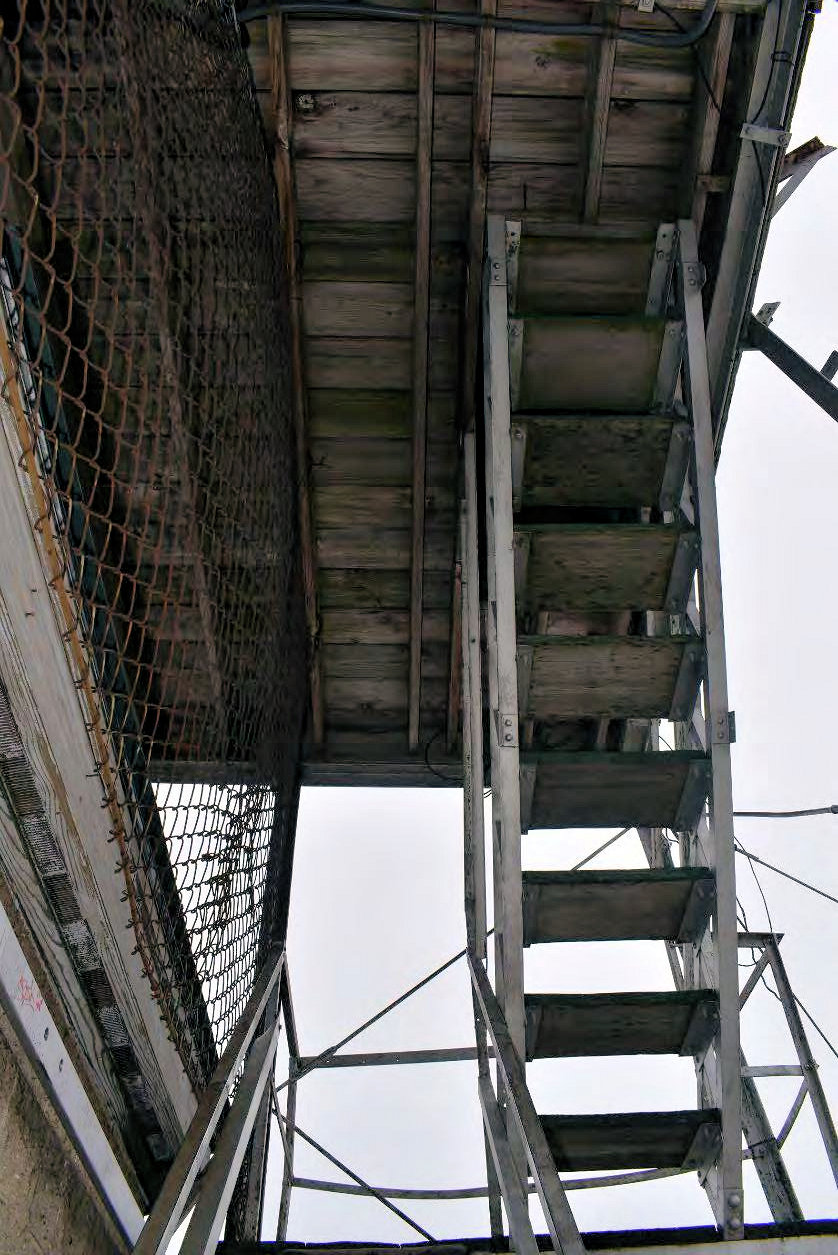
Narrow stairs ascend north from a poured concrete platform at the north side of the tower base. The tower stairs consist of two flights with bolted steel truss stringers and bolted wood treads. The tower does not have a platform below the cab. Landings have wood platforms reinforced by steel cross beams. Handrails on the stairs and at the landings consist of welded 1.5-by-1.5-inch steel bar railings and posts with a smaller mid-rail. Chain-link fencing has been added around the stairs ascending to the cab. When built, the tower had a steel ladder to access the cab; this was replaced by stairs in the mid-twentieth century.
The cab has wood clapboard cladding and bands of three square windows with wood frames on each elevation. The roof is covered in standing seam metal panels. Fenestration consists of single-pane, awning-type, wood-frame windows, all of which have been shuttered with plywood and boards. These windows replaced six-light windows in the early 2000s. The cab's interior has a finish-grade plywood paneled ceiling, vertical plank-covered walls, and a plywood floor. A wood board-clad half-wall encircles the hatch at the east wall of the cab. It contains typical fire tower equipment and furnishings: an Osbourne Fire Finder in the center, built in cabinetry and bench, and a map hung on the wall. The hatch to the platform below is a wood plank door.
There is a small, concrete block private communication building within the west half of the tower base area. It has a shed roof and a metal door. There are solar panels attached to the tower frame and cab on the south elevation. A U.S. Coast & Geologic Survey Reference Mark, dated to 1873 - 1958, is located in the vicinity of the tower. A second U.S. Coast & Geodetic Survey Triangulation Station Mark, dated to 1873 - 1958 and labeled "Cardigan," is located within the tower base area.
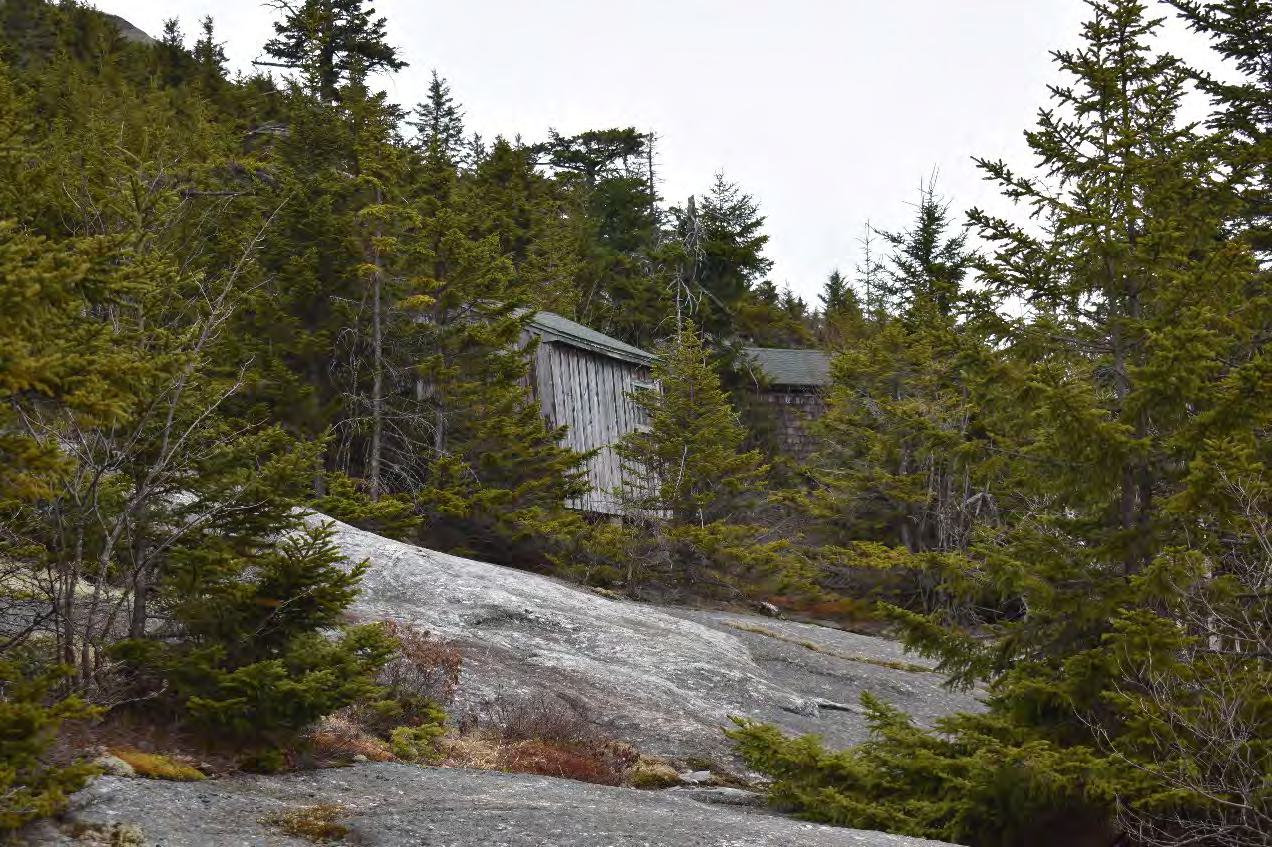
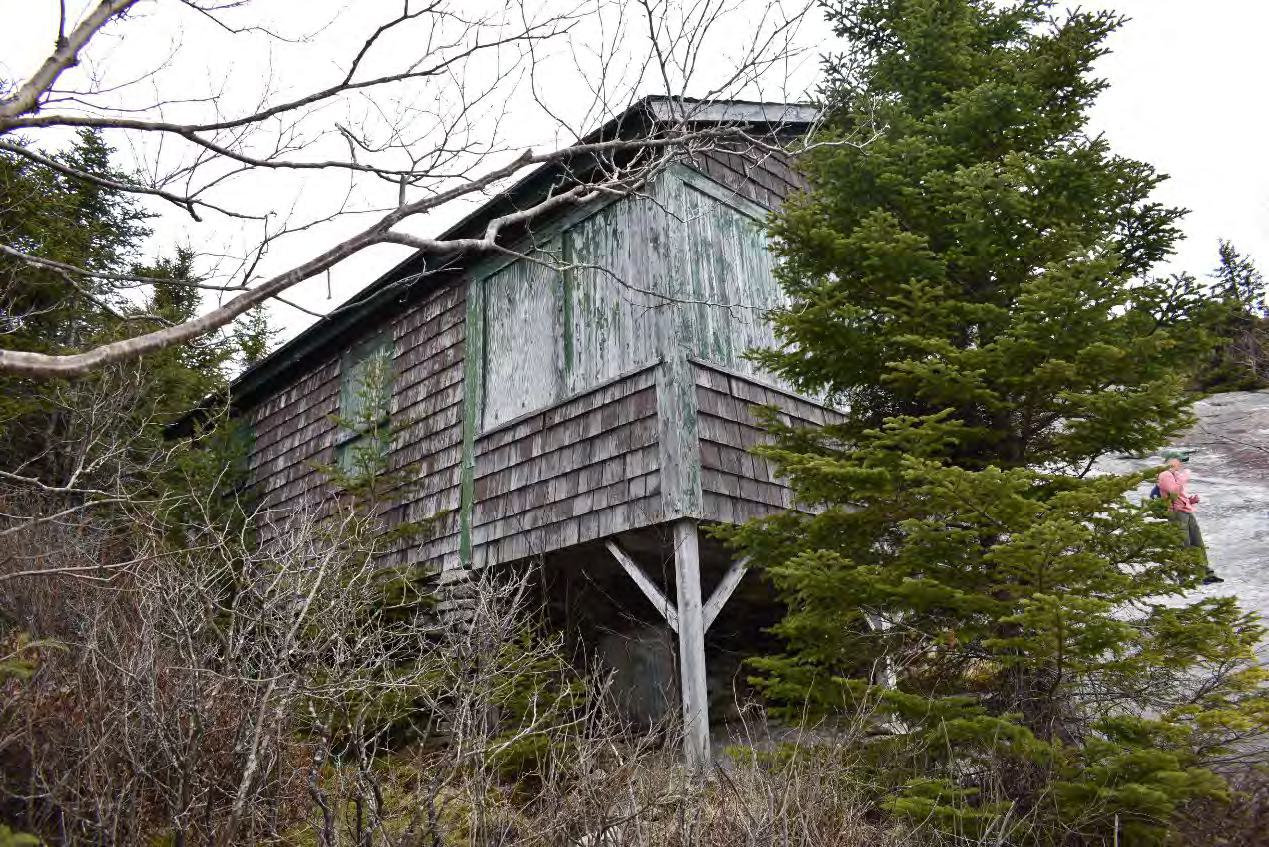
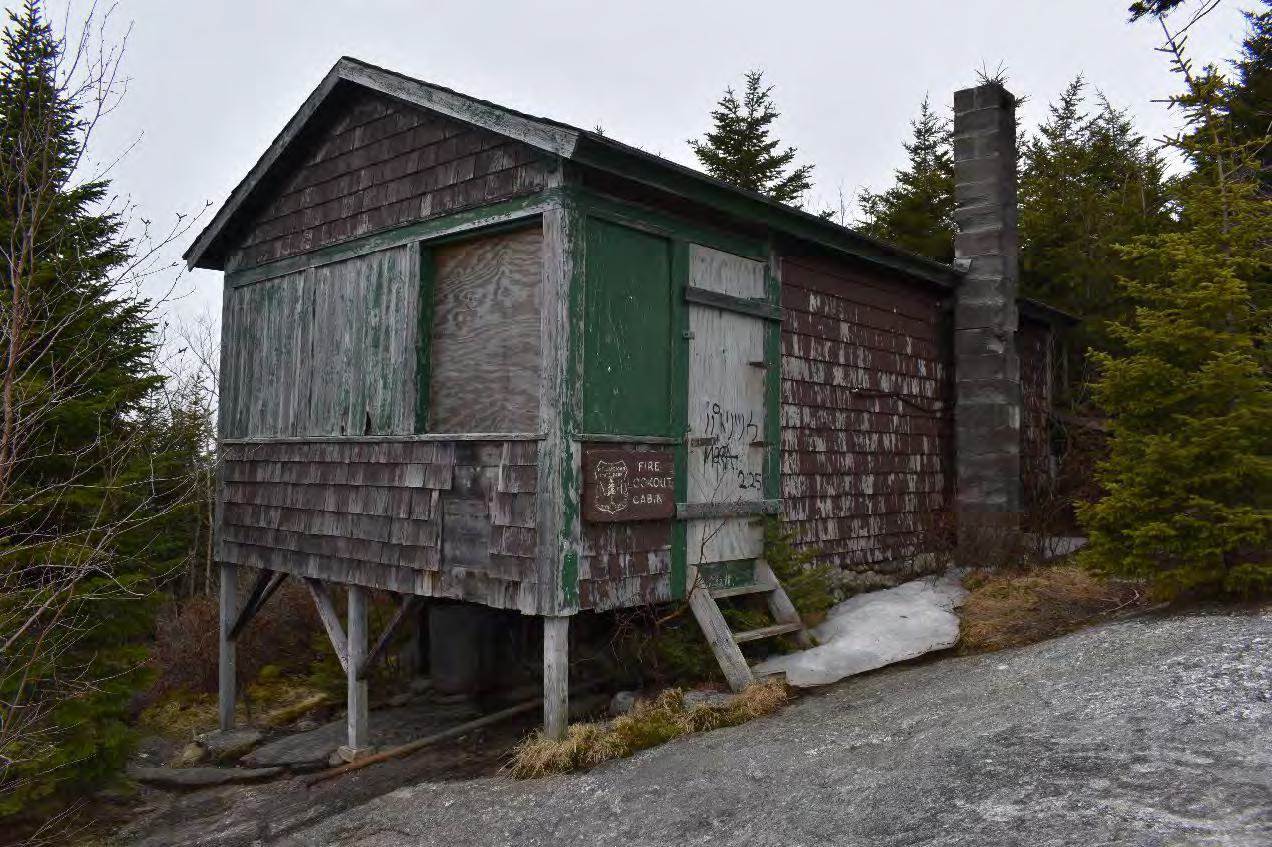
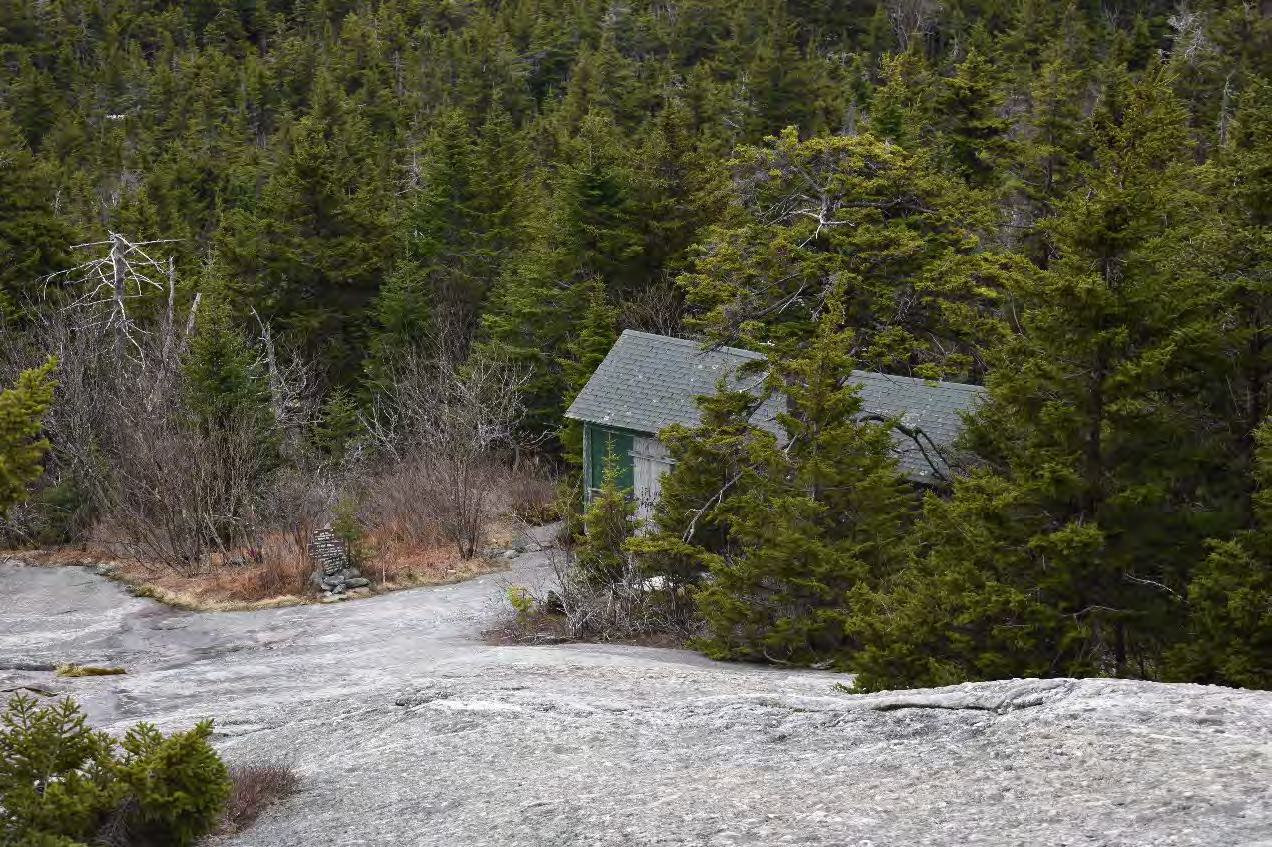
A cluster of two associated buildings is located 850 feet south of the fire tower. The Watchman's Cabin is a two-bay-by-two-bay, one-story, front-gable, wood-frame building with an enclosed porch on its facade (southeast) elevation. Its roof is covered with asphalt shingles and the walls are clad in wood shingles. A concrete block chimney is located on the northeast elevation. The cabin sits on a dry-laid stone foundation, supplemented with braced wood piers under the porch. The porch has solid balusters clad with wood shingles and square posts. Wooden steps to a plywood door provide access into the porch. The windows have wood surrounds and are shuttered with plywood and boards. The interior was not accessible for evaluation.
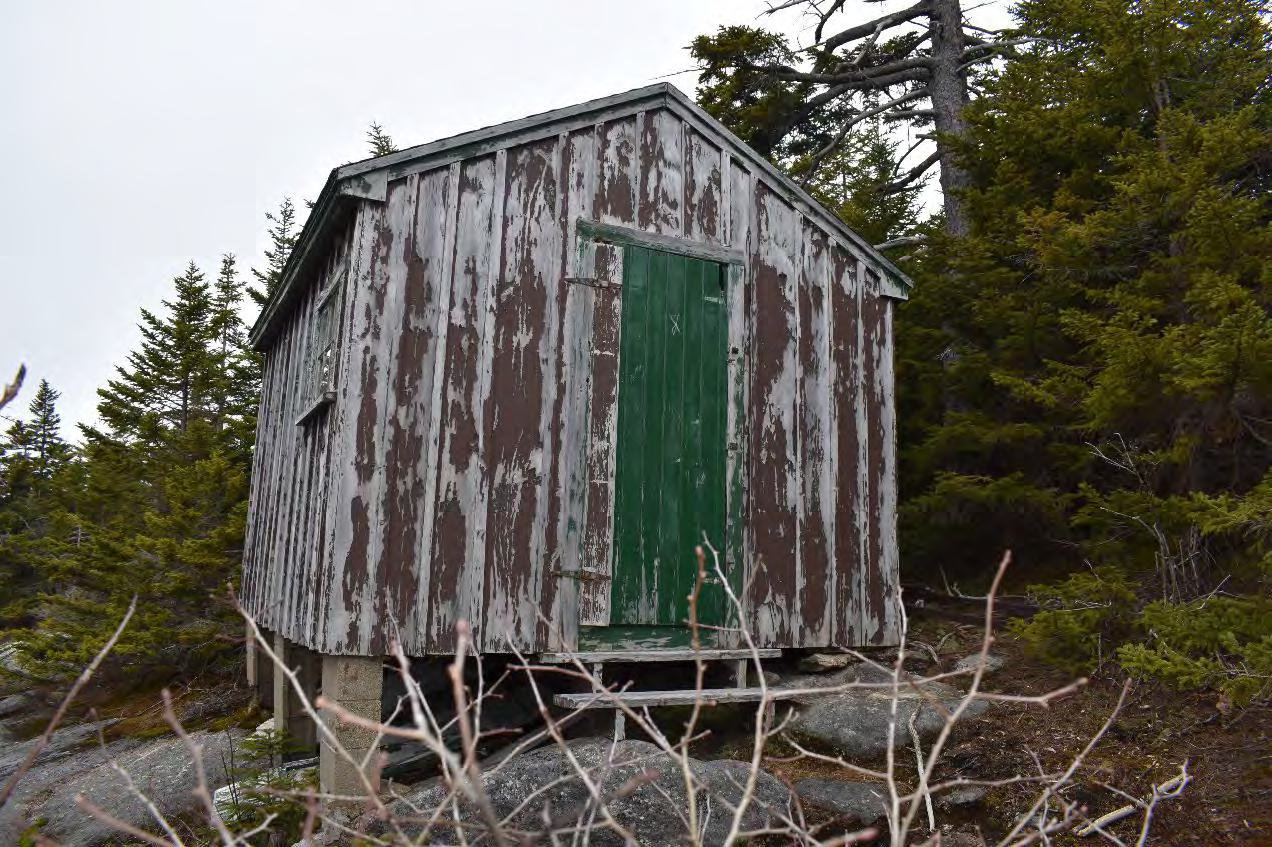
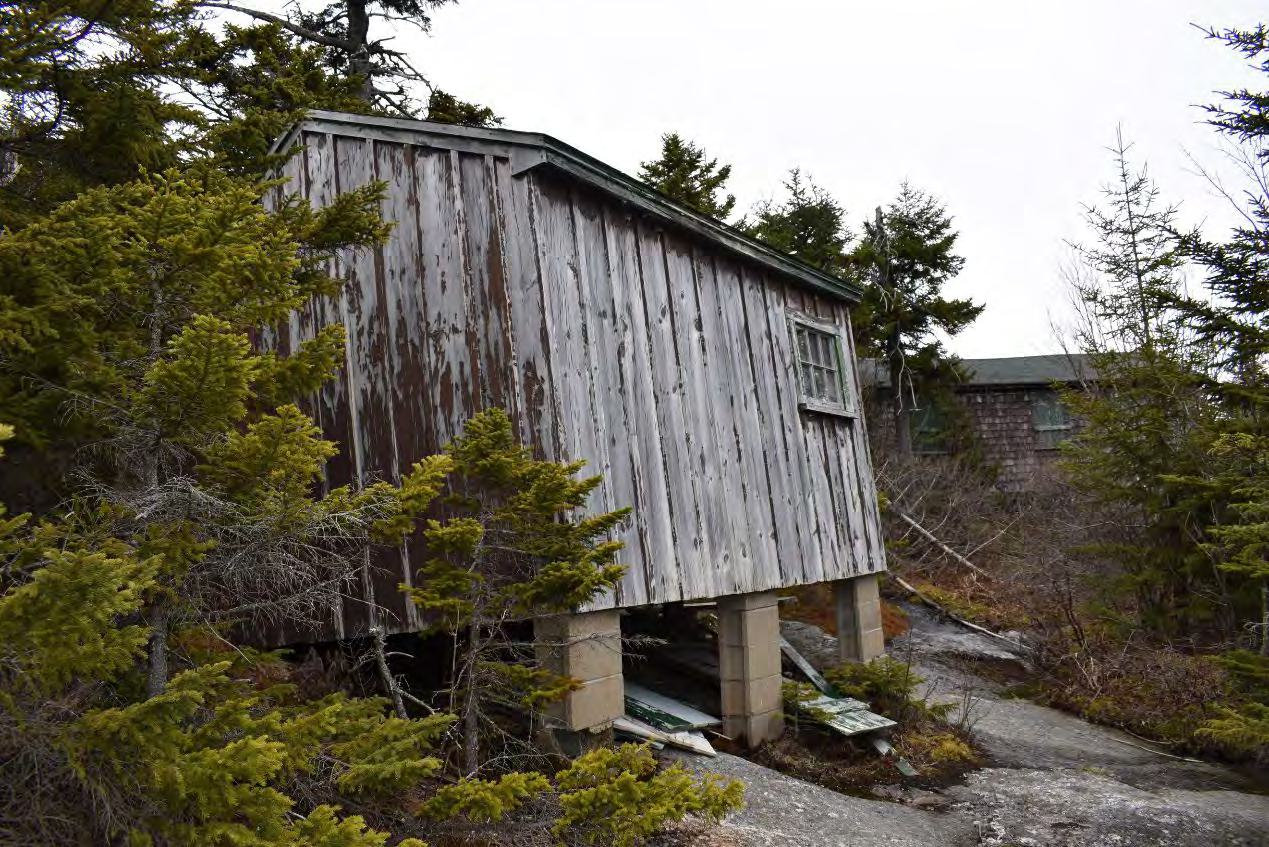
The Storage Building is a one-story, single-bay, front-gable building located southwest of the cabin. It has an asphalt shingles-covered roof. The walls are board-and-batten. The building sits partially on bedrock and partially on concrete block piers. The only entry is on the northeast elevation and consists of a vertical board door. Fenestration consists of six-light, wood-framed windows. The interior was not accessible for inspection. A segment of a steel ladder located next to the building is allegedly the original ladder used to access the fire tower cab.
An outhouse, noted as deteriorated and fallen over in a 2015 assessment, was not located.
NH Dept. of Natural & Cultural Resources for New Hampshire Division of Historical Resources
Photographs of Cardigan Fire Tower