This Jump near Berlin, NH was Built by the First Ski Club in the US
Nansen Ski Jump, Milan New Hampshire


- Categories:
- New Hampshire
- Recreation

History
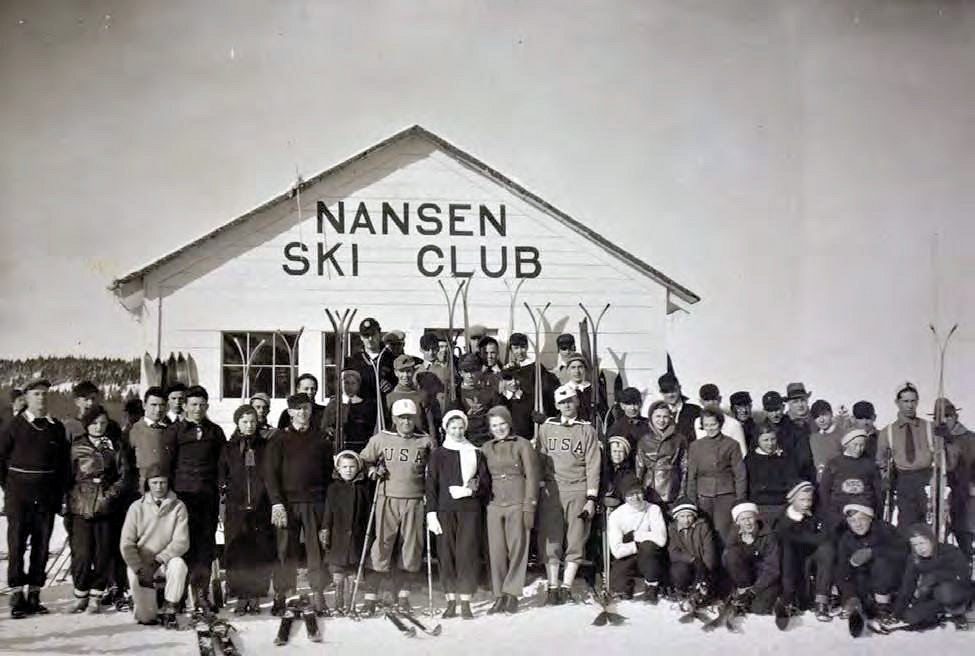
The Nansen Ski Jump complex was constructed in 1936-1938 and featured a 171-foot-tall inrun tower that was the tallest of its kind in the world at the time. It immediately took its place among the premier ski jumping facilities in the country, hosting numerous national and international championships over the next four decades. Founded in 1872 by Norwegian immigrants who came to work in Berlin's lumber mills, the Nansen Ski Club (NSC) is acknowledged to be the oldest ski club in the country. It was a pioneer in the development of competitive amateur skiing in the United States and a major early contributor to promoting skiing as a recreational activity in New England. The National Youth Administration (NYA) was one of the many relief programs established to combat the effects of the Great Depression of the 1930s by providing unemployed young people with jobs working to improve local infrastructure in their communities. The Nansen Ski Jump was one of the largest and most unusual construction projects ever undertaken using NYA labor. The Nansen Ski Jump was a work of the Hussey Manufacturing Company of North Berwick, Maine, which went on to become an internationally known manufacturer of seating for sport complexes. The last major event at the ski jump was the 1972 National Ski Jumping Championship.The Nansen Ski Club (NSC) was organized in 1872 by a small group of Norwegian immigrants who came to Berlin, New Hampshire, to find work in the city's lumber and paper industries. On their Sundays off from work, the group came together to enjoy the Nordic forms of skiing, cross-country, ski jumping, and Telemark skiing, that they had practiced in their native lands. The founding of the club pre-dates by several years the establishment of ski clubs in the Upper Midwest, where Scandinavians settled in larger numbers and ski jumping gained its initial popularity as a sport in the United States.
The NSC was formally organized in 1907 and thereafter held annual invitational ski jumping and cross-country competitions that were instrumental in the introduction and early promotion of skiing in New England. In 1922, the NSC joined four other clubs in the Northeast to form the U.S. Eastern Amateur Ski Association (USEASA), which became the governing body for skiing in the region and, after joining the National Ski Association 1925, had a major influence on the development of amateur skiing in the United States, including the selection and development of U.S. Olympic ski teams. Although it regularly hosted major regional ski jumping events during the 1910s and 1920s, the NSC's early jumping hills were not sufficient to hold national competitions. With construction of the massive Nansen Ski Jump in 1938, however, the club had a facility that rivaled any in the country and that immediately became one of the most frequent sites for sanctioned national championship events. Between 1939 and 1972, the NSC hosted four U.S. National Ski Jumping Championships, several Olympic ski jumping qualifying events, two U.S. Nordic Combined Championships, a North American Championship, and other major regional, national, and international competitions. The 1972 National Ski Jumping Championship was awarded to the NSC in honor of its centennial anniversary.
Origins of Competitive Ski Jumping in the United States
The development of Nordic skiing for recreation and sport began in the Telemark region of Norway in the mid-nineteenth century and made its way to the United States during the first major wave of Norwegian immigration in the 1870s and 1880s. Like other Scandinavian groups, most Norwegians migrated to the Upper Midwestern states of Michigan, Illinois, Wisconsin, and Minnesota, where they found work in agriculture and mining and a climate that was similar to their homeland. The first documented mention of skiing for transportation in the United States occurred in Wisconsin in 1841 and, by the early 1880s, skiing was gaining popularity as a recreational activity throughout the region.Ski jumping was the first form of competitive sport skiing to capture widespread attention in the United States. Unlike cross-country skiing, the entire event occurred within view of the spectators, who were thrilled by the inherent danger of the sport and the courage and skill of the competitors. Ski jumping events featuring the "Knights of the Air" were major drawing cards at winter carnivals in the Midwest by the early 1880s, entertaining massive crowds with spectacular distance and trick jumps. Notable feats such as completing somersaults or jumping through hoops of fire were widely reported in the press.
The first recorded ski jumping tournament in the United States was held in St. Paul, Minnesota, on January 25th, 1887, and was won by Mikkel Hemmestvedt with a jump of 60 feet. Michigan's Upper Peninsula emerged as another hotbed for ski jumping after a group of Norwegians founded the Norden Ski Club in Ishpeming in 1887. The following year, the club changed its name to Den Nordiske Ski Club (Nordic Ski Club) and became one of the Midwest's most active promoters of ski jumping. In 1891, the Nordic Ski Club joined four other ski clubs from Eau Clair, Stillwater, Red Wing, and Minneapolis to form the Central Ski Association (CSA), the first organized ski governing body in the country. Although the CSA was active for only a few years, the regional ski jumping competitions it hosted served to further popularize the sport and, by 1900, ski jumps were a common feature of the Upper Midwestern landscape.
In 1901, the Nordic Ski Club decided to extend memberships to people of other nationalities and changed its name to the Ishpeming Ski Club and hosted as many as three major regional competitions per year in the early 1900s. In 1905, Ishpeming joined four other Midwestern ski clubs to form the National Ski Association (NSA) to promote the sport and organize national skiing events. That year Ishpeming hosted the first official U.S. National Ski Jumping Championship, which was attended by an estimated 8,000 people and was won by local club member Ole Westgaard. For most of the ensuing two decades, the membership of the NSA was drawn exclusively from clubs in the Upper Midwest, and the national ski jumping championships were held on member hills in the region.
In the 1920s, the popularity of skiing, particularly alpine skiing, exploded among a burgeoning middle class who had the means to travel and a desire to participate in healthy outdoor recreational activities. During the decade, other regional ski organizations made up of clubs in the Northeastern and Western states were formed and competed with the NSA. The most prominent was the U.S. Eastern Amateur Ski Association (USEASA) established in Saranac, New York, in 1922, by five ski clubs, including the NSC (see below), and was the first regional ski organization to sponsor competitive alpine racing events. The USEASA affiliated with the NSA in 1925 and, over the next five years, the NSA organized a Rocky Mountain Division, Central Division, and Pacific Northwest Division, making it a truly national organization.
Founding of the Nansen Ski Club and its Place in Early Skiing History of New Hampshire, 1872-1935
Although the Upper Midwest had the highest concentration of early ski clubs with histories dating to the late nineteenth century, the NSC is generally acknowledged as the first ski club formed in the United States. There are no meeting minutes or other club records that establish the exact date, but skiing historian John B. Allen, who conducted exhaustive research in the club's later records and interviewed early members, determined that it was likely founded in February 1872 by a group of Norwegian immigrants who worked in Berlin's sawmill. Simply called the Skiklubben, it was a loosely organized group of friends who regularly came together on Sunday afternoons during the winter to slide down hills or leap off small jumps. According to Allen, there were no dues, but all members had to contribute labor to build a hut, maintain equipment, and clear cross-country ski trails.At the time the club was established, Berlin was in the early stage of a transformation that took it from a small rural agricultural town to a prominent northern New England industrial center. In 1870, most of the working-age male population of the town was employed at the Berlin Mills Company sawmill, which was in the northern part of town on the Androscoggin River and was owned by the Brown family of Portsmouth, Maine. In the late 1870s, new industries, including pulp production and papermaking, were introduced. In the 1890s, the Berlin Mills Company (later renamed the Brown Company) constructed large mills along both banks of the Androscoggin. The expansion of industry was accompanied by a rapid influx of workers and associated growth in in residential, commercial, and civic development.
The operation of the mills depended heavily on immigrant labor. French Canadians were by far the largest immigrant group, although many Europeans also made their way to the community. In the early 1850s, several Norwegians on a crew working to construct a spur line of the Grand Trunk Railroad to the sawmill took jobs at the sawmill and later brought their families to Berlin. The Scandinavian families built homes near the sawmill in an area that became known as Norwegian Village. Located between 5th (now Iceland Street) and 11th streets, the area was formally platted in 1896 with north-south running streets named Norwegian (later Norway), Sweden, Denmark, and Finland. By 1902, the neighborhood included St. Paul Evangelical Lutheran Church (founded in 1887) at the corner of Norwegian and 7th streets, numerous single-family houses, and a few multi-family tenements.
The Skiklubben held its first competitive meet in 1882 at a jump that was built over a fence near the Brown Company's dynamite house. The name of the club was changed to the Berlin Mills Ski Club about 1886 after the place where most of the Norwegian immigrants worked. The club's first formal ski jump was north of Norwegian Village on Paine's Pasture near present-day 12th Street. It consisted of a low wood trestle inrun built into the side of the hill. In 1906, the ski club held its first regional competition, inviting skiers from other clubs in New England. The event subsequently became the highlight of Berlin's Winter Carnival that was held each year in late February or early March. In 1907, the club changed its name to Skiklubben Fridtjof Nansen in honor of the famous Norwegian explorer who crossed Greenland on skis in 1888. More recently, Nansen had been a leader of the Norwegian movement to gain independence from Sweden. In 1912, the Skiklubben Fridtjof Nansen opened membership to all nationalities and anglicized its name to the Nansen Ski Club.
The NSC was founded at a time when the outdoor recreation movement in the United States was in its infancy. The movement was a response to accumulating medical evidence that extolled the benefits of outdoor exercise and fresh air to counteract the negative effects of urbanization and industrialization. An increasing amount of leisure time afforded by the shortening of the work week during the late nineteenth and early twentieth centuries allowed many urbanites the opportunity to pursue recreation on a regular basis. One of the manifestations of the movement was the founding of a variety of social clubs organized around outdoor recreational pursuits such as hiking, mountaineering, bicycling, hunting, and fishing. These clubs were private entities that built their facilities for the use of their membership and not for the general public.
The Appalachian Mountain Club (AMC) and the Dartmouth Outing Club (DOC) were the other contemporaries of the NSC that had a major impact on the development of skiing in New England in the early twentieth century. The AMC, founded in Boston in 1876 as one of the earliest outing clubs in the United States, was formed to "explore the mountains of New England and adjacent regions both for scientific and artistic purposes, and in general to cultivate an interest in geographical studies" in New Hampshire's White Mountains. The club's early focus was on hiking. Its Tuckerman Ravine Trail to the peak of Mount Washington was completed in 1879, making it one of the first recreational hiking trails constructed in the United States. By the early 1920s, the AMC maintained more than 200 miles of trails in the mountains of New Hampshire and Maine and began to get involved in skiing, ultimately becoming one of the sport's chief promoters. The AMC led the way in making skiing more accessible to the general public by organizing ski instruction, building ski trails, arranging travel with railroad companies via special "snow trains," and publishing an early ski periodical.
The DOC was formed in 1909 when Dartmouth College junior Fred Harris proposed the formation of a winter sports club that focused Nordic events, including cross country runs and ski jumping contests. Soon after it was established, the DOC also embraced downhill and slalom skiing and quickly became one of the most popular clubs at Dartmouth. Over the next two decades, the DOC constructed several ski jumps, including an 85-foot-tall steel tower (not extant) on a hill at the college golf course and carved an extensive system of ski trails on Mounts Moosilauke and Washington. Harris, one of many DOC members who would influence the development of skiing in the region, went on to form the Brattleboro Outing Club in his native town of Brattleboro, Vermont, in 1922, and the same year was elected the first president of the USEASA.
The activities of the NSC, AMC, and DOC helped to increase awareness of New Hampshire's possibilities as a major winter tourism destination. The White Mountains had attracted summer tourists since the mid-nineteenth century, but there was little activity during the winter until skiing became a popular form of recreation in the United States. Some summer resorts found they could be profitable during the winter by offering activities such as bob-sledding, snowshoeing, tobogganing, and downhill skiing. After America's first ski school was established in 1929 at Sugar Hill, New Hampshire, ski enthusiasts, hotel owners, and transportation agencies persuaded the state legislature to develop one of the Northeast's first downhill skiing centers at Franconia Notch State Park's Cannon Mountain in the early 1930s. In 1933, the Boston & Maine Railroad began running winter snow trains to North Woodstock, where skiers could continue to Cannon Mountain by car or use recently cut trails near the village.
In 1917, 18-year-old Alf Halvorson (1899-1973) was elected president of the NSC and would remain its guiding force over the next 30 years. The son of Norwegian immigrants, Halvorson grew up in Berlin's Norwegian Village and was "a pretty good jumper and also good at cross country, but if we raced over 5 miles." Admitting that he was "blessed with promotional ideas," Halvorson became one of the leading figures in the history of Nordic skiing in New England. He was president of the NSC during the 1920s when it was a dominant force in competitive skiing in the region and took over the planning for Berlin's annual winter carnival, turning it into a major tourist attraction that showcased major regional ski jumping and cross-country competitions.
Halvorson was an early proponent of organized ski competitions and during the winters of 1920-1921 and 1921-1922 he attended meetings with representatives of the most active Nordic ski clubs in the Northeast at Saranac Lake, New York, to discuss the formation of a governing body similar to the NSA in the Midwest. In 1922, the NSC joined the Saranac Lake Ski Club, Norseman Ski Club (New York City), Lake Placid Ski Club (Lake Placid, New York), and the Brattleboro Outing Club (Brattleboro, Vermont) to form the USEASA, which was responsible for standardizing tournament rules, scheduling competitions so they would not conflict with those of other member clubs, establishing a regular circuit of jumping events, and general promoting of ski sports. Fred Harris of the newly formed Brattleboro Ski Club was named the USEASA's first president and its offices were established in Brattleboro.
Over the next few years other existing and newly formed ski clubs along the Eastern Seaboard joined the USEASA and, by 1924, membership had swelled to 25 clubs. Halvorson may have influenced some of the clubs to join after he began refusing to send NSC jumpers to meets where the host club was not a member of the USEASA. In 1925, the USEASA affiliated with the NSA and, due to its size and territory encompassing the major Eastern cities, became a major voice in the direction of organized competitive skiing in the U.S. Reflecting a general increase in the popularity of the sport, membership in the USEASA continued to grow rapidly; to 54 clubs in 1934 and to 181 clubs by 1940. After World War II, the USEASA became the first of the NSA's divisions to hire a full-time executive director and subsequently added a support staff of up to 12 persons. The headquarters was moved to Littleton, New Hampshire, in the late 1960s and, by the end of that decade, the organization had about 380 member clubs and 31,000 individual members.
In 1921, the NSC built a much larger ski jump on Paine's Hill north of the original jump at Paine's Pasture, which was no longer adequate to train its jumpers and hold competitive meets. The new ski jump consisted of a 65-foot-tall, steel trestle inrun chute that angled down to a wooden take-off structure built into the crest of the hill. Club member Carl N. Johnson designed the jump, basing the plans on the Howelesen Hill Ski Jump in Steamboat Springs, Colorado, where several North American records were set in the 1910s. Olaf ("Spike") Olesen, who had been a member of the NSC since the early 1880s and was one of the first ski makers in the region, oversaw the construction of the jump. Billed as the "largest ski chute east of the Mississippi," the jump was the manifestation of the club's aspirations to hold nationally prominent ski jumping events and to provide a training facility for its members. The completion of the jump coincided with one of the best string of victories for NSC club athletes, with Gunnar Michelson, Sverre Knudson, and Albert Hanson taking the first three places at a major tournament held at Lake Placid, New York. In 1922, the NSC won the Eastern team championship, and club member Bing Anderson won five major ski jumping competitions in the United States and Canada. The NSC was widely known in the competitive skiing community for developing some of the nation's top jumpers, and members were often invited to compete at different meets on the same day.
Halvorson hoped to expand the club's profile beyond the region by sending a contingent to the international ski tournament to be held in 1924 in Holmenkollen, Norway, which was considered the birthplace of ski jumping and held the most prestigious annual jumping competition in the world. He planned to raise funds for the trip from the proceeds of Berlin's Winter Carnival and worked with the city's Chamber of Commerce to expand and promote the carnival. The annual ski jumping competition remained the primary draw, but other activities included tobogganing, wood sawing and chopping, fire building, skating races, dog team races, cross-country ski races, snowshoe relays, horse racing on ice, and skijoring (skiers towed by dog teams or horses). The 1923 carnival featured the club's 18th Annual Ski Jump with 40 entries, including some of the "best Ski-Men in the Eastern United States and Canada." The first International Mount Washington Marathon Ski Race was also held that year. It was a hybrid downhill and cross-country race that started at the Halfway House on the Mount Washington carriage road and ended about 20 miles distant at Paine's Hill. At least four of these hybrid events were held during carnivals in the 1920s and were among the first races in the eastern United States to feature downhill skiing. NSC member Robert Reid won the event in 1924 and the same year won the national cross-country championship held in Brattleboro.
In 1926, Halvorson, who was always interested in promoting skiing as a healthy recreational outlet for youth, founded the NSC's Junior Ski Club, the first such club in the nation. He also was responsible for one the most famous early events in New England's ski history at that year's Berlin Winter Carnival-a 100-mile race, the longest competitive cross-country skiing race ever proposed in the United States, between NSC members Bob Reid and Helmer Oakerlund who together dominated the sport in New England for most of the 1920s. Halvorson made sure the event received regional publicity by notifying the sportswriters of all the Boston newspapers in advance. The race began on February 10th during one of the worst blizzards to ever hit New England, and over the next four days newspaper stories about the conditions and hardships endured by the skiers captivated the country. Reid finally won the race, finishing 8 minutes ahead of Oakerlund. Although Halvorson thought the race might become an annual event, the results suggested it was too dangerous and it was never held again. Even so, Halvorson later wrote that the event was one of the most outstanding attractions of any winter carnival and brought in thousands of spectators to witness the finish and the ski jumping meet the following day.
In 1927, the NSC moved the ski jump to a different position on Paine's Hill that allowed an increase in the potential length of jumps from about 125 to 150 feet. The move helped club members stay current in their training for competition, but the facilities were still not up to the standards of the largest jumps in the Midwest and West that were capable of holding national tournaments where winning jumps were regularly going over the 200-foot mark.
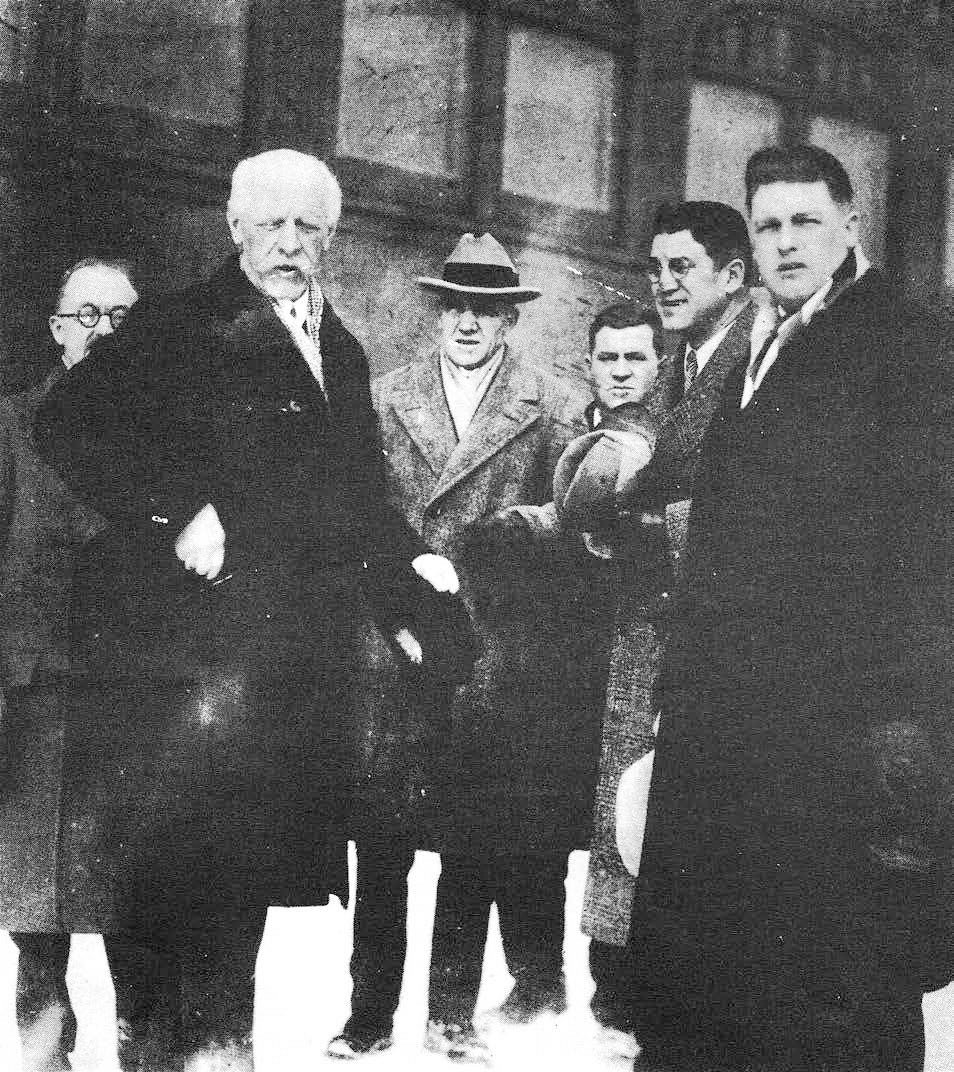
During the winter of 1929, the NSC was honored by a visit from its namesake, Fridttjof Nansen. By that time, Nansen had become an internationally known figure for his tireless humanitarian efforts on behalf of displaced peoples during and after World War I. For those efforts, he was awarded the Nobel Peace Prize in 1922. Nansen went out of his way to make the trip to Berlin, which included a visit to the ski jump on Paine's Hill escorted by members of the NSC's Junior Ski Club.
The NSC's efforts to improve its facilities and expand competition opportunities for its skiers paid off when it came time to select the U.S. ski team for the 1932 Winter Olympics to be held at Lake Placid. Bob Reid, who had continued to be one of the most successful racers in the Northeast throughout the 1920s, was chosen for cross-country skiing and Erling Anderson was chosen for ski jumping. For his role in developing the region's jumping competitions, Alf Halvorson was named as assistant coach to the team.
Construction of the Nansen Ski Jump, 1936-1938
By the 1932 Winter Olympics, Berlin was beginning to feel the full effects of the Great Depression (1929-1939). Because of the general decline in demand for paper products, the Brown Company teetered on bankruptcy and was forced to reduce its weekly payroll from $235,000 to $50,000. The increasing numbers of unemployed citizens on relief roles put the City of Berlin in danger of financial collapse before the State of New Hampshire stepped in to back the City's borrowing capacity. The deal resulted in the formation of an unusual public-private partnership in which the City used notes to buy lands from the Brown Company, harvest the timber on the land, and transport it to the mill where it was processed into paper products sold by the Brown Company to repay the loan. The Brown Company was reorganized and placed under the direction of a board of trustees and continued to operate and supply much-needed jobs for residents. The City also took advantage of the various federal relief programs under President Franklin Roosevelt's New Deal program to provide jobs for the unemployed. By 1936, more than 20 construction projects in Berlin had been approved by the Works Progress Administration (WPA), established in 1935, with a prospective employment of up to 500 persons. Projects included improving streets and sidewalks, building recreational facilities and schools, and operating a cement pipe plant that supplied materials for WPA projects throughout northern New England. Approximately 60 men found employment clearing and constructing a ski slope on City land near Cates Hill.Much of the initial development of New Hampshire's resort ski industry was accomplished under federal relief programs, particularly the Civilian Conservation Corps (CCC), which was created under the Emergency Conservation Work Act of 1933, and the WPA. The CCC built one of New England's first downhill ski racing trails at what became the Wildcat Mountain Ski Area near Jackson, New Hampshire, and constructed the ski trails and associated facilities for the Cannon Mountain Ski Area in Franconia Notch State Park. The largest ski development in the state undertaken by the WPA was the Belknap Mountains Ski Area in Gilford, New Hampshire, which began as a proposal by the Winnipesaukee Ski Club (founded in 1918) to replace the club's ski jump that had been toppled during a strong wind storm in 1932. The Belknap Board of County Commissioners saw the project as an opportunity to provide work relief for unemployed residents and bolster the area's winter tourism economy. With $300,000 in funding through the WPA, the project was expanded to include building three ski jumps of different sizes, new ski trails, ski lift facilities, and a resort hotel and created employment for as many as 300 workers over three years. The Hussey Manufacturing Company of North Berwick, Maine, designed and oversaw construction. The largest of the three ski jumps was patterned after one in Lake Placid, New York, and was purposely built to be 1 meter longer. It was completed in 1937, and the first sanctioned competitive event held there was the USEASA's combined ski jumping and cross-country skiing championship.
Alf Halvorson was aware of the new ski developments in New Hampshire and the federal assistance they were receiving. In 1936, while still the president of the NSC and as a city selectman, Halvorson learned that a representative from the National Youth Association (NYA) had approached the mayor's office about establishing a work program for Berlin's many unemployed young people. Halvorson, who had always promoted youth involvement in the NSC, stepped forward to volunteer as the city's NYA supervisor with the initial idea of expanding the club's facilities, including the network of cross-country trails, and building what he referred to as "one the outstanding ski jumps in America".
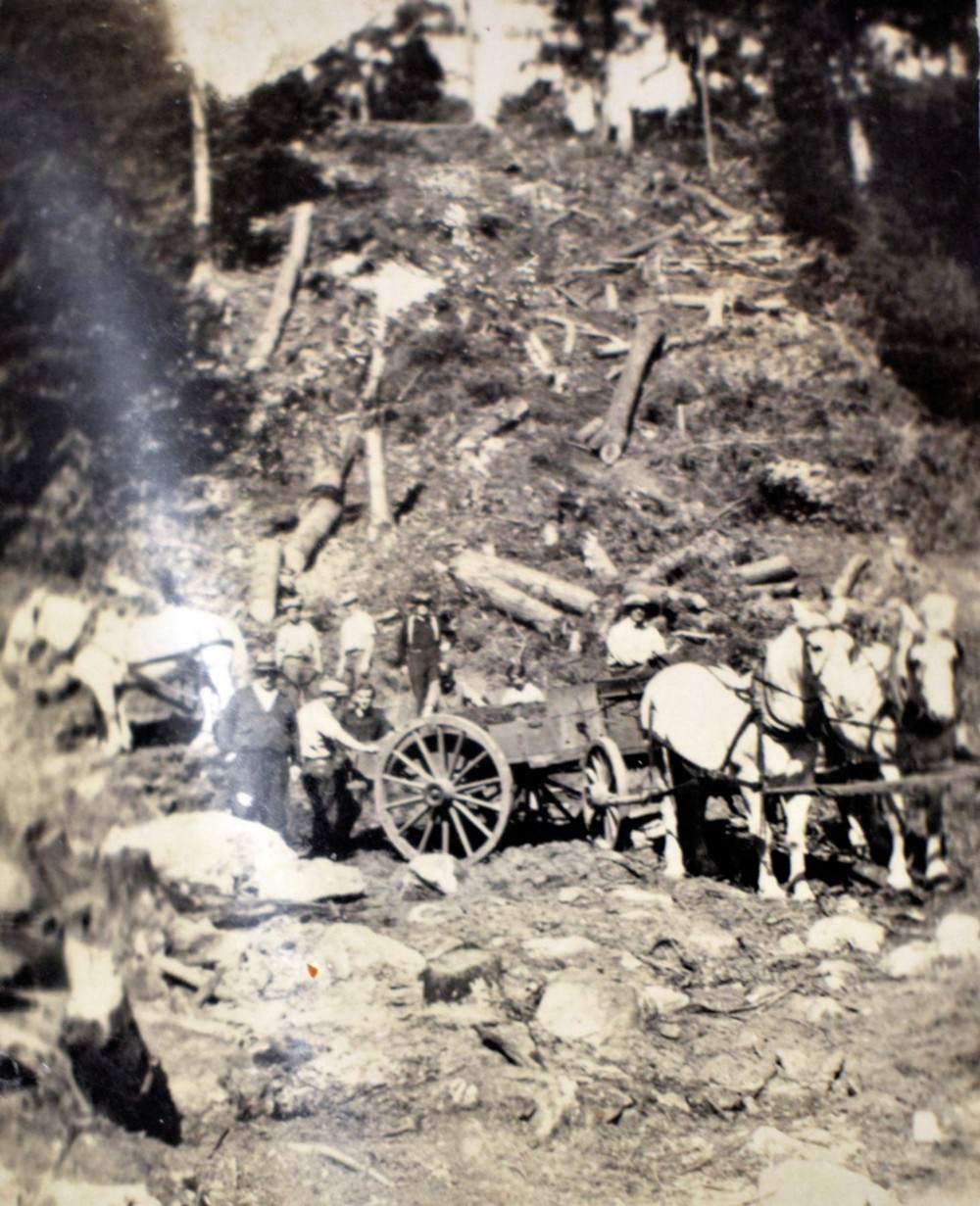
Halvorson was successful in getting the City of Berlin to back his idea of putting young people to work building the new ski jump. The City Council voted to appropriate money to purchase the property, supply materials, and provide heavy equipment and administrative support. Halvorson worked closely with City Engineer Patrick Murphy to identify an appropriate site for the jump, eventually settling on a tract of land on a steep hill along Milan Road just over the Berlin border. Like much of the land in the vicinity, the two 4-acre parcels that made up the tract were owned by the Brown Company. Since the timber on the parcels had already been harvested, the land was cheap, and the City was able to acquire it from the Brown Board of Trustees for $75, which was the amount the company had mortgaged the land for in the 1920s. The deed for the property was executed on January 2nd, 1937.
The NSC hired the Hussey Manufacturing Company to design and fabricate the jump's inrun tower because of its experience at the Belknap Mountains Ski Area. The steel and wood for the tower was purchased through a City appropriation of $2,500. Under Halvorson's supervision, the NYA workers assisted in building the steel trestle towers and wood plank runway of the inrun, removed stumps from the hill, built a wood trestle structure, and shaped the hill with fill to make smooth landing and transition areas, constructed a stairway to reach the top of the hill, and carved a terraced area out of a side hill adjacent to the landing hill for spectator viewing. The total cost of the complex was estimated at $30,000, far cheaper than the "magnificent sums spent on the structures at Lake Placid, Laconia and in Germany," which were the recently completed comparable facilities to the new Nansen Ski Jump.
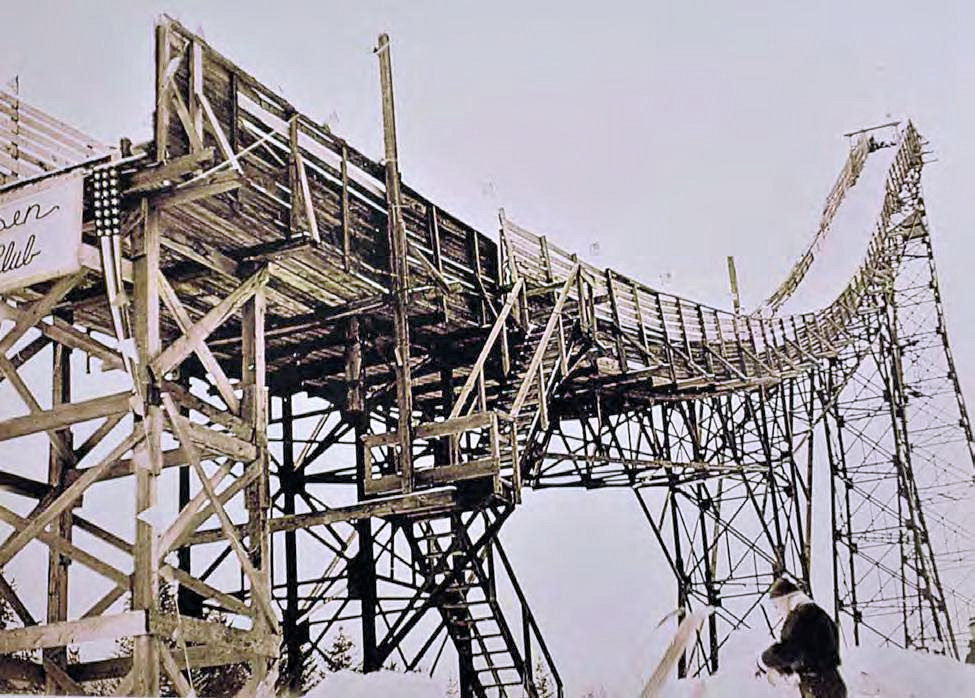
The ski jump was substantially completed by the winter of 1938, although work on the complex continued through the following year. Its 171.5-foot-high, 310-foot-long inrun tower was widely recognized as the largest artificial inrun tower in the world at the time. The NSC estimated that, under the right conditions, skiers could attain estimated speeds of 55 miles per hour, making it possible to attain distances of up to 270 feet. That claim would have excited interest among ski fans because the record for the longest official jump at an American hill was 247 feet set the previous year at Ecker Hill in Salt Lake City, Utah, by Alf Engen of the Sun Valley Ski Club in Idaho. Norwegian ski jumpers Birger Ruud, the prevailing Olympic gold medal holder and world champion, and Johanne Kohlstad, the women's world record holder, visited the jump after it was completed and pronounced it the finest they had seen in the United States. The NSC confidently boasted that it was "a foregone conclusion that all existing world records for amateur ski jumping will be shattered on this jump".
National Ski Jumping Events at the Nansen Ski Jump, 1938-1960
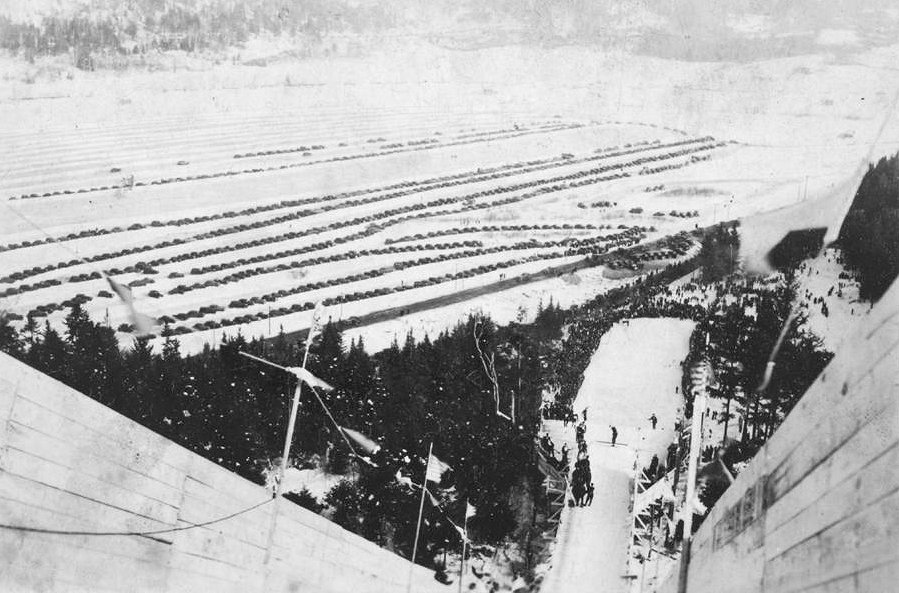
On Saturday and Sunday, March 5th and 6th, 1938, the NSC hosted its first nationally significant event, the Eastern Elimination Contests, which were authorized by the U.S. Olympic Committee as a preliminary event for the selection of the ski team to represent the United States in the 1940 Winter Olympics in Sapporo, Japan. Held as part of Berlin's Winter Carnival, the two-day event featured an 18-kilometer cross-country ski race, (At that time, the standard distances for individual cross-country medal races at the Winter Olympics were 18 and 50 kilometers) which started at the old jump on Paine's Hill, and a giant-slalom race at the club's Cate's Hill ski trail (not extant), which had been constructed by the WPA. The inclusion of the downhill race was evidence of the growing popularity of alpine skiing events, which were first included in the Olympics in 1936. Despite the popularity of the other skiing events, the last and most anticipated event of the weekend was the jumping contest on Sunday afternoon. Approximately 25,000 spectators attended, arriving by car and parking in the adjacent airport landing field or miles away in spots along Milan Road. The competition was broadcast live on 87 radio stations throughout the country. The honor of making the first competitive jump was given to NSC member Clarence "Spike" Oleson. The longest successful jump by a male was 238 feet and, although women were not allowed to participate in jumping at the Olympics because it was considered too dangerous, Johanne Kohlstad made a jump of 228 feet.After the successful 1938 event, Halvorson began planning with the administration of New Hampshire's Governor Francis P. Murphy to make a bid for the state to host the 1944 Winter Olympics. The plan incorporated the use multiple venues throughout the state. With the Nansen Ski Jump in place, Berlin would host the Nordic ski events. The alpine events would be held at Cannon Mountain. Iceboating would take place on Lake Winnipesaukee, figure skating at a facility in Conway, and a new bobsled run would be constructed on Mount Madison. Scale drawings of the proposed facilities were to be developed to support the state's pitch to the Olympic International Committee in London in June 1940 (Portsmouth Herald 1939).
In February 1939, the Nansen Ski Jump hosted the final tryouts for the U.S. Ski Jumping Team for the 1940 Winter Olympics. It was anticipated that the "keen competition combined with spectacular jumping [would] make this tournament America's greatest winter event." In addition to participating in the Olympics, which by then had been moved to Germany due to Japan's increasing involvement in the Second Sino-Japanese War (1937-1945), the team would also represent the United States at the Federation De Nationale De Ski (FIS) Championships. Another large crowd gathered at the Nansen Ski Jump and was treated to several long jumps that threatened the hill's unofficial record of 262 feet. The individuals chosen for the ski jumping team never competed in the international events because both the Winter Olympics and the FIS Championships were subsequently cancelled due to the breakout of World War II.
The following year, the NSC hosted its first National Ski Jumping Championships. Still the most prestigious event in American skiing at the time, the event received national press coverage. An article that appeared in the Portsmouth Herald on February 24th, 1940, was reprinted by many papers throughout the country and began with the following:
Hoping to assemble a field of the best jumpers in the nation, Halvorson arranged to have jumpers from the Midwest and West meet in Chicago, where a dedicated car on a passenger train would take them through Montreal to Berlin. As part of the deal with the railroad, Halvorson had a banner hung on both sides of the car proclaiming that the train was headed to the national ski jumping championships in Berlin. A crowd of 35,000 was expected and the area available for parking at the airport and along Milan Road was expanded to accommodate 2,000 cars. In expectation of massive automobile congestion, the New Hampshire State Police erected a tall observation tower in the airport parking lot and created a placard signaling system that told officers on the ground which areas were full so that cars in line could be redirected to available parking spots.
The 1940 Class A competition featured past national champions George Kotlarek of the Duluth Ski Club, Roy Mikkelson of the Yosemite (California) Winter Club, and Sigurd Ulland of the Leavenworth (Washington) Sports Club. Sverre Fredheim of the Gateway Ski Club (Wisconsin) would return to the jump where he had earned his spot on the U.S. Olympic ski team the year before. Many of the large throng of people who attended the competition, however, came to see the young ski jumping sensation Torger Tokle, who was then representing the Norway Ski Club of Brooklyn, New York. After immigrating to the United States from Norway in 1939, Tokle immediately began competing in ski jumping and won nearly every meet he entered.
The event lived up to its billing with Alf Engen, the current holder of the U.S. national ski jump record, barely beating Tokle. In less than ideal conditions, the two tied for the longest jumps of the day at 218 feet, but Engen's second-best jump of 217 feet was better than Tokle's at 214 feet and Engen won the event with a total of 229.3 points. In a rematch at the national championships the following year at the Milwaukee Ski Bowl in Seattle, Washington, Tokle got revenge by beating Engen and destroying his U.S. record by recording a jump of 288 feet.
In the program for the 1940 national championships, Halvorson announced that New Hampshire, then "recognized as the biggest recreational spot for ski enthusiasts from all over the United States," had been awarded the International Ski Championship for 1941 at the NSA's annual meeting. Like his previous plan to bring the Olympic Games to the state, the event would be held at various locations in New Hampshire, with Berlin hosting the jumping and Nordic combined competitions. Halvorson hoped to make it the largest international ski championship ever by inviting and paying the travel expenses for 50 of the top European skiers. The championship was scheduled for March 1941, but the war in Europe forced it to be cancelled. The 1940 national championships proved to be the last nationally important event held at the Nansen Ski Jump for more than a decade.
No sanctioned national ski jumping events were held in 1943-1945, as many of the country's most prominent competitors enlisted or were drafted into the armed services. Some, like Tokle, who had become a U.S. citizen, and the NSC's Ken Fysh utilized their skiing backgrounds while serving in the U.S. Army's 10th Mountain Division, a light infantry unit that specialized in rapid movement on skis through mountainous terrain. Only a few months before the war ended, Tokle was killed in action during a battle in the Apennine Mountains of Italy, depriving the U.S. ski jumping community of its brightest star.
The first post-war U.S. National Ski Jumping Championship was held in 1946 at Howelesen Hill in Steamboat Springs, Colorado, and Alf Engen again claimed the title in the Class A division. The Nansen Ski Jump was the site of several important regional events during the late 1940s, and the Eastern U.S. jumping record was set there in 1948, when Norway's Ernest Knudsen soared 255 feet.
Throughout the 1950s the NSC, still under Halvorson's direction, hosted at least one major competition each year that brought together the some of the best ski jumpers in the world. The decade began the first of two consecutive National Nordic Combined Championships to be held at the Nansen Ski Jump and the club's 1-mile cross-country course. Despite warmer weather that required the NSC to truck in snow from elsewhere, the 1950 event attracted an outstanding field of American jumpers and a large contingent from Europe, which was in the U.S. to attend the World Championships in Lake Placid the following week. The overall champion of the combined event was local favorite Ralph Townsend of the University of New Hampshire Ski Club. The following year, Ted Farwell Jr. of Montague, Massachusetts, won the combined championship. In 1952, the NSC hosted the USEASA Championship, but poor weather conditions made for a disappointing meet. However, a snow storm several weeks later made conditions ideal and the club decided to hold an impromptu event during which Charles Tremblay of Lebanon, New Hampshire, eclipsed the hill record by landing a 256-foot jump. An event billed as the International Jumping, Cross-Country and Nordic Combined Championships was held in 1954 and 1955. Art Devlin, who had won the 1946 U.S. National Ski Jumping Championship and was well on his way to becoming one of the best known American-born ski jumpers of all time, won the 1954 event with "two nearly perfect leaps of 208 and 201 feet" before 10,000 spectators.
In 1955, the Nansen Ski Jump served as the backdrop for a speech by President Dwight D. Eisenhower, who was in the area during a fly-fishing vacation in Maine. Eisenhower's speech, attended by about 2,000 people, garnered national attention after he seemed to hint that he might not run for president again in 1956.
The U.S. National Ski Jumping Championships returned to Berlin in 1957 and was also a tryout competition for the North American ski team that would compete on the FIS tour the following year. The field included Art Devlin, Arthur Tokle (Torger's brother and winner of the 1953 championship), and Clarence Hill and Rudy Maki of the Nordic Ski Club in Ishpeming, Michigan, who had won the 1952 and 1955 championships, respectively. The 1957 winner was Norway native Ansten Samuelstuen, then affiliated with the Steamboat Springs Winter Sports Club in Colorado. Samuelstuen was in the midst of a hot streak of wins that included the following week's North American Ski Jumping Championship hosted by the Winnipesaukee Ski Club at the jump in Gilford, New Hampshire. On his second jump at the national championships, Samuelstuen broke the Nansen hill record by landing at 262-foot jump. During the event several competitors, including 18-year-old Willie Erickson of Iron Mountain, Michigan, who won the Class B title, jumped farther than Samuelstuen but failed to land the jumps. Samuelstuen also took home the Torger Tokle Memorial Trophy, which was awarded by the Norway Club of New York to the NSA's national champion.
Rehabilitation of the Nansen Ski Jump, 1963
By the time of the 1957 national championships, the Nansen Ski Jump was showing its age. The jump had deteriorated and improvements in jumping techniques and equipment threatened to make it obsolete for major competitions. Although the steel inrun tower was structurally sound, the wood deck was in poor condition. The landing hill was the major problem, however, and it would require substantial work to make it safe and compliant with competitive standards. Therefore, no major tournaments were held at the Berlin facility in 1959-1962. Neither the NSC nor the City of Berlin had the funds needed to renovate the jump, but its value as a source of prestige and revenue prompted City officials and local representatives to the State Legislature to lobby for state funding.In February 1961, Laurier Lamontagne, then Berlin's mayor and a state senator, filed a resolution asking for an appropriation of $5,000 toward the renovation project in the belief that reestablishment of the jump would be equivalent to introducing a new industry to the city. The following fall, the legislature voted a $9 million bond issue to improve facilities important to the state's recreation industry. The Nansen Ski Jump was the first project to receive funding: an initial grant of $8,000 to be matched by $18,000 from the City. Shortly after the deal was announced, the City deeded the 8.2-acre ski jump property to the state as consideration in lieu of cash. Placed under the administration of the NH DPR, the ski jump project received additional funding through the recreation bond issue.
In the summer of 1962, the City issued a bid package for the rehabilitation project, which included adding three new starting points, modifying the takeoff on the inrun ramp, reshaping the landing hill, constructing a 260-foot-long steel and wood staircase for the side of the landing hill for competitors and spectators, and constructing a two-story steel frame judge's stand. Curran and Lavoir Inc., a construction firm based in Littleton, New Hampshire, won the bid at $47,500. The work was completed by January 1963. The modifications to the jump conformed to the strict standards of the FIS and resulted in the addition of about 10 feet to the height of the jump and the reshaping of the landing hill by bringing in fill to replace the wood artificial hill near the takeoff. The modifications increased the jump's rating from 65 to 80 meters with a safe, maximum jump was 292 feet. Due to cost overruns, the total cost of the improvements came to more than $75,000.
The first competition on the renovated jump was the 1963 International Jumping, Cross-County and Combined Championships on Saturday and Sunday, March 2nd and 3rd. The event was held during Berlin's Winter Carnival and the International Snowshoe Congress, which brought more than 500 snowshoe club members to Berlin, creating a "Mardi Gras atmosphere" for the weekend. The highlights of the first day were the arrival of two snow shoers who had just completed a 300-mile, 11-day trek from Hartford, Connecticut, and a ceremony to rededicate the Nansen Ski Jump. The International Jumping Championship on March 3rd featured 18 Class A jumpers from the U.S., Canada, and Europe and was won by Sweden's reigning national champion, Kjell Sjoberg, with a pair of identical jumps of 212 feet.
In 1964, the North American Ski Jumping Championship was held at the Nansen Ski Jump and was won by U.S. Olympic team member John Balfanz of Minneapolis, Minnesota, with jumps of 224, 211, and 201 feet, piling up a total score of 230.5 points.
Return of the U.S. National Ski Jumping Championships, 1965 and 1972
The main goal of the NSC after the rehabilitation of the jump was to bring another U.S. National Ski Jumping Championship to Berlin. It successfully lobbied the United States Ski Association (USSA) to hold the 1965 championship. The field of jumpers, assembled by Ken Fysh of the NSC, included many of the best in the world and all the jumpers from the U.S. Ski Team. According to the Berlin Reporter, it was "the greatest combination of talent ever seen coming off the Berlin Chute." The event was part of the Berlin Winter Carnival, which began on Friday, February 26th, with two hockey games featuring Berlin High School and Berlin's Notre Dame High School. Together the two teams had won the state championship the previous 18 years, earning Berlin another nickname: Hockey Town U.S.A. The NSC also added a special jumping event on Saturday called the Nansen Invitational, which was designed to focus on distance rather than style points and give the field an opportunity to thrill the crowd and break Samuelstuen's hill record. Early during the preliminary practice jumps, U.S. Ski Team member Jay Martin of Minneapolis flew over 300 feet. This was beyond the safe distance of the jump and officials decided to use one of the lower starting points on the inrun for both the Nansen Invitational and the national championships the following day. Balfanz repeated his victory of the previous year by winning the invitational with jumps of 243 and 242 feet. Dave Hicks, a freshman at the University of Minnesota and member of the U.S. Ski Team, finished second, followed by Samuelstuen, the sentimental crowd favorite for his victory in the 1957 championships, and Martin.
Between 10,000 and 15,000 people turned out to watch the national championships on Sunday. The weather was not ideal, with high winds and snow that turned icy in the afternoon. Even so, the competition was one of the most exciting ever held at the jump with Hicks recording near perfect style points on his first two jumps of 249 and 256 feet. On his third jump, he set his sights on the hill record and nearly landed a 266-foot attempt but was unable to hold the landing. Martin went 263 feet on his first attempt, but his hands touched the snow on the landing and he was charged with a fall. After landing a 246-foot jump, Martin soared 266 feet and held the landing to set the new hill record by a foot. Hicks won the title on points, with Martin finishing second. Balfanz, who recorded jumps of 225, 256, and 254 feet, came in third place.
Although the 1965 championship received positive coverage in the press for the excitement it generated, many of the stories also included adverse comments from the competitors about the Nansen Ski Jump. Hicks charged that the jump conditions were inadequate and Arthur Tokle, who was then serving as the U.S. Olympic jumping coach, thought that icy conditions later in the day on Sunday caused some of the jumpers to lose confidence and hold back in their jumps. In reference to Martin's thrilling but dangerous 300-foot jump on Saturday, some of the competitors felt that if they went "all out" they might overshoot the hill's critical point and risk severe injury by landing on the flat ground of the outrun. Tokle mentioned that there were "numerous" other jumps that were superior and named the Ishpeming Ski Club's Suicide Hill Ski Bowl, where a meet was held the previous week, as one example. These so-called "black marks" against the Nansen Ski Jump threatened its viability for hosting future national and Olympic competitions.
Over the next few years, the NSC continued to host the Nansen Invitational Ski Jumping meet and it regularly attracted a considerable number of top American and European jumpers. Regional competitions held at the jump during the late 1960s included the 1969 Eastern Ski Jumping Championships with a field of more the 100 jumpers. By that time, however, changing trends in sports and recreation began to impact the club's membership and it was finding it difficult to attract young members who would carry on the club's traditions and the significant work it took to organize events and prepare the jump for competitions. (In the early days of the jump, it could take 100 people to prepare it for competitions. Snow was carted to the top of the inrun in wicker baskets, dumped, and compressed on top of the deck to make a solid track. The landing area requited manicuring before and during competitions to make sure the surface was smooth) In 1968, the club upgraded its training facilities for developing the junior program by constructing a new 40-meter jump to augment its existing 25-meter jump. It was thought that the new intermediate jump would encourage more high school jumpers to graduate to the 80-meter jump (neither of the two training jumps is extant).
Starting in the winter of 1970, the NSC made a concerted pitch to host the 1972 U.S. National Ski Jumping Championship in celebration of the club's centennial anniversary. Club member Bob Arsenault, who was also the executive director of the Berlin Chamber of Commerce, took the lead in the campaign and garnered support from Governor Walter Peterson and from Robert Crowley, commissioner of the NH Department of Resources and Economic Development. "Naturally," Arsenault stated in a newspaper article, "if we can host the Nationals in two years that would be the biggest thing that could possibly happen to us on our 100th birthday. That's a birthday present we really want".
Agreeing to the NSC's request was likely a difficult decision for the USSA. The progression of new techniques and improved equipment had advanced to the point where the average jumps of elite competitors were well beyond the maximum safe distance of the Nansen hill. To keep up with the advancements, many of the older jumps that were regular hosts of the U.S. National Ski Jumping Championships were either modified extensively or ceased to hold the event. All the jumps that continued to hold the event had ratings of at least 90 meters, and although Crowley directed the Department of Resources and Economic Development to seek federal funding to bring the Nansen Ski Jump to that standard, the restrictions of the site would have made the cost prohibitive. Ultimately, however, the USSA was swayed by the importance of the centennial anniversary in the history of skiing and awarded the championship to the NSC.
The national championship held on March 5th, 1972, was the last major national event at the Nansen Ski Jump. The field included 1965 champion Dave Hicks and most of the U.S. Ski Team jumpers who had competed in the Winter Olympics in Sapporo, Japan, the previous month. Snow fell throughout the competition and forced the cancellation of the third jump. U.S. Ski Team members took the three tops spots. Greg Swor, who was affiliated with the Duluth Ski Club, finished first with a total of 205.7 points and the day's longest jump at 243 feet. He was followed by Greg Windsperger of Minneapolis who scored 202.1 points and Scott Berry from Deadwood, South Dakota, with 189.3 points. Canadian Ski Team member Zdenek Mezl finished fourth with 187.2 points.
The Nansen Ski Jump After 1972
The NCS suffered a significant loss when Alf Halvorson died in 1973. After World War II, he had become a prominent real estate developer in Berlin and founded and operated a trotter horse racing track in Hinsdale, New Hampshire. For many years, he continued to judge ski jumping events and remained involved in the NSC. Halvorson was inducted into the U.S. Ski and Snowboard Hall of Fame in 1968 in recognition of his pioneering efforts to promote skiing in the Northeast. Following his death, the Nansen Invitational was renamed the Alf Halvorson Memorial in his honor.In 1977, a skier was paralyzed in a jumping accident at the Nansen Ski Jump and a subsequent lawsuit forced the NSC's directors to tap into their personal homeowner's insurance policies to settle a $2.5-million judgment. At the same time, the number of NSC members participating in jumping declined and the club's focus shifted to maintaining its network of cross-country ski trails. Shawn Costello, who helped organize competitions at the jumps in the 1970s later recalled having to call the local unemployment office to hire enough people to do the work. In the late 1970s, the City of Berlin's Planning Department attempted to preserve the jump as the centerpiece of a proposed "Nordic Center" to include the Nansen Club ski trail network, a Nordic Ski academy, and a Nordic Ski museum. One element of the city's approach was to gain recognition of the historic significance of the jump by pursuing its listing in the National Register, but none of the plans ever came to fruition. In 1978, the State of New Hampshire acquired a 6-acre tract of land on the west side of the Androscoggin River, across Route 16 from the Nansen Ski Jump property, from the Brown Company. The property was subsequently developed as a boat launch and picnic area called the Nansen Wayside.
The last official competition at the Nansen Ski Jump was in 1984, and it was last used for jumping in 1988. In 1987, the New Hampshire Legislature passed a bill that sought to privatize the structure by sale or long-term lease on the condition that the jump would be maintained and operated. In April 1992, after an advertising campaign failed to produce a buyer, the Legislature authorized the DPR to sell the property without provisions for preserving the jump. By then, the jump was in poor condition due to a lack of maintenance. In a November 1992 Manchester Union Leader article titled "Time Running Out for Ski Jump," DPR Director Wilbur LaPage stated that needed repairs and improvements and liability issues made it unlikely the jump would ever be used again. The following January, State Representative Marie C. Hawkinson and Senator Carole A. Lamirande of Berlin spearheaded an effort to designate the ski jump a state historic landmark and enact a bill to provide a challenge grant of up to $100,000 in matching funds toward the restoration and preservation of the jump. Once again, however, the effort failed, and the abandoned jump continued to deteriorate.
Interest in the jump was revived in the mid-2010s. Under the direction of Ben Wilson, chief of the state's Bureau of Historic Sites, trees and underbrush that had grown up on the landing hill were removed, exposing the jump to travelers on Highway 16. Local interest grew in preserving the prominent landmark and a friend's group was formed to raise money and make plans for the jump's restoration. Executives of the Red Bull energy drink company learned about the jump through a social media campaign and decided to fund the restoration, so it could be used in a documentary they were making about Sarah Hendrickson (1994-), America's most decorated female ski jumper. A native of Salt Lake City, Hendrickson won the first ever women's World Cup season championship in 2012, won the individual women's gold medal at the 2013 World Championships, and was give the honor of being the first woman to make a jump in the Olympics when were first allowed to compete in the 2014 Games. With $200,000 from Red Bull and a huge community effort involving mostly volunteer work, the jump was completely re-decked by Knollstone Contracting LLC, and Hendrickson's jump on the restored Nansen Ski Jump occurred on March 4th, 2017, almost 79 years to day after Johanne Kohlstad had made the first jump by a woman. Plans are underway to restore the jump complex, including the Landing Hill Stair and the Judge's Hut, to host junior ski jumping tournaments.
The NYA and the Construction of the Nansen Ski Jump
The NYA was established by an executive order signed by President Roosevelt on June 26th, 1935. Until then, New Deal work relief programs focused primarily on supplying jobs for family wage earners and did not adequately address the millions of unemployed young people who were out of school and had little hope of entering the labor market. Although the CCC supplied many young people with meals and healthy physical work in the outdoors, the camps were often far from home and the work did little to develop the advanced skills and training needed for future employment in any but manual labor jobs. Harry L. Hopkins, director of the Works Progress Administration (WPA), and Eleanor Roosevelt recognized the problem and were influential in convincing President Roosevelt to establish a program to provide "useful" work for young people. The primary missions for the NYA were to create a student work program for youths who were still in school (elementary to graduate) and another program to provide work and training for needy unemployed youth aged 16 to 24 who were out of school. Initially placed under the WPA, the NYA became a division of the Federal Security Agency in 1939. It supplied employment to approximately 4.5 million youth before being dissolved in September 1943.In addition to the ski jump, NYA projects in Berlin included constructing a large community swimming pool, reclaiming several acres of swamp land that became the city's Memorial Field sports complex, replacing all the city's street signs, and building a trade school. Halvorson put some of the "huskier boys" to work at the city's cement plant, which began producing cement pipe for highway projects throughout the state. After finding steady employment and housing for about 100 boys, Halvorson worked on developing skill training in secretarial and nursing work for approximately 75 girls in the city. For these and many other activities, Halvorson was eventually put on the federal payroll to run the program full time.
As Halvorson later noted, the Nansen Ski Jump was a large and unusual undertaking for the NYA:
The wide-ranging activities of the Berlin NYA made it one of the most successful local chapters in the country and brought it to the attention of officials in Washington. Near the end of the program in the early 1940s, NYA's national director Aubrey Williams displayed a group of four representative photographs in his office bearing the title, "The Achievements of the National 'Youth Administration of the United States of America." Three of them, including one of the Nansen Ski Jump, were Berlin NYA projects.
The Nansen Ski Jump project was also highlighted in the administration's final report in 1944 as one of the NYA's major construction projects:
Other Early Ski Jumps
The Nansen Ski Jump is one of only a few pre-World War II ski jumps of its class in the United States extant. Comparable facilities are those that were constructed before 1940 and host premier national competitions such as the U.S. National Ski Jumping Championships, Olympic trials, or other nationally prominent events during the period from 1938, when the Nansen Ski Jump was constructed, to 1980. Most of the ski jumps had similar designs, but few retain their original appearance. Some have been radically altered or replaced to keep up with advances in equipment and new techniques, while most others have been abandoned or demolished. The Nansen Ski Jump is one of the most intact historic facilities of its kind in the United States.The closest New England equivalents to the Nansen Ski Jump were the Harris Hill Ski Jump off Cedar Street in Brattleboro, Vermont, and the 60-meter jump at the Belknap Mountains Ski Area in Gilford, New Hampshire. The Harris Hill Ski Jump was built in 1922 and was named for the Brattleboro Ski Club's founder Fred Harris. In 1924, it hosted the first U.S. National Ski Championships held in the East. In 1929, a larger tower was constructed and over the next 50 years the Brattleboro facility was the site of six additional U.S. National Ski Championships and numerous other national and regional events. The hill continues to be the premier ski jumping facility in New England, but the 1929 tower was entirely replaced and enlarged to a 90-meter hill in 2006-2008.
The 60-meter ski jump in Gilford was constructed as part of the development of the Belknap Mountains Ski Area (now Gunstock Mountain Resort) in 1936-1937 and was used by the Winnipesaukee Ski Club to host the annual USESA Eastern Ski Championships and other major regional events. It was designed by the Hussey Manufacturing Company, which also designed the Nansen Ski Jump, and was patterned after the large jump at Lake Placid, New York. The jump was modified and enlarged to a 70-meter jump in 1976 and was one of the first in the country to receive FIS certification.
The only other analogous Nansen contemporary in the East was the jump constructed in Lake Placid, New York for the 1932 Winter Olympics. That facility was entirely replaced in 1977 by a modern ski jump complex for the 1980 Winter Olympics.
Nine pre-World War II ski jumps in the Midwest and West comparable to the Nansen Ski Jump have hosted U.S. National Ski Jumping Championships: two each in Washington and Michigan and one each in Colorado, Illinois, Minnesota, Wisconsin, and Utah.
In 1940, the Chicago, Milwaukee, St. Paul and Pacific Railroad ("The Milwaukee Road") built a large ski jump at its Milwaukee Ski Bowl in Hyak, Washington. In 1941, the facility hosted the its first of its two national championships. The event featured a rematch of Engen and Tokle who had competed at the Nansen Ski Jump for the national championship the year before. Tokle won the 1941 event by setting a North American record of 288 feet. The second of the Milwaukee Ski Bowl's national championships was held in 1948, but a year later the massive ski lodge at the complex burned down and the railroad abandoned the facility in 1950. The facility was reopened as the Hyak Ski Area in 1958, but the ski jump is no longer extant.
The Bakke Hill Ski Jump in Leavenworth, Washington, was originally constructed in 1930, but the original inrun tower collapsed and was rebuilt in 1957. The trestle is built into and follows the contours of a natural hill and is not an artificial tower like the one at Nansen. Graded as a 90-meter hill, the facility was the site of five national championships between 1955 and 1978. The jump has not been used, however, since the late 1970s, and the wooden trestle is severely deteriorated.
The Suicide Hill Ski Bowl in Ishpeming, Michigan, is a complex of five ski jumps operated by the Ishpeming Ski Club. The oldest and largest of the jumps was completed in 1926 and is a 90-meter hill with a 140-foot artificial steel tower. Suicide Hill is associated with the history of the Ishpeming Ski Club, which was a founding member of the National Ski Association and was the impetus for establishing the National Ski Hall of Fame in Ishpeming. The 90-meter jump was the site of five national championships between 1947 and 1979. The historic ski jump is carefully maintained and continues to host competitive ski jumping events.
The Pine Mountain Ski Jump in Iron Mountain, Michigan, is the other jump beside the Nansen Ski Jump that was often referred to as the tallest ski jump in the United States. It is owned and operated by the Kiwanis Ski Club and hosts annual international FIS Ski Jumping Continental Cup competitions. The original jump was completed in 1938 and the artificial inrun tower was 156 feet tall. During the first competition held at the jump in 1939, Bob Roecker of Duluth, Minnesota, beat Alf Engen with a jump of 257 feet, setting a new American distance record. Between 1958 and 1966, Pine Mountain hosted three national championships. The facility has been modified numerous times, most notably in 1948 when the outrun was dug out to lengthen the jump, and in 1977 when the original inrun tower was damaged by fire and was subsequently increased to its current height of 176 feet. In its current configuration, the Pine Mountain Ski Jump is rated as a 120-meter hill and is currently the largest ski jump in the United States, excluding ski flying hills. Pine Mountain holds the U.S. records for the longest jump in World Cup competition at 140 meters (459 feet) and the overall distance record at 143.5 meters (471 feet).
Howelesen Hill in Steamboat Springs, Colorado, has a history of ski jumping that dates back to 1905 and several world records were established there in the 1910s. The jump was built by Norwegian immigrant Karl Howelsen and it consisted of a low inrun tower that followed the contour of a steep natural hill. In 1931, the jump was enlarged and was the site of U.S. National Ski Jumping Championships in 1946, 1953, and 1963. The inrun tower burned in 1977 and was replaced by a modernized facility that reopened in 1982.
The Fox River Grove Ski Jump was built in 1906 by the Norge Ski Club, which was founded the year before by a group of Norwegian men from Chicago. In the early years of the club, huge crowds came from Chicago and its suburbs to see the ski jumping tournaments. The club also sponsored promotional jumps, setting up temporary scaffolds at the Navy Pier in Chicago and set up a jump where the jumpers landed in Lake Michigan and at Soldier Field where crushed ice was used on the landing platform instead of snow. The original jump at Fox River Grove was a 60-meter hill that hosted numerous national championships from the 1910s through the 1960s. The jump tower was replaced in 2003 with the current 160-foot-tall tower and the hill is now classified as a 70-meter hill.
The Duluth (Minnesota) Ski Club, also founded in 1905, produced numerous ski jumping champions and Olympic team members, including Adrian Watt, Greg Swor, and Jim Denney. After its original ski jump was destroyed during a wind storm in 1915, the club built what was billed as the "largest steel ski slide in the world" at Chester Bowl Park. In 1940, a larger 88-meter ski jumping hill was added to the complex, which hosted the 1942 and 1950 national ski jumping championships. The last ski jumping event at Chester Bowl was held in 2005; in 2014, the remains of the historic jumps were removed.
The original Westby Ski Jump in Westby, Wisconsin, was built in 1923 by the Snowflake Ski Club, which was founded by Norwegian immigrants from Minnesota and Wisconsin in 1922. The jump was replaced by a 60-meter hill in 1948 and hosted the 1956 national ski jumping championships. A 90-meter hill with a large inrun tower was added in 1961 and subsequently served as the venue for the 1968 national ski jumping championships. In 1980, the hill was enlarged by moving the inrun to the back on the hill and, in 1999, the profile of the landing hill was reshaped and enlarged to 106 meters.
The Ecker Hill Ski Jump near Salt Lake City, Utah, was constructed by the Norwegian-American Athletic Club in 1928 and hosted the 1949 U.S. National Ski Jumping Championships. Alf Engen set a national record of 281 feet at the jump in 1934. The use of the jump declined rapidly after the 1949 championships because its landing hill was then too short for the length of the latest jumps. Last used about 1960, the inrun structure was left to deteriorate and is now in ruins.
Hussey Manufacturing Company
The Hussey Manufacturing Company was founded by William Hussey in 1835 and became a nationally known plow manufacturer. After a fire destroyed the company's original factory in North Berwick, Maine, the owner at the time, Timothy Hussey, turned the business over to his three sons. By that time, the horse-drawn plow business was in general decline and the Husseys sought ways to diversify the business. After rebuilding their foundry and metalworking shop, they split the company into two divisions: one for manufacturing plows and the other for producing steel ladders and fire escapes. The company also took on special projects, including supplying manhole covers and sewer grates to local municipalities. During the patriotic fervor stirred by the U.S. involvement in World War I, the company had a successful sideline business producing flagpoles.The company became involved in manufacturing seating for sport fields and gymnasiums in 1931 when it won a contract to supply portable outdoor bleachers for a new Boys Club in Portland, Maine. The company made other improvements that set their bleachers apart from those on the market at the time, including innovative retractable indoor bleachers for gymnasiums and full grandstands for baseball and football stadiums. As the business expanded, the company produced other types of metal products for recreational facilities, including a line of water sports equipment named Laughing Loon.
The combination of their involvement in summer sporting facilities and expertise in manufacturing metal fire escapes may have been the impetus for an invitation to design the Belknap Mountains Ski Area in Gilford, New Hampshire, which led to its work on the Nansen Ski Jump. The project was funded by the WPA and built under the direction of the Belknap County Board of Commissioners. The Hussey Company's Ed Willey, an engineer and ski enthusiast, was in charge of construction that included a clubhouse, parking area, roads, bridges, a water supply, and a sanitary system. The recreation facilities included one of the first motorized chairlifts in the country. The company's experience with fire escape construction was applied to the design of three ski jumps, including a large lattice inrun tower for a 60-meter hill, which led the NSC to select Hussey to design the Nansen Ski Jump. The company went on to design ski jumps and other ski facilities in Colorado, Australia, and Colombia, South America, but that type of work ended when Willey enlisted in the Seabees and went on to build airports for the American forces in the Pacific during World War II.
After the war, the Hussey Company focused on meeting the growing demand for school and sports facility seating. Beginning with Canada, it expanded into international markets and began shipping seating products throughout the world. In 1952, it developed the first closed deck telescopic gym seating system that prevented spectators from losing personal items under the seat risers. The idea was expanded into telescopic platforms for civic centers and stadiums in the 1960s, when the company changed its name to the Hussey Seating Company. Other innovations in the late twentieth century included individual upholstered automatic folding seats for auditoriums and polymer stadium chairs that were installed in some of the most famous sports stadiums throughout the world. The company continuously expanded its North Berwick plant and constructed new manufacturing facilities in other parts of the eastern U.S., Canada and Europe.
Property Description
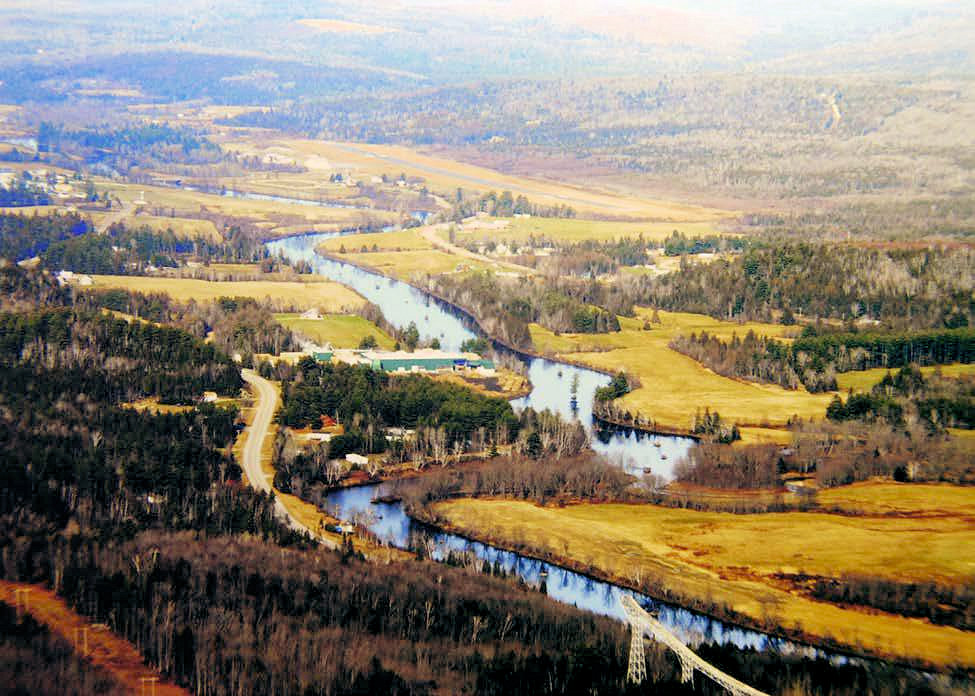
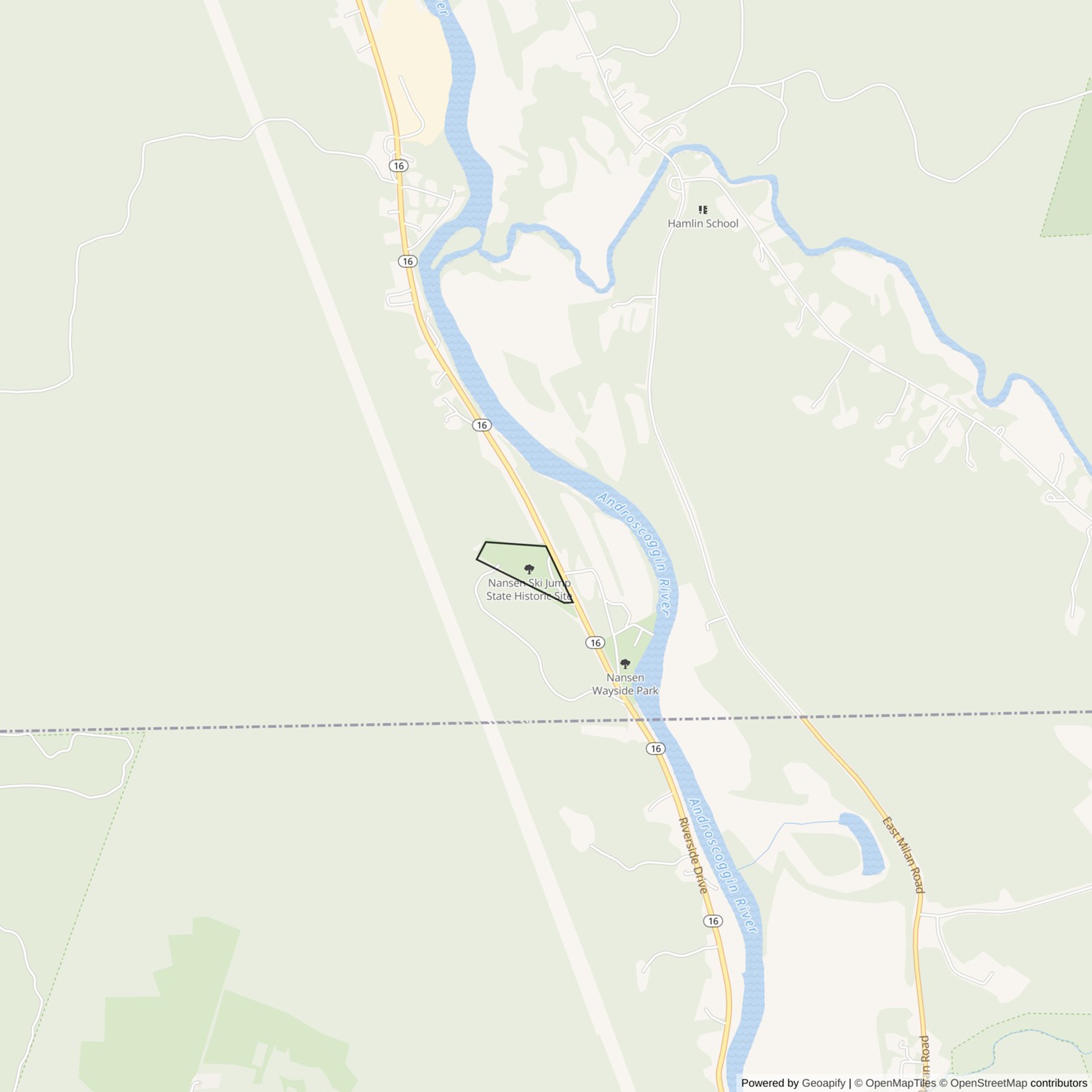
The Nansen Ski Jump is located in the Androscoggin River valley on State Route 16 (Milan Road), in Milan, New Hampshire. At the time of its completion in 1938, the "Big Nansen," as it was often called, was the largest ski jump in the United States, and over the next four decades it was the site of numerous national and international competitions. The Nansen Ski Jump is a structure that consists of a 181-foot-tall steel inrun tower, a natural landing hill, and an outrun. The other structures are a landing hill stairway, a terraced spectator area, and a parking lot. The building is a steel frame and wood judge's hut.The Nansen Ski Jump is on the west side of Route 16, about 0.3 mile north of Milan's border with Berlin, New Hampshire's fourth largest city. The ski jump is owned by the State of New Hampshire and is administered by the Division of Parks and Recreation (DPR) as a historic site within the state park system. The immediate setting is rural in character and consists of large tracts of forest interspersed with cleared agricultural fields along the banks of the Androscoggin River and low-density, linear residential development along the highway. The river, which flows 175 miles from its source at Umbagog Lake in Errol, New Hampshire, to the Merrymeeting Bay estuary in Brunswick, Maine, is the dominant natural feature of the immediate setting and was the source of the transportation and waterpower that fueled the development of Berlin's early lumber and paper-making industries. The undulating topography of the area that rises up from the banks of the river comprises the foothills of surrounding mountain ranges. The top of the Nansen Ski Jump's landing hill, which rises steeply from the west side of Route 16, affords panoramic views of the river valley and the Mahoosuc Mountains to the east and the White Mountains to the south.
Nansen Wayside Park, a separate reservation administered by the DPR that includes a modern picnic area, parking lot, and boat launch, is southeast of the ski jump property, between Route 16 and the river. The 6-acre park parcel was acquired by the State of New Hampshire in 1978 and has no historical associations with the ski jump. North of the park is a privately owned corn field that was once the site of an airplane landing strip. The airfield was used for overflow parking during large events at the ski jump.
Ski Jump Nomenclature
Ski jumps used for sanctioned competitions have three common elements used to describe and rate them in terms of distances that may be achieved: the inrun, landing hill, and outrun. The inrun tower is usually a manufactured ramp (sometimes referred to as an "artificial tower") that has a downward arcing shape and consists of a starting point, an inrun, a transition, and a take-off. The starting point is usually at the top of the tower but may be moved downward if conditions warrant it for safety reasons. From the starting point, skiers enter the inrun, a steeply pitched downward slope where they gather speed, then into the transition (known as the upper transition or R1) where the angle of the inrun shallows out. The transition leads to the take-off where skiers jump and become airborne. The take-off is angled slightly downward so that the skiers are not launched too far above the hill.The landing hill is usually a natural hill where the contours are graded to meet the specifications of the inrun tower and is designed so that the skier is never more than about 10 feet from the ground while airborne. The hill begins with a knoll that leads to the landing zone and then the transition (known as the lower transition or R2) to the outrun. The point where the landing zone meets the transition is the K-point, which is used to determine the size of the jump facility. In the past, jumps were measured by the distance from the take-off to the steepest point of the landing zone. Under the current system, jumps are measured in meters from the lip of the take-off to the K-point and are referred to by their "K-number," e.g., a jump with a K-point of 86 meters would be a K-86 hill. The outrun at the end of the transition is either flat or slightly upturned and of a length sufficient to allow skiers to turn and stop. The starting points on jumps at nationally and internationally sanctioned jumping events are adjusted to ensure that skiers will fly no farther than 10 percent past the K-point to avoid the danger of a skier flying too far and landing on the flat outrun.
Nansen Ski Jump
The Nansen Ski Jump consists of a manufactured steel inrun tower, a landing hill, and an outrun. The original structure was completed in 1938 and most of the original components and materials are still in place. The most significant changes were made during a rehabilitation of the jump in 1962-1963; other subsequent adjustments included the take-off lowered for safety purposes in 1976. The jump was abandoned in the mid-1980s but restoration began in 2017.The inrun tower is perched on the crest of and perpendicular to the landing hill on a northwest-southeast axis. When it was built, the tower was 171 feet tall and had an overall length of approximately 290 feet. The inrun was approximately 260 feet long and had a downward angle of 37.5 degrees at its steepest point. The total vertical drop from the top of the inrun tower to the bottom of the landing hill is 225 feet. The height of the tower was increased by 10 feet in 1963 to accommodate a set of new starting points.
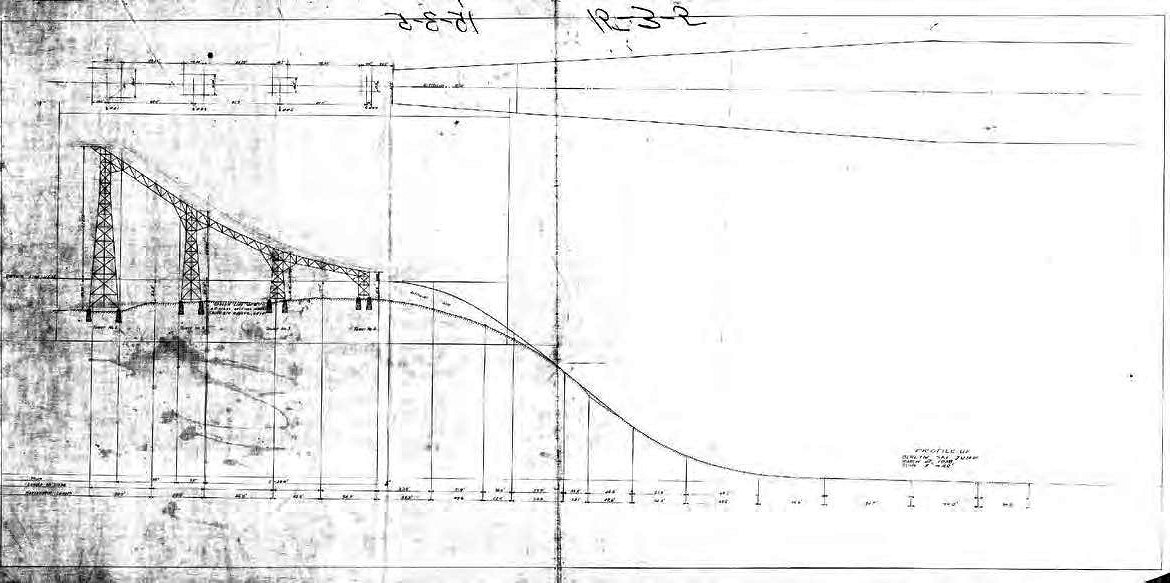
The structural system of the inrun tower consists of four square steel lattice towers that support a steel truss and wood deck superstructure. An as-built plan of the ski jump prepared in 1938 numbers the towers from largest to smallest and provides the following dimensions rounded to the nearest quarter inch:
Tower 1 - 157.25 feet tall with a 28-feet-square base
Tower 2 - 86.5 feet tall with a 19.5-feet-square base
Tower 3 - 45.75 feet tall with a 14.5-feet-square base
Tower 4 - 24 feet tall with a 10-feet-square base
The towers are square and evenly spaced at 83 feet on-center but vary in height and base-width to form the arc of the inrun and provide structural stability. The main supporting members are steel I-beams that form the corners of the towers and are founded on buried monolithic concrete footings. The I-beams taper inward to a point where they reach the outer width of the ramp's substructure and then extend straight upward. L-shaped steel horizontal ties and cross braces are connected by steel bolts to welded girder plates on the I-beams to give the structure lateral stability.
The lattice towers support the substructure of the inrun tower, which consists of four sections of modified Warren trusses. The lower and upper cords of the trusses are made from T-shaped metal beams and are joined by steel L-shaped diagonal braces and vertical steel bars. The upper cords of the middle two sections are curved to create the transition from the inrun to the take-off. The two parallel trusses that make up each section are joined by lateral cross-bracing on the top and bottom. Extra longitudinal support for the substructure is provided by diagonal bracing that extends from the upper portions of the lattice towers. When the height of the tower was increased in 1963, the section that comprises the take-off substructure was lengthened to cantilever the deck beyond the end of the original structure. When that change was made, a wooden structure that extended the take-off to the artificial hill was no longer needed and was removed. Improvements in equipment and techniques that allowed skiers to jump farther forced further adjustments to the Nansen Ski Jump; the most significant occurred in 1976 when the angle of the take-off was lowered in advance of the Bicentennial Jump Meet to decrease the possibility of skiers overflying the landing area.
The deck of the take-off consists of wood planking laid on top of steel I-beams that are connected to the top cords of the trusses. Narrow wood boards are laid on top and perpendicular to the planks at 1-foot intervals to provide a better foundation for holding snow. The I-beams that support the deck are cantilevered approximately 2 feet past the outer faces of the trusses on each side, giving the deck a total width of 14 feet. Vertical steel posts are attached to the ends of the I-beams and serve as the main structural component of a wood plank railing that runs along both sides for the full length of the structure. A thick board stringer laid on end divides the ski deck from a narrow walkway on the northwest side of the deck that skiers use to reach the start at the top of the jump.
From the ground, the walkway is reached via a stairway consisting of steel I-beam stringers and wood steps attached to the easternmost tower. The walkway and stairway leading to the ramp were originally on the southeast side of the jump but were moved to the other side during the 1963 rehabilitation. All the wood materials of the deck, rails, and stairs were replaced in-kind during the most recent rehabilitation of the jump in 2017.
The most significant alteration to the original design of the Nansen Ski Jump was to the landing hill. When the jump was built, the natural topography of the hill sloped downward at too sharp an angle for a safe take off. The solution was to construct a structure (referred to in the original plans as an "artificial hill") to increase the height of the knoll to be nearer to the lip of the take-off and create the proper angle for the landing area. The artificial hill was a trapezoid-shaped structure with a wood deck supported on wood pilings. It was about 160 feet long, 37 feet wide at its top edge nearest the take-off, and 56 feet wide at the point where it met the natural slope of the hill. This wood structure was removed during the 1963 rehabilitation of the jump and replaced with earthen fill that provided the proper contour for the landing hill.
The current landing hill is covered with low vegetation that has grown since the jump was last used in March 2017. The outrun is a relatively flat area covered with maintained grass lawn. The combined distance of the knoll and landing area to the point of transition (R2) is about 280 feet. The transition is about 150 feet long and the outrun extends approximately 200 feet. Originally considered a 65-meter hill, the jump was rated as an 80-meter hill after the 1963 rehabilitation based on the distance between the edge of the jump and the steepest point on the landing hill. The K-point is 82 meters (269 feet) from the edge of the jump; using the current hill measuring system, it would be classified as a K-82 hill.
Judge's Hut
Judging for style points has always been a component of the scoring for competitive ski jumping events and all major jumps have some sort of judge's hut or stand that afforded an unobstructed view of the entire run, including the take-off, flight, and landing where the highest point values were awarded. The original judge's stand for the Nansen Ski Jump was on the artificial hill. The current Judge's Hut was built during the 1963 rehabilitation of the complex and is southeast of the take-off near the brow of the landing hill. It is a two-story rectangular building with a flat roof and a steel frame and wood stud structural system. The building is set on a raised steel I-beam platform connected to I-beam corner posts founded on concrete piers. The exterior walls are clad with novelty siding and modern plywood in areas where the original siding has been removed. The entrance is on the west elevation, but the original door is no longer present. The north side has ribbons of openings, five in the second story and four in the first, that were used for viewing jumps. The east and south elevations were originally blank walls. Some of the siding is missing, creating holes that are contributing to the building's deterioration. The interior has no partitions, and wall studs and floor beams are exposed. An interior stairway used to access the second floor was on the south wall but is no longer in place. The roof was also used for viewing by judges and was reached by a stairway that extended up from the second floor in an enclosed saltbox shed that is no longer in place. The roof has collapsed and there is significant weather damage to the interior.
Landing Hill Stairway
The Landing Hill Stairway was built during the rehabilitation of the complex in 1963 to improve access to the top of the hill for competitors and spectators. It is northeast of the jump, extends about 250 feet from the base to the crest of the hill, and consists of parallel steel I-beam stringers with L-brackets on which the wood plank treads were attached. The stringers are supported by rectangular concrete piers. It originally had 242 steps, but most of the wood treads have been removed. A portion of the stair at the top of the hill has been restored and leads to a platform that provides views of the Androscoggin River valley.
Parking Lot
Because the Nansen Ski Jump was designed to host national and international championships, provisions were made to accommodate large numbers of spectators. Most people came by automobile and parked in an area at the east end of the outrun (the Parking Lot) or in the overflow parking area at the airstrip on the east side of Route 16. Historical accounts suggest that many stayed in their cars to view the jumps and honked their horns when a good jump was made. The Parking Lot within the district consists of an oblong graded dirt driveway and parking area connected at both ends to Route 16. The drive is approximately 700 feet long, is surfaced with crushed stone, and is bordered on the west for most of its length by a wood rail fence.
Spectator Terrace
The best vantage points of the ski jump were around the outrun and on the Spectator Terrace on the south side of the landing hill. The Spectator Terrace consists of three earthen steps carved from the face of a hill that flanked the landing hill and outrun. The elevated steps gave onlookers a close view from the side of the jump of skiers in flight from take-off to landing. The area is now overgrown with vegetation, but the steps are still discernible.
Photographs of Nansen Ski Jump