Built in 1928 and Closed in 1960, World Class Skiers Jumped Here
Ecker Hill Ski Jump, Synderville Utah


- Categories:
- Utah
- Recreation
History of Ecker Hill
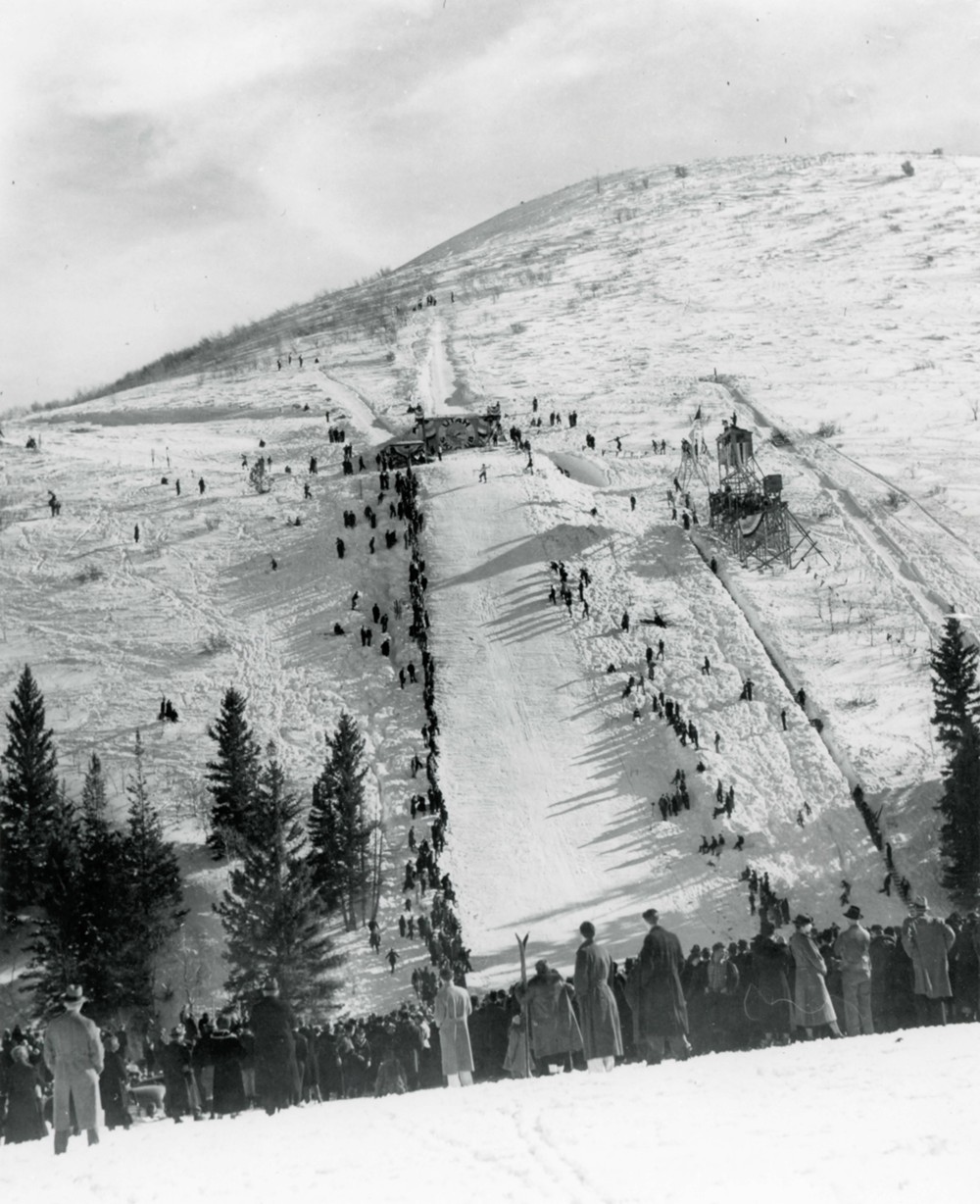
Developed in 1928, the Ecker Hill Ski Jump was one of the premier ski jumping hills in the United States during the 1930s and 1940s and was the first highly successful ski facility in Utah. National meets were held at Ecker Hill regularly during that period, and several world records were established at the hill. It was one of the handful of world-class ski jumps in the U.S. at that time. After hosting the national championships in 1949, Ecker Hill quickly declined in stature as longer, more carefully designed hills were constructed both in the U.S. and in Europe and as downhill skiing began to attract the majority of ski enthusiasts. Ecker Hill continued in ever decreasing use until closing down completely around 1960. Though neither the first nor the only ski jumping hill in Utah, Ecker Hill was certainly the most celebrated and professional facility in the state. Its national and international prominence established Utah as a viable skiing center in the West, and as the first widely known ski facility in Utah it helped launch what has become one of the state's principal industries, skiing.The first ski jumping exhibition in Utah was held in 1916 by a group of amateur skiers belonging to the Norwegian Young Folks Society. The young people in this club were primarily children or grandchildren of Norwegian immigrants, many of whom came to Utah as converts to the Church of Jesus Christ of Latter-day Saints (Mormon or LDS church). Skiing was a popular recreational activity among the Norwegians, and in Utah they found suitable conditions for continuing the sport. Their first ski jumping hills were located on the foothills near Salt Lake City, yet because of unreliable snow depths at those elevations other sites higher in the mountains were sought.
In 1927 the Norwegian-American Athletic Club (NAAC), which included the Norwegian Young Folks Society, was formed in Salt Lake City with the intent of promoting cross-country and ski jumping. Officers of the club were Axel Andresen, Peter Ecker, and Marthinius "Mark" Strand. An offshoot of that group, the Utah Ski Club, was formed soon after with many of the same officers.
One of the organization's first items of business was to investigate the possibility of establishing a jumping facility at Rasmussen's Ranch near Parley's Summit. The Rasmussens, who were Norwegians and skiers themselves, helped construct the jump which was completed by Christmas Day 1928. The first tournament was held at the hill on Washington's Birthday weekend in 1929, and the hill proved to be a very suitable facility. Other events at the hill followed as ski jumping grew in popularity throughout the state. In 1930 the jump at Rasmussen's Ranch was officially named Ecker Hill by Utah Governor George Dern in honor of Peter Ecker, acting president of the Utah Ski Club.
Ecker Hill overshadowed the other major ski jumping hill established in Utah at that time, Becker Hill in Ogden Canyon. Named after Gus Becker, owner of a local brewery and chairman of the Winter Sports Committee in Ogden, Becker Hill debuted in February 1930 as host of Ogden's much celebrated "First Annual National Ski Jumping Tournament." After 1933, however, Becker Hill was no longer used for large scale competitions. Possible reasons for its demise include its less favorable orientation toward the sun, the economic effects of the Depression, the competition from other "snow festival" sites in the West, and, in the words of ski jumper Alf Engen, "Perhaps it wasn't as good as Ecker." A number of smaller jumps geared toward amateurs and juniors were also built a various locations throughout the state during the 1930s and 1940s. None of those, however, received the notoriety achieved by Ecker Hill.
Ecker Hill's national and international reputation grew during the 1930s and 1940s as a records were set and major competitions were staged at the hill. Large crowds of up to 9000 people gathered regularly to observe the competitions at Ecker Hill, and the accomplishments of the skiers received broad coverage in the media. The hill was among the handful of world class ski jumps in the U.S. at that time. Others included Snoqualmie Pass, Washington, Iron Mountain, Michigan, Lake Placid, New York, Big Piney, California, and Sun Valley, Idaho. During the early years at Ecker Hill most of the headlines were garnered by skiers from the Professional Ski Jumpers of America, a fifteen-member group that competed for prize money at various locations throughout the country. Many records set by that group were unofficial since their meets were usually not staged by official sponsoring organizations such as those that sanctioned the amateur events. Most of those professional skiers regained amateur status in time for the 1936 Olympics and thereafter competed for official records.
Alf Engen is perhaps the best known of those early professional jumpers. He jumped world record distances several times during the 1930s, and each year from 1931 to 1935 he was named National Professional Jumping Champion. His top mark at Ecker Hill was a 281-foot record setting jump in 1934. Other world class skiers who jumped at Ecker Hill included two-time Olympic champion from Norway Sigmund Ruud, Sig Ulland, Gordon Wren, Sverre Engen, Art Devlin, 1948 Olympic champion Peter Hugsted, and others.
Some of the major events held at Ecker Hill include the 1932 and 1933 Western Amateur Championships, the 1932 National Championships for professionals, the 1936 U.S. Olympic Team Trials, the 1937 National American Ski Championships, the 1939 Combined Federation Internationale de Ski (F.I.S) tryouts, the 1947 Utah Centennial Ski Jumping Championships, and the 1949 National Jumping Competitions.
After the 1949 National Championships, use of Ecker Hill for ski jumping competitions declined rapidly. Longer, better designed hills were being constructed in both the U.S. and Europe, replacing smaller hills such as Ecker. By the late 1940s skiers were already coming close to landing on the flat at Ecker Hill with jumps of almost 300 feet. Improved ski jumping equipment and techniques rendered the hill obsolete for world class events during the 1950s.
The decline in the popularity of ski jumping as a spectator sport also contributed to Ecker Hill's demise. Ski enthusiasts who had previously been content to simply watch ski jumping were now more interested in the participatory sport of downhill skiing. Local resorts such as Brighton, Alta, and Park City began their rapid growth during the 1950s and 1960s. Ecker Hill was last used around 1960.
The success of Ecker Hill marked the first major stride toward national recognition of Utah's skiing resources and pointed the way toward the emergence of skiing as a major industry in the state. "Mark" Strand, a Utah Ski Association official and later First Vice President of the National Ski Association, had the vision of the potential role of skiing in the state as early as the 1930s: "Oh, if the people could see it as I do, that here within our grasp lies Utah's hope for future recognition as the nation's most outstanding center for winter sports. Salt Lake City could become a byword in the world, and a source of wealth yet untouched." The success of Utah's ski industry over the past two or three decades is testimony to the accuracy of Strand's vision. Though not necessarily "the most outstanding center for winter sports" in the U.S., Utah has become well known for its skiing. The ski industry currently accounts for approximately 30 percent of the 1.3 billion dollars spent annually by tourists in Utah.
Property Description
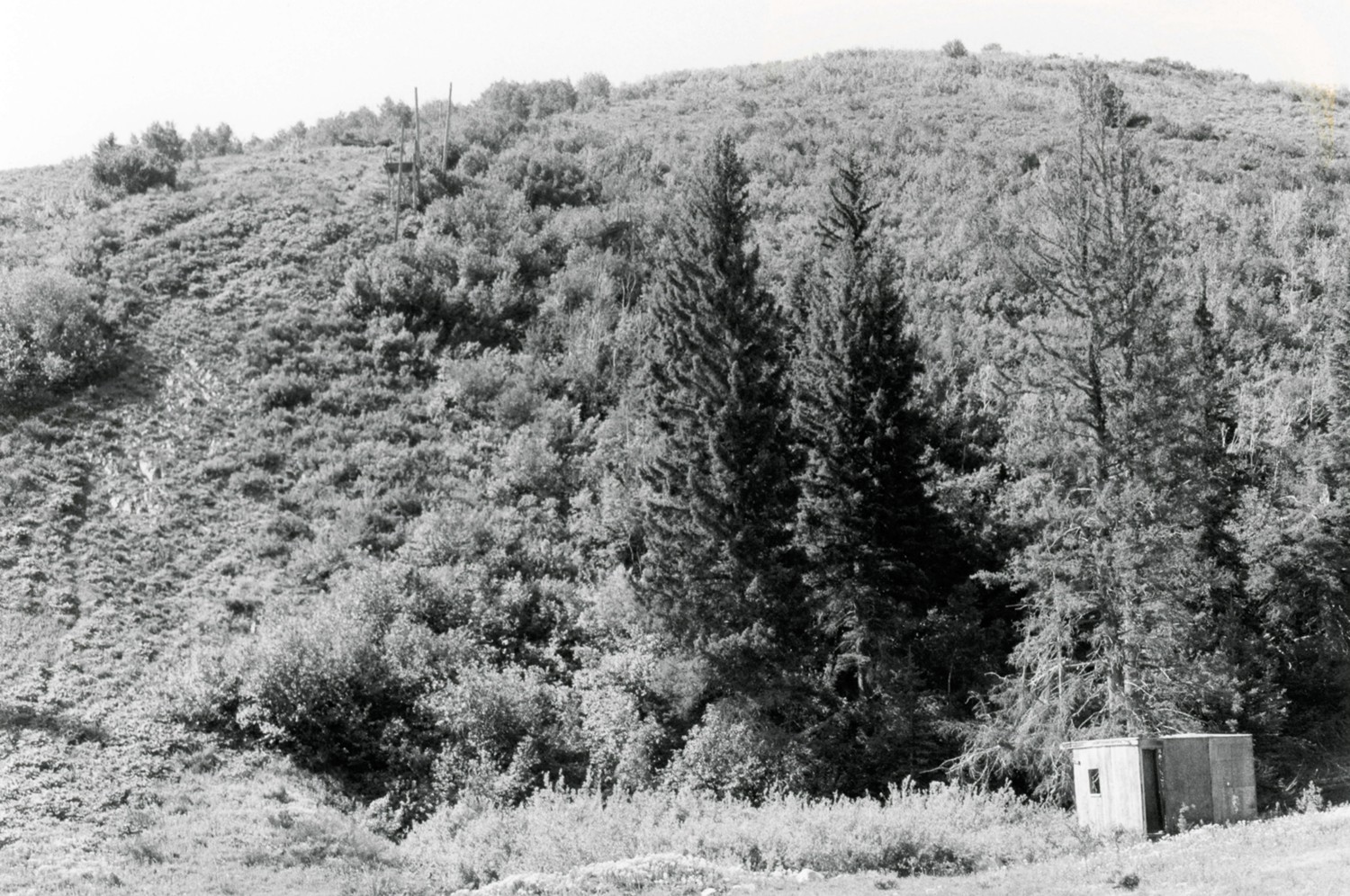
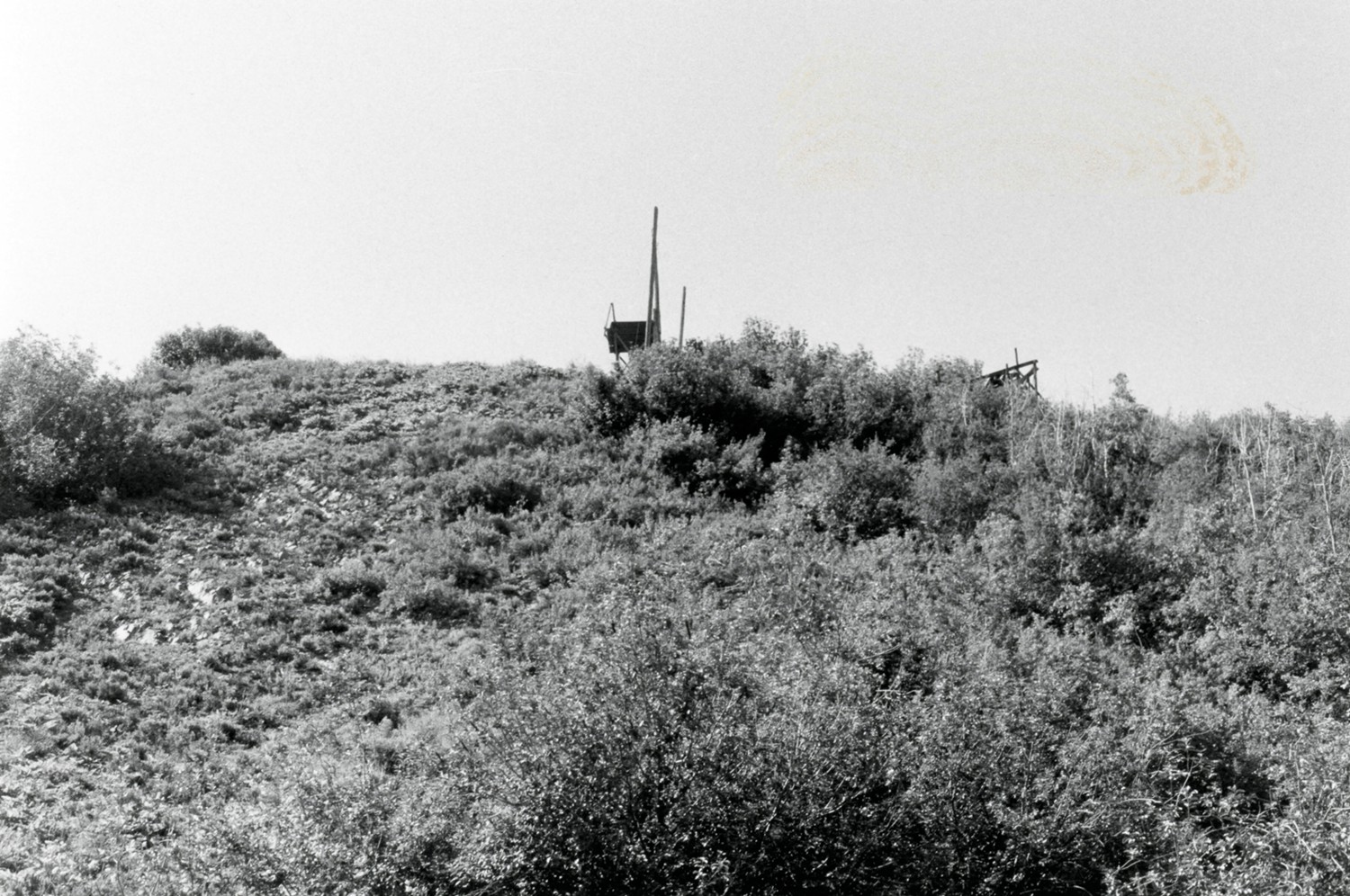
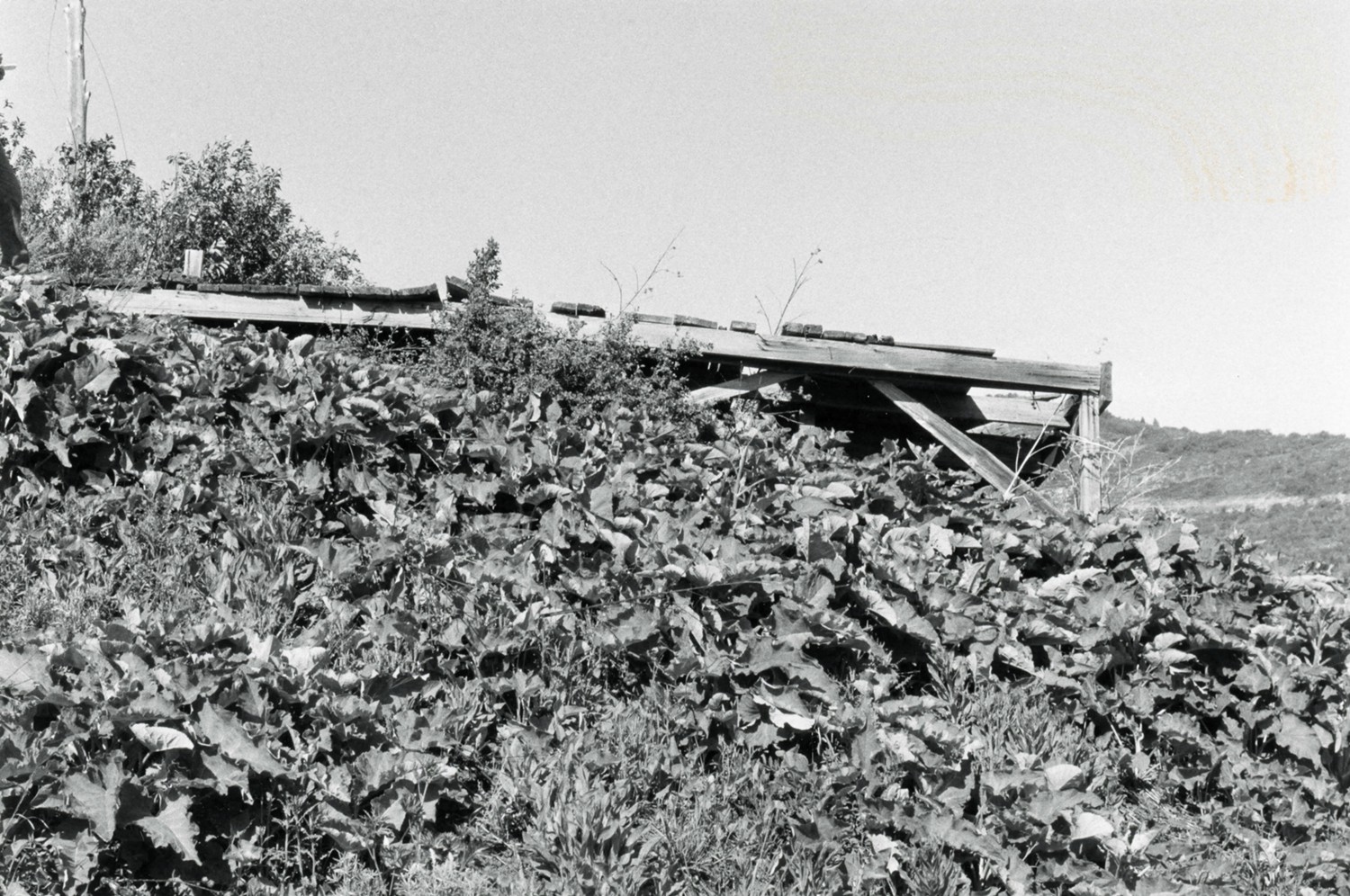
The Ecker Hill Ski Jump consists of an approximately 300 foot hillside that was first groomed for jumping in 1928, a dilapidated wooden takeoff ramp, extremely deteriorated remnants of a judging or observation stand and of a wooden stairway that ascends the hill, a frame shed at the base of the hill (c. 1950?), and a small wooden judging stand that was probably built in the 1950s or later. Despite the deteriorated condition of those structures, the site retains its integrity because its principal feature, the hill itself, is still discernible as a ski jumping site.The hill faces north-northwest and consists of three main segments, the 300-500 foot runway or approach at the top, the 300 foot hill, and a coasting apron of approximately 200 feet at the bottom (dimensions are in linear feet). The bottom of the hill is at an elevation of approximately 6460 feet and the top is at about the 6830 foot level. The most visually distinctive feature of the hill is the takeoff located at the juncture of the approach and the jumping hill where the slope steepens. It consists of an artificially formed earthen mound capped with a wooden takeoff ramp. Historically there were two ramps on the hill, a large "professional" ramp and a smaller "amateur" ramp. The existing ramp more closely resembles the smaller of the two, though it is probably not the original since the ramps were moved and modified repeatedly during the years of operation.
Also visible on the hill are the areas adjacent to the takeoff where dirt was removed for use in building up the takeoff and slope. Modifications and improvements were made on the hill throughout its three decades of operation. The last major grooming of the hill probably took place in 1946 in preparation for the National Championships held there in 1949. The hill has not been used as a ski jump since the 1960s.
Utah State Historical Society
Photographs of Ecker Hill Ski Jump