Established in 1936, this Local Ski Slop Feature a Rope Tow and Ice Arena
Abenaki Ski Area Wolfeboro, New Hampshire


- Categories:
- New Hampshire
- Recreation
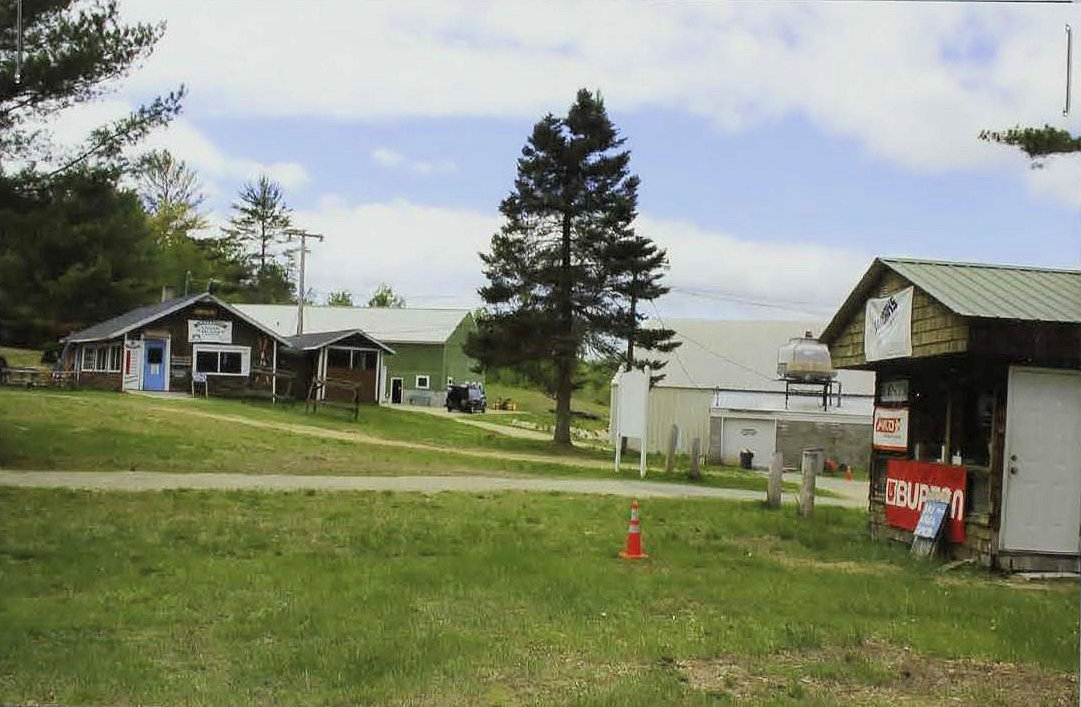
The Abenaki Outing Club was formed in 1936 during a key period of development in the ski industry in New Hampshire. The club created 2 trails in early 1936, and began a trend of periodic expansion and alterations by 1938. In 1940 the extant ski lodge was constructed. Additional ski-related features and events were added following the end of WW II through the 1970s. By the 1990s the ski area was open only sporadically, however in 2005 the Friends of Abenaki group was formed to help reinvigorate the ski area. The facility is currently a town-owned area.
The development of the Abenaki Ski Area is representative of a trend in the history of the skiing industry in the State of New Hampshire. Abenaki Ski Area opened in 1936, at a time when ski areas were developing across the New Hampshire Landscape. These small areas expanded rapidly after World War I, with the introduction of the automotive age, the development of the modern vacation, and the concept of spending more time doing leisure activities.
The first ski club in New Hampshire was founded in 1872 in Norway Village, just north of Berlin. This club was called the Berlin Mills Ski Club, changed its name to the Fridtjof Nansen Ski Club, and the Nansen Club in 1912. The focus of the club was on cross country style skiing and jumping. By 1906, the Berlin Carnival had begun with ski jumps on Paine's Meadow. A major ski jumping structure was created in 1921 and enlarged in 1927. In 1936, the National Youth Administration built a new jump for the Nansen Club.
Concurrently, in 1909 Dartmouth underclassmen Field Harris (class of 1911) proposed a ski and snowshoe club be formed in Hanover in order to "promote skiing as a sport and pastime. By 1920 about two-thirds of the student body belonged to the Dartmouth Outing Club.
Skiing really took off in the state between the 1930s and World War II, as the sport entered a new era of popularity and mechanization. On January 11th, 1931, the Boston & Maine Railroad put into operation a "Snow Train" to bring winter tourists to the various Ski Areas in New Hampshire. The train started in Boston's North Station and ran to Warner, NH. The Civilian Conservation Corps created trails on which to hold cross-country races. The first in New Hampshire was the Richard Taft Trail on Cannon Mountain in 1933. The "effeminate tow" era began in 1932 in Stambridge, Quebec. This system was more or less copied the following season in Woodstock, VT and a rope tow was installed at Gunstock, NH in February 1935. By the winter of 1935, New Hampshire alone had twenty ski areas with sixty-five miles of ski trails, twelve of them new that year.
On February 4th, 1936, Abenaki Outing Club was formed to "stimulate interest in outdoor sports." The club had 87 charter members from Wolfeboro and Tuftonboro who wanted to promote winter sports in the area and were convinced alpine skiing would draw winter tourists. Ralph G. Carpenter was elected president, Harold Harvey vice president, Norman Davis secretary and Edgar Tetherly treasurer. They started creating and cutting their first trails on Poor Farm Hill in the winter of 1936, after the club earned three first place awards at the Alton Winter Carnival. Each of these trails was about 4 miles long. One was created to be straight and gentle, and the other was fast with curves. A small ski jump and toboggan slide were also planned at this time.
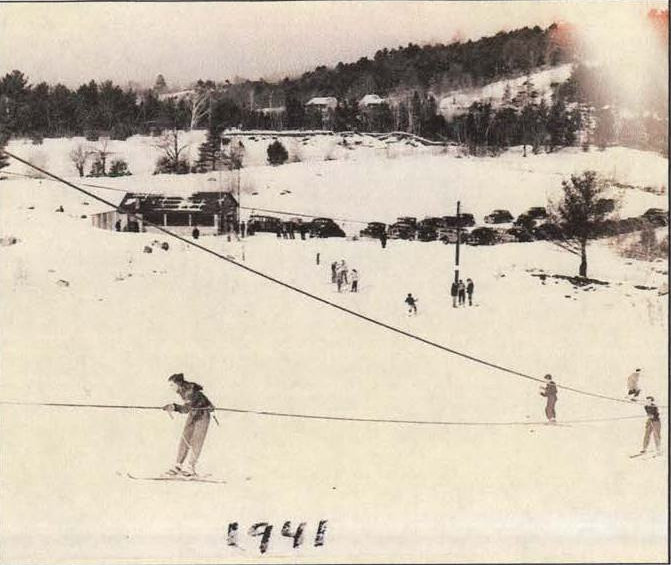
Rowland Peabody, a guest speaker from Franconia at the autumn 1936 meeting of the Wolfeboro Development Association, related that only six years earlier there were just a couple of skiers in the White Mountains, and now it had become a major business. In January 1938, the skiing facilities on Poor Farm Hill were expanded. A new ski slope was constructed for the 1939-1940 season with an 800 foot rope tow powered by a tractor which had been supplied by Elbridge Robie.
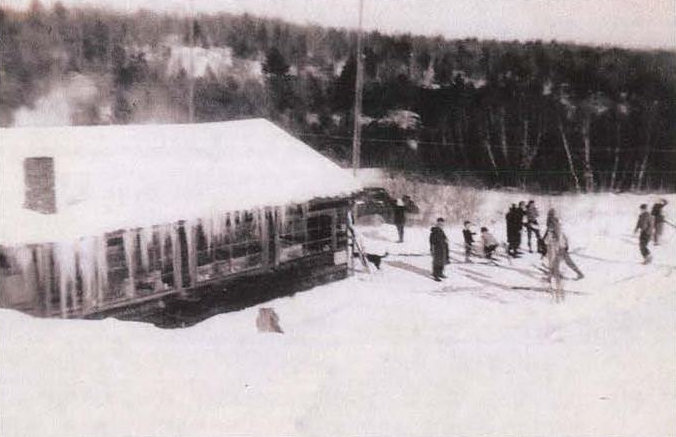
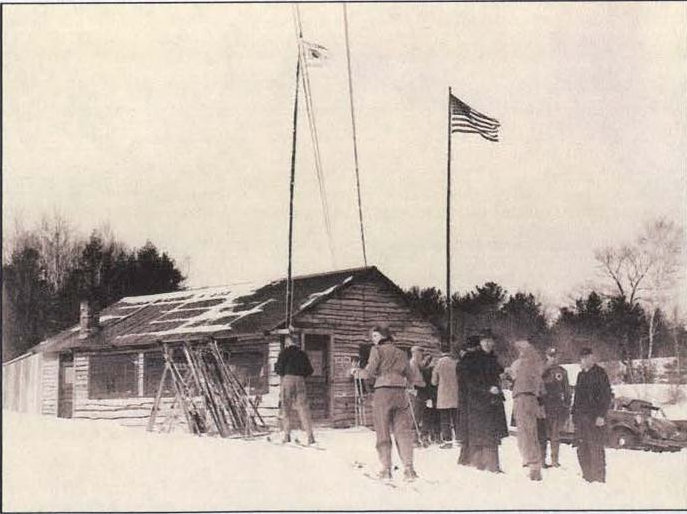
October 5th, 1940 the Abenaki Outing Club changed its name to the Wolfeboro Abenaki Outing Club. Also in the fall of 1940, a ski lodge was constructed at the base of the hill from materials salvaged from the razing of the Ann Inn. The building was to be used for warmth and refreshment and was dedicated on December 20th, 1940. In a speech at the building dedication, Robert Kimball, vice president "said the objective for the coming year was to make the ski slope presentable to the public and to encourage the public to use it. He stated that the Town gave $500; that the ski tow was constructed by Elbridge Robie, and the lodge through the cooperation of many people; that the Municipal Electric Department stood half the expense for the construction for lighting the slope; and that the corresponding secretary had written hundreds of letters, to let people outside Wolfeboro know what the club was doing, and to obtain their cooperation."
The Abenaki Outing Club was extremely quiet during World War II. Many services were closed down and the rope tow was not put back into service until the first week of January 1946. At this time an old Buick automobile motor was used to haul skiers uphill. As the war ended, business picked up with skiers from southern New Hampshire and New England coming specifically for winter skiing. Lights for night skiing had been erected before the war and in the fall of 1946, plans were made to enlarge the slope by clearing a new novice practice area on the south side of the rope tow (the tow was later switched to its present position). Downhill and slalom races were held, attracting racers from all over New England.
Abenaki continued to be extremely popular through the 1950s. In the 1960s, Brewster Academy and Kingswood Regional High School's ski teams practiced and held races at Abenaki. The rope tow was extended further up the hill and the trails on either side of the slope were widened.
The Wolfeboro Parks & Playgrounds Commission took control of the ski area, but the land was still held by the Hersey Family until March 29th, 1978, when the property was sold to the Town of Wolfeboro. The Caroll F. Hersey Memorial Ski Jump was built in 1970 and used by the Kingswood Ski Team in the 1970s and 1980s. Later in the 1980s, the structure fell into disuse and it is presently taken over by new growth saplings.
Through the 1990s, Abenaki Ski area was open only sporadically and had problems with aging equipment, such as an old Tucker Snowcat. The cross country ski trails were consistently used, however.
In 2005, the Friends of Abenaki formed to help restore the ski area to its former position as a winter recreation destination for the residents of Wolfeboro and Tuftonboro. In 2006-2007, a used tow was purchased for the novice slope. In 2009, the town installed a permanent snowmaking system up on the hill.
Property Description
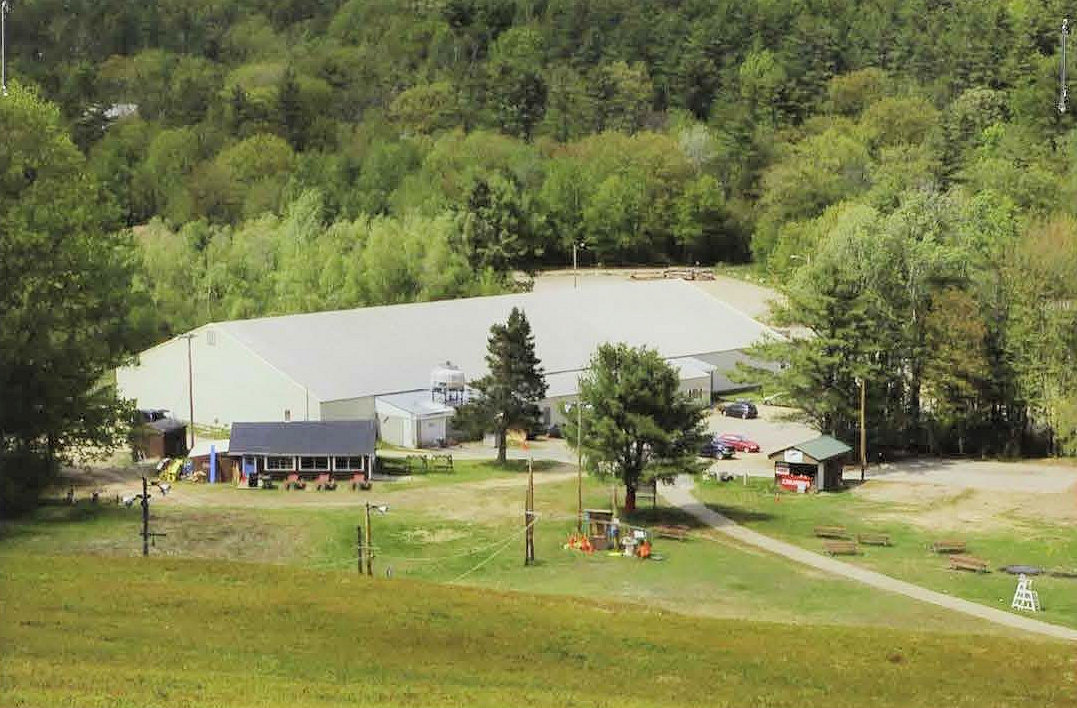
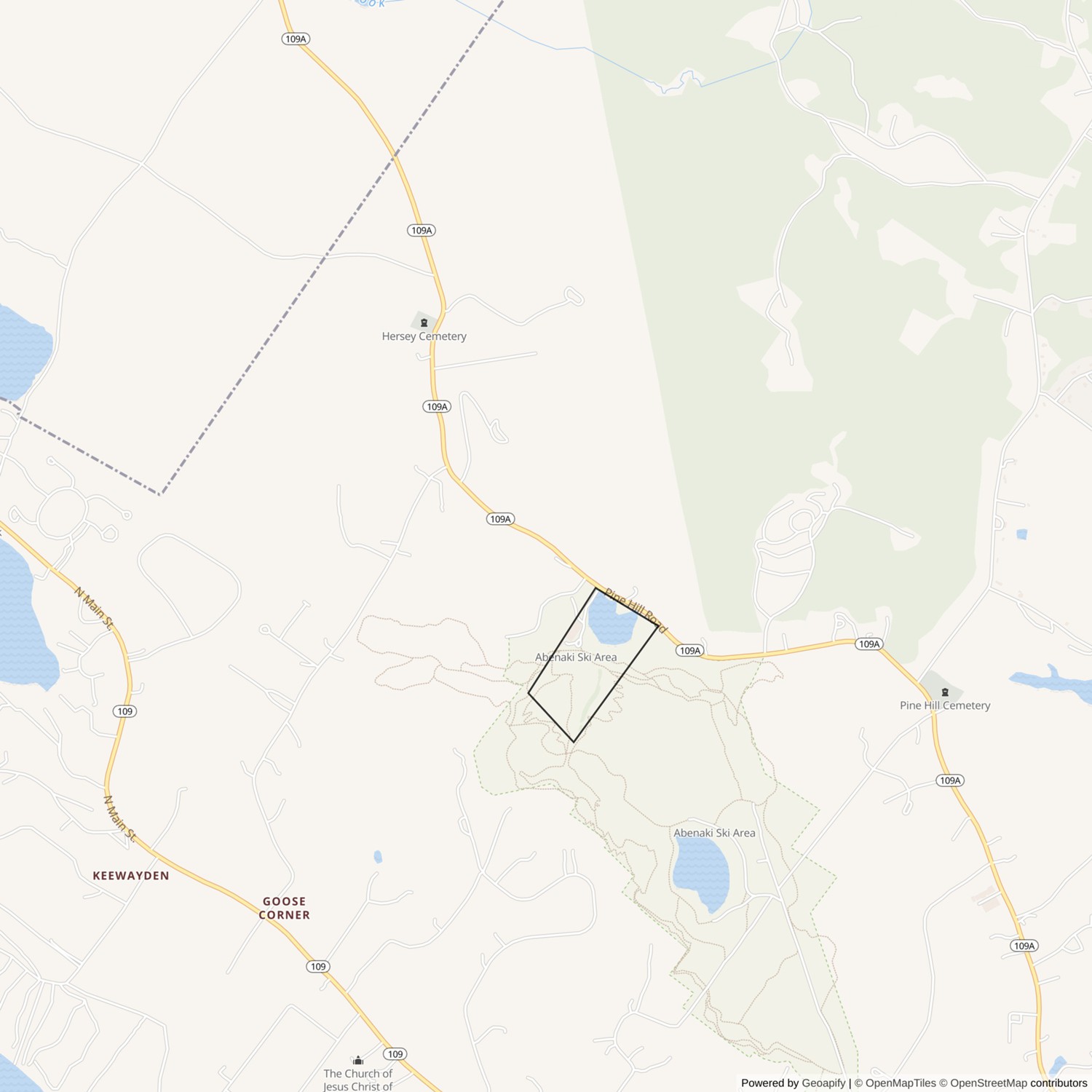
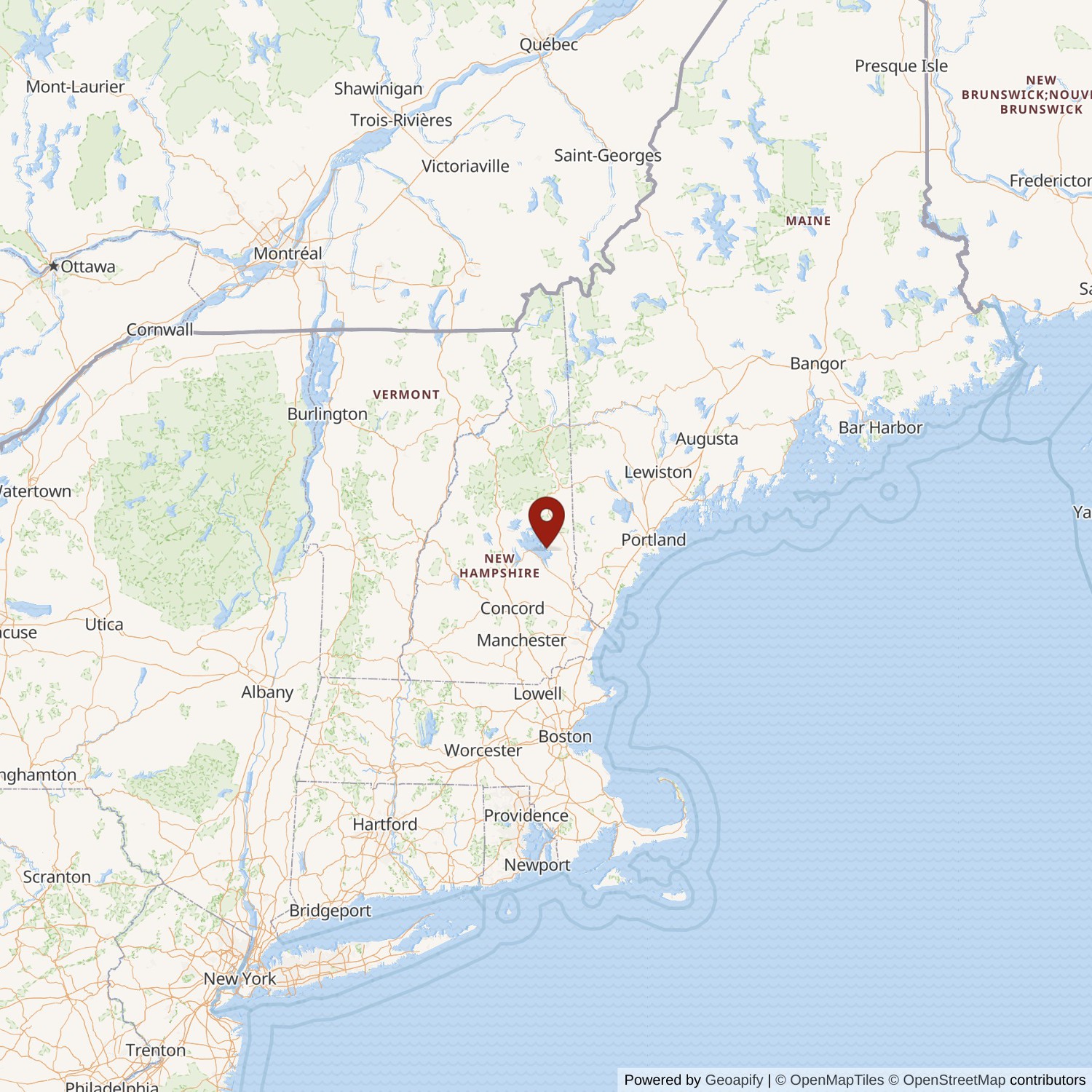
Abenaki Ski Area is located on the south side of NH Route 109A in the town of Wolfeboro in Carroll County, New Hampshire. The site is approximately 1.5 miles north of Lake Winnipesaukee and between Tuftonboro center and Wolfeboro town center. The surrounding area is rural residential/agricultural. The ski area occupies approximately 40.1 acres and is located adjacent to an unnamed pond. The Town of Wolfeboro owns land to either side of the ski area and has municipal highway sheds to the west, and water treatment facilities to the south and east.Abenaki Ski area is located off of a small access road on the south side of NH Route 109A (also known as Pine Hill Road). The ski area is a complex of many small outbuildings located just southeast of a large ice arena. The complex spreads up the north side of Poor Farm Hill.
Since it was started in 1936, Abenaki Ski Area has been in a near constant state of upgrades to buildings and machinery. As a result, the exact dates of many structures are unknown and very few character-defining historic features remain.
The majority of structures at the Abenaki Ski Area are located at the base of Poor Farm Hill, clustered loosely around the original lodge building. The Ski Area has always been operated by the Town of Wolfeboro, offering affordable rates to local residents. As a result, the operations budget has been somewhat marginal without major building campaigns until recent years. The buildings have evolved organically, spreading out from the lodge as a need arose and as materials became available. As a result, the organization of these buildings does not appear to follow any plan. Because many of the structures were moved to the site from elsewhere, there are no common building materials or styles that link them together.
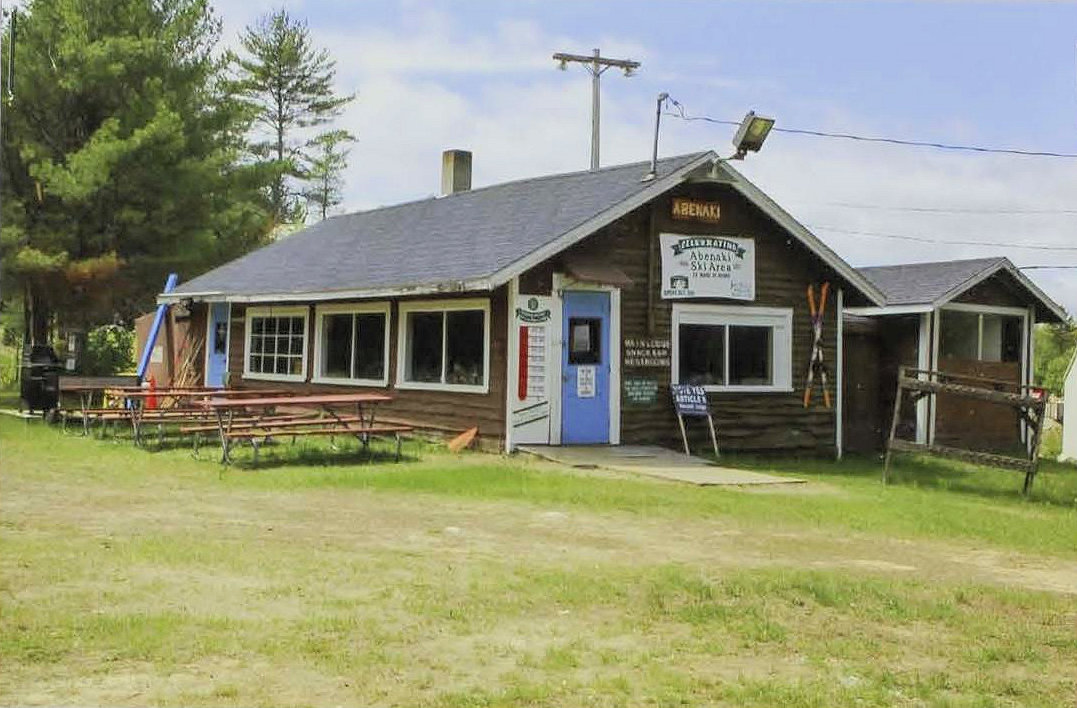
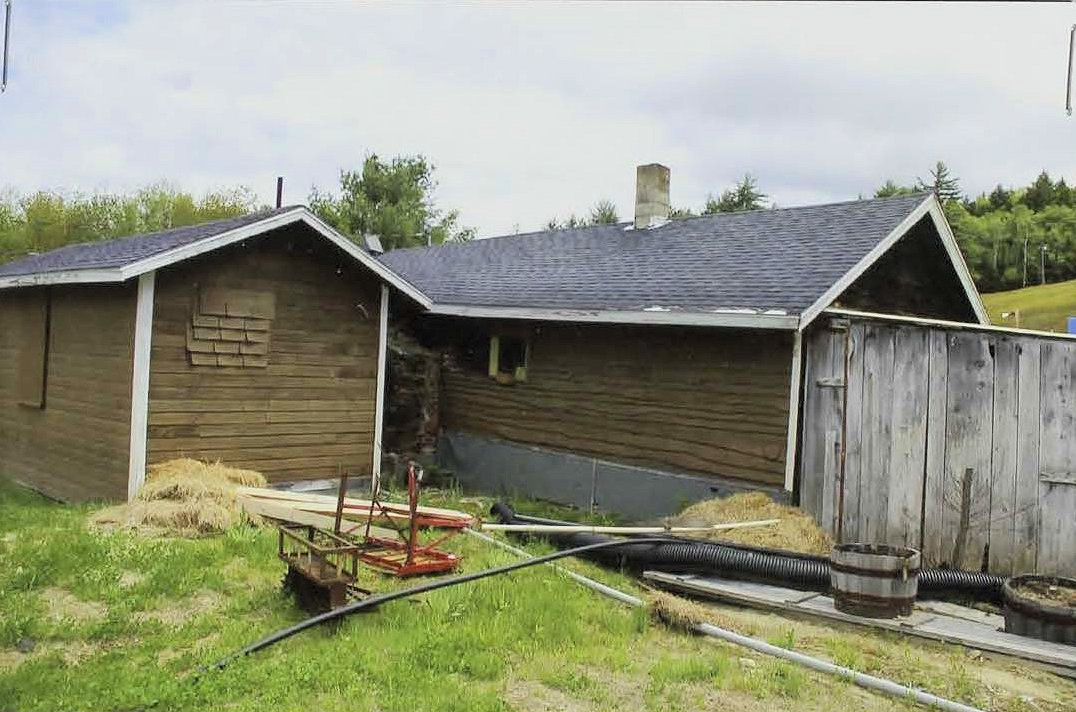
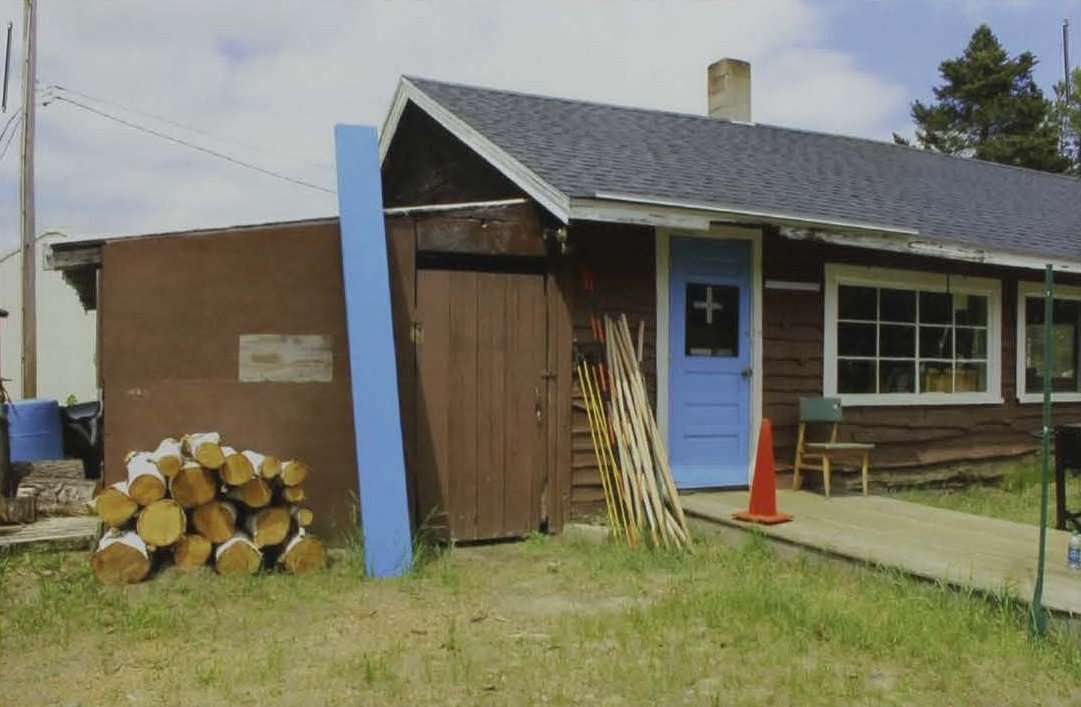
The Lodge is the oldest structure to survive at the Abenaki Ski Area. It was constructed in 1940. The single-story building has gable roof oriented roughly east/west with the longitudinal side of the structure facing the slope. The roof is sheathed in asphalt shingles and the wails are clad in rustic siding that has been painted. The roof overhangs on all sides of the building and rafters are enclosed with very narrow fascia boards. There is a modern-era cinderblock chimney at the center of the ridge and the remains of an historic brick chimney at the center of the north side. The brick chimney The foundation is not visible and is below modern grade. The cornerboards are very narrow and the window trim is flat and narrow. Most of the windows are composed of paired fixed panes. One of the original 12 lite fixed windows remains at the southwest corner of the structure. The muntins profile on this window is very plain and typical for the 1940s. The main entrance is located at the southwest corner of the building, below an aluminum awning. The door is composed of four wood panels and a large lite. The bottom of the door is covered with a sheet of plywood. A matching door is located at the southeast corner of the building. A wooden ramp leads to the main entrance. A wooden deck has been constructed off of the southwest corner of the structure, directly outside of the door.
A modern woodshed has been added to the east end of the lodge. This structure has a metal shed roof and plank door. The walls on the south side are plywood, those on the east are metal, and those on the north are composed of unpainted vertical planks. The gable end of the lodge, above the shed roof appears to be the original unpainted surface.
An ell off of the northeast corner of the Lodge connects to a small 1 x 1 bay structure. This structure was moved to the location and may have once served as a garage. There is a large opening at the cast end of this structure, which was once the garage door. A sheet of plywood blocks the bottom of the doorway, below a fixed Plexiglas window. The roof of the addition is gable and covered in asphalt shingles. The structure is sheathed in novelty siding. A small window at the east end has been covered over with sheets of cardboard.
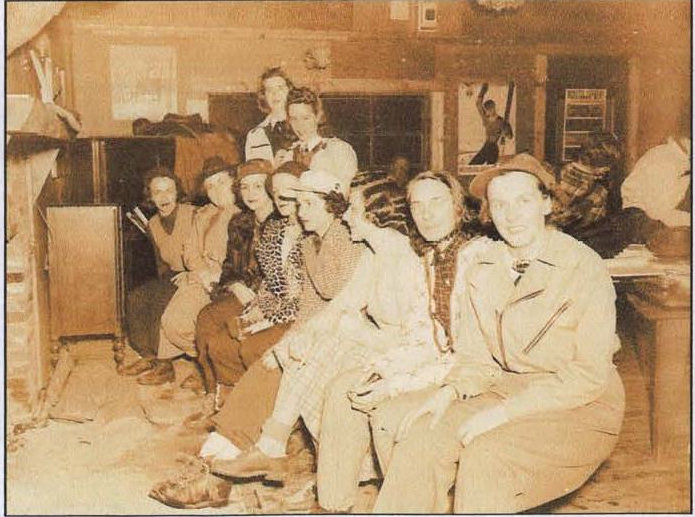
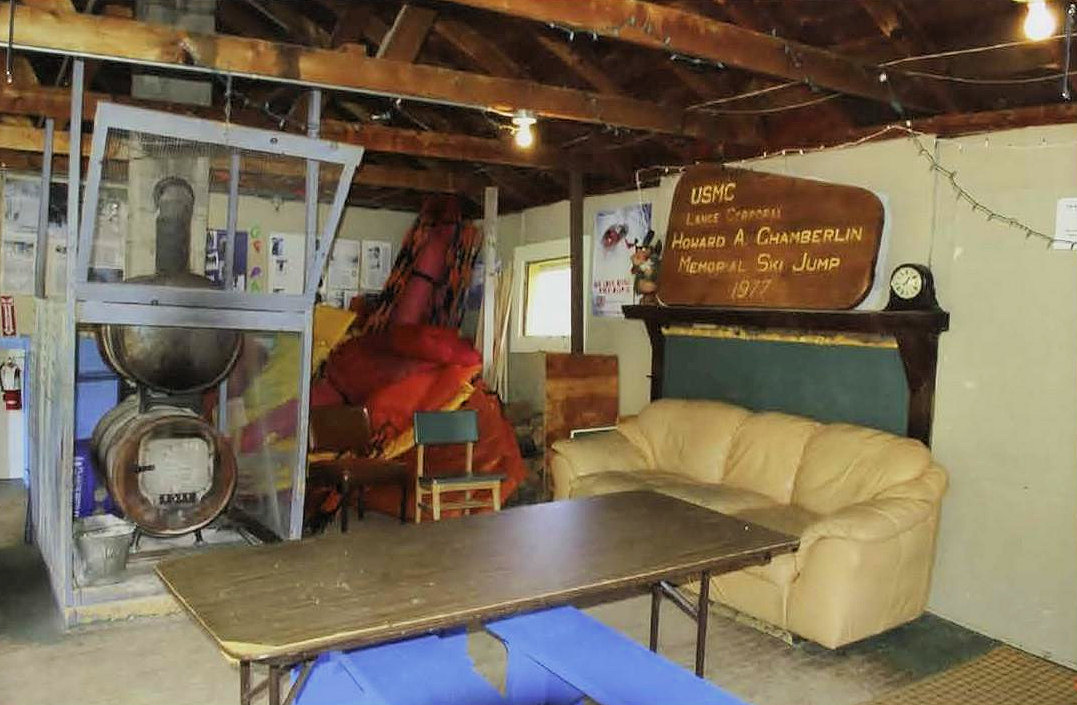
The interior of the lodge has been split into three spaces with a large room occupying ¾ of the space, a small room at the northwest corner and a tiny hallway inside the secondary door. The main room is open with exposed rafters. The floor is narrow wood and the walls are sheathed in a combination of fiber and gypsum boards. There is a large stove in a cage at the center of the room that is made from two recycled oil drums. Very little of the historic interior survives. The fireplace has been covered over and sealed, but the wooden mantel survives.
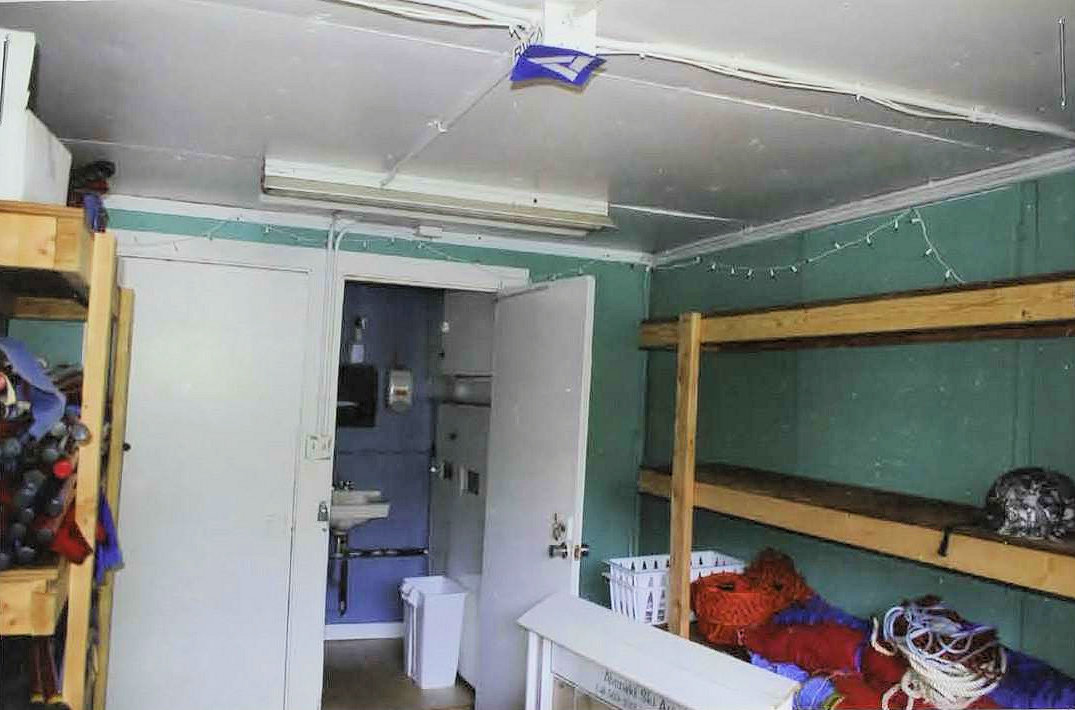
The interior of the former garage building has been converted to storage with a very small bathroom at the east end (inside the cardboard sheathed window). The interior walls are fiberboard and the bathroom door is a modern hollow-core unit. Some of the wiring for the original garage door remains at the center of the ceiling.
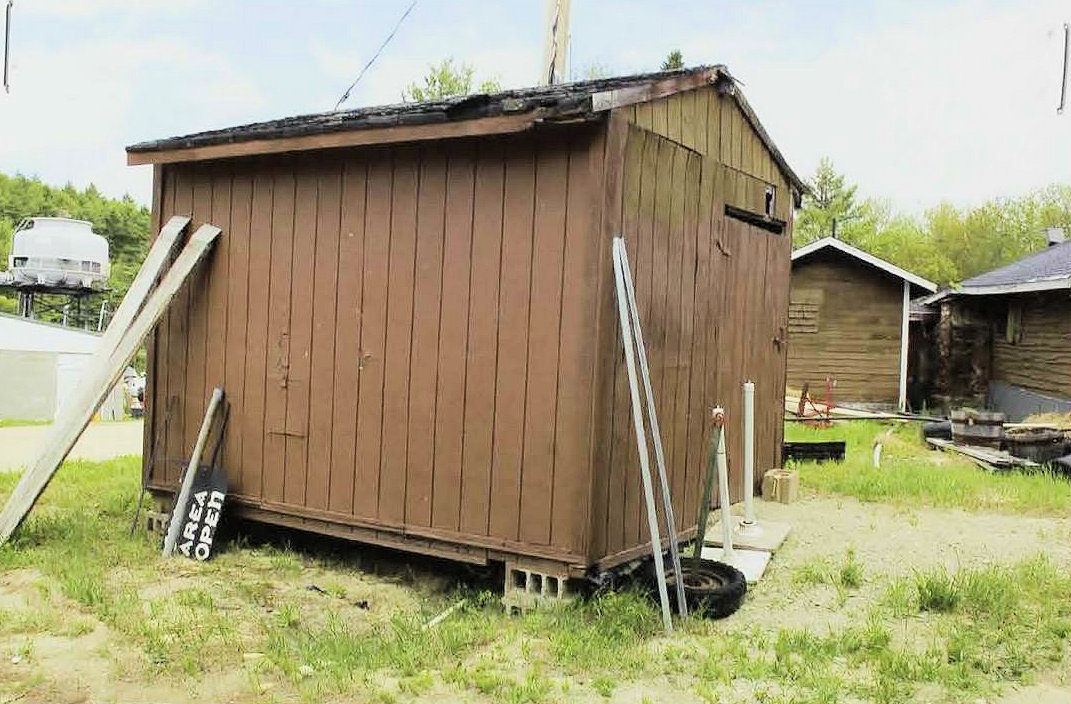
Behind the lodge is a modern shed. This single-story structure is 1x1 bay with T-111 siding and asphalt shingle roof.
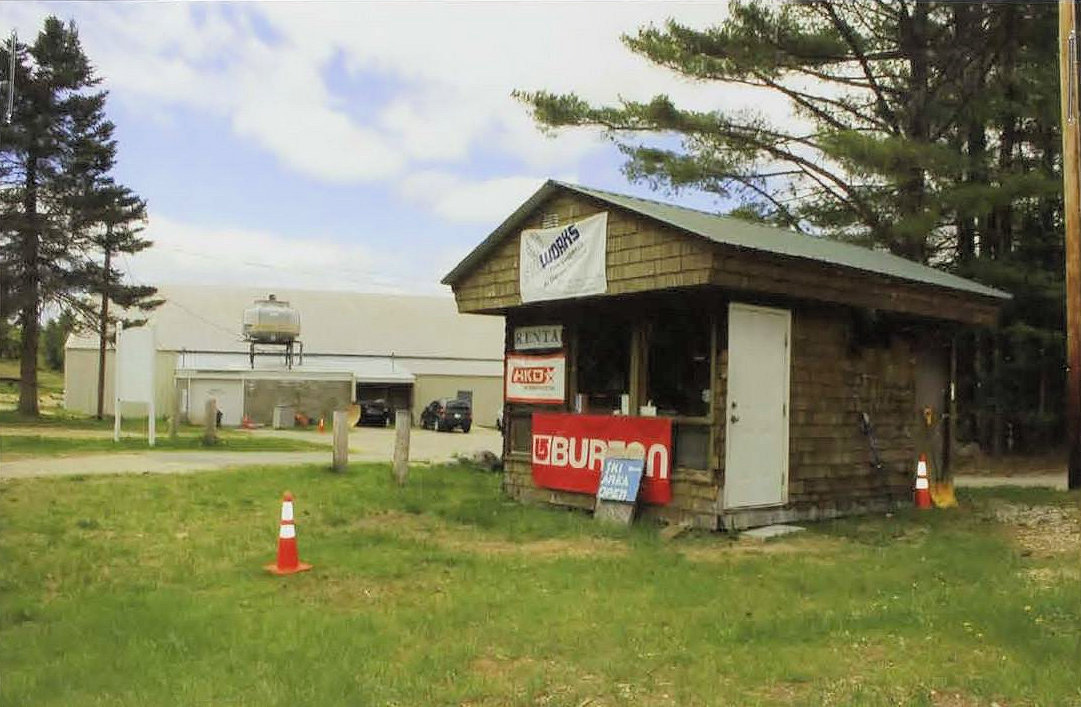
Across from the Lodge, to the cast, is the ski rental building. This structure was also donated and moved to the site. It has a standing-seam metal gable roof and shingle siding that is in extreme need of repair. Large windows occupy the south side, facing the ski slope. This building was most likely constructed ca. 1980.
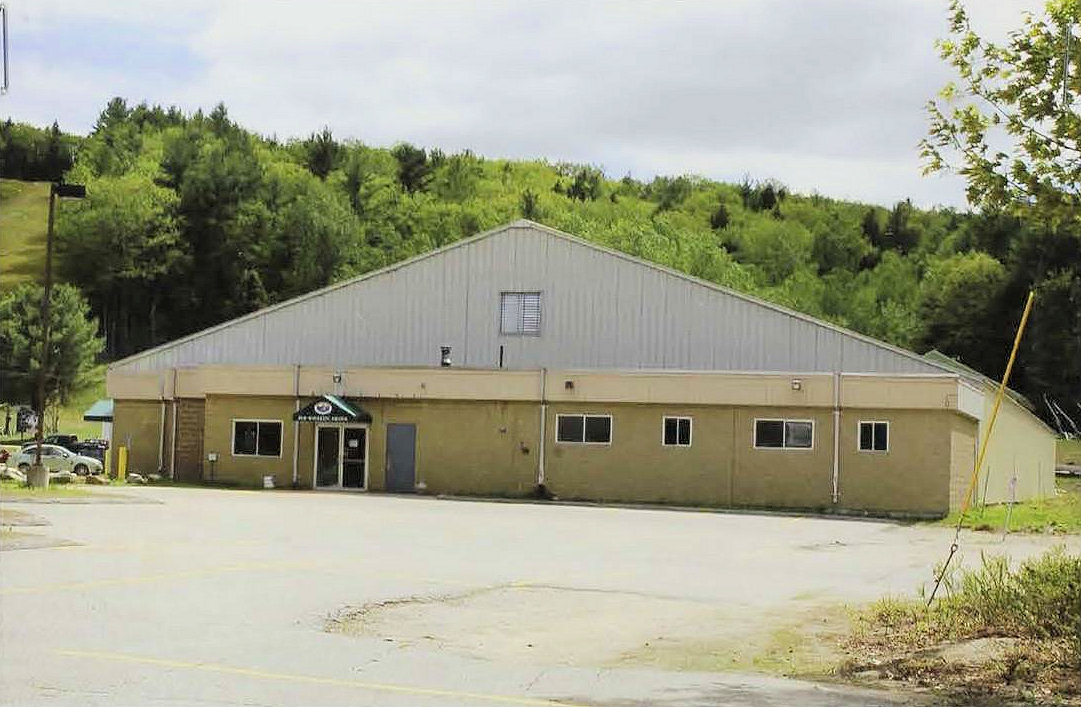
In 1986, the Town of Wolfeboro added an Ice Arena to the site. The ice arena is located to the north of the lodge.
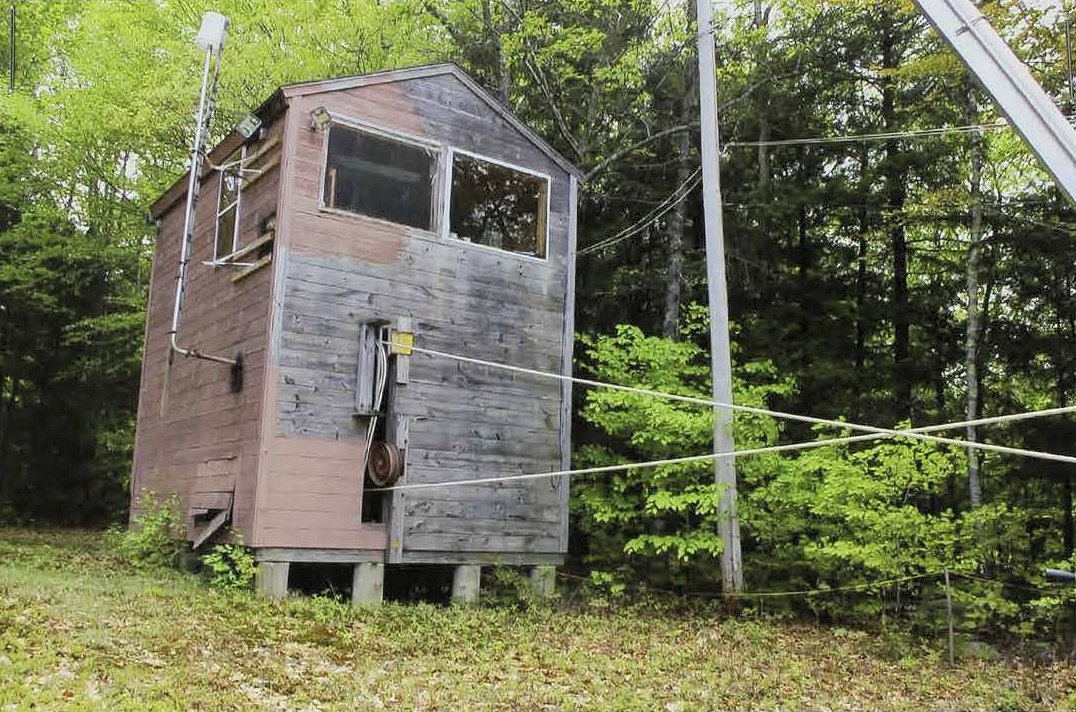
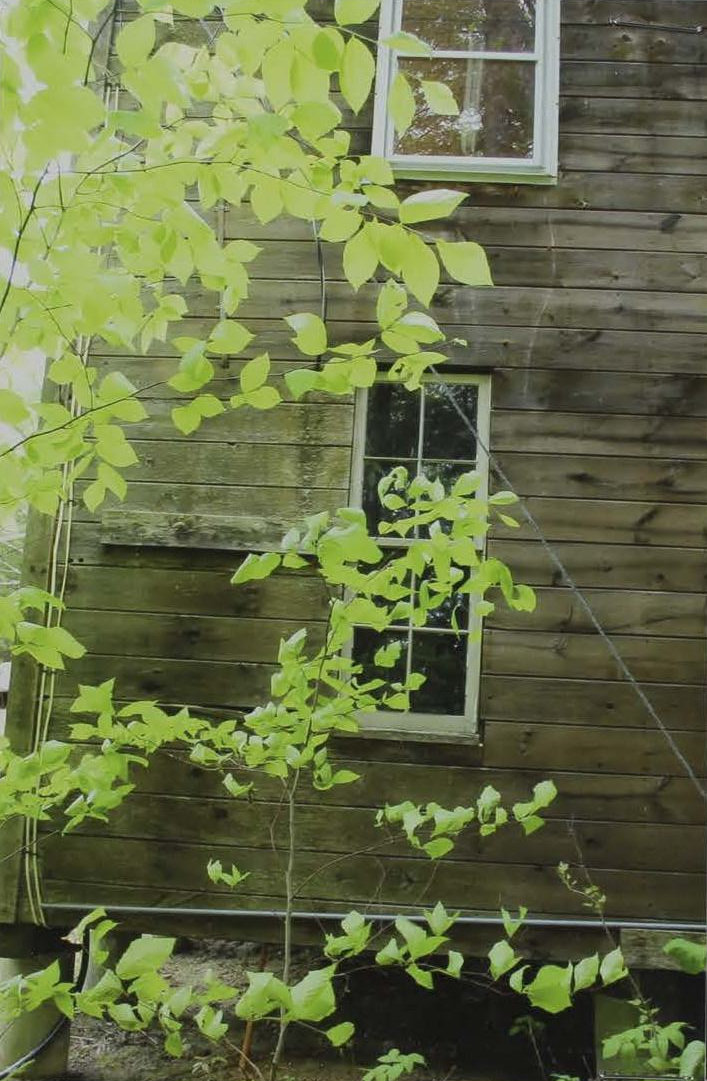
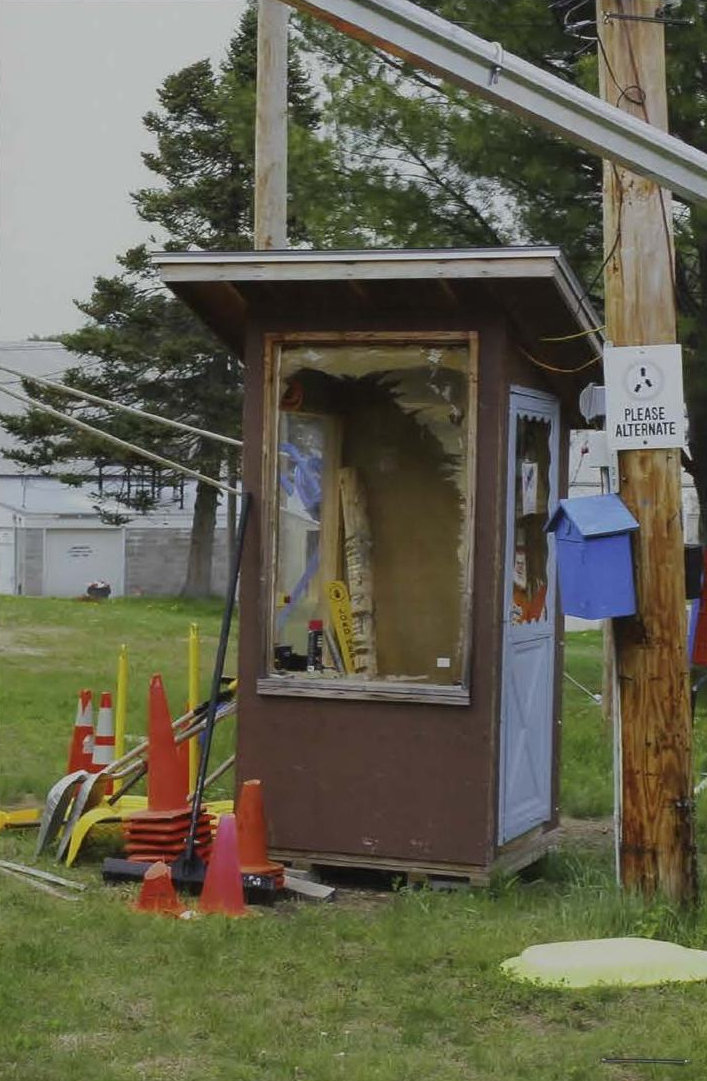
The Rope Tow and Associated Buildings are located to the south and east of the lodge. The small shack at the bottom of the rope tow and the tow itself are not historic. The building at the top of the hill may have been constructed ca. 1960, when the rope tow was extended in length. This two-story building has gable end facing north, parallel to the ski slope. This building has novelty siding and sits atop poured concrete piers. The structure is plain with narrow corner boards and almost no roof overhang. The majority of the structures windows are aluminum replacements that are either fixed or 1/1 double-hung sash. An historic window is located in the east side of the structure and is 4/4. A double door is located at the south side of the building and there is a small shed addition off of the southwest corner. A narrow vertical opening in the north side of the structure allows space for the rope tow itself. The engine that runs the rope tow (a truck engine at present date) is located just inside this opening.
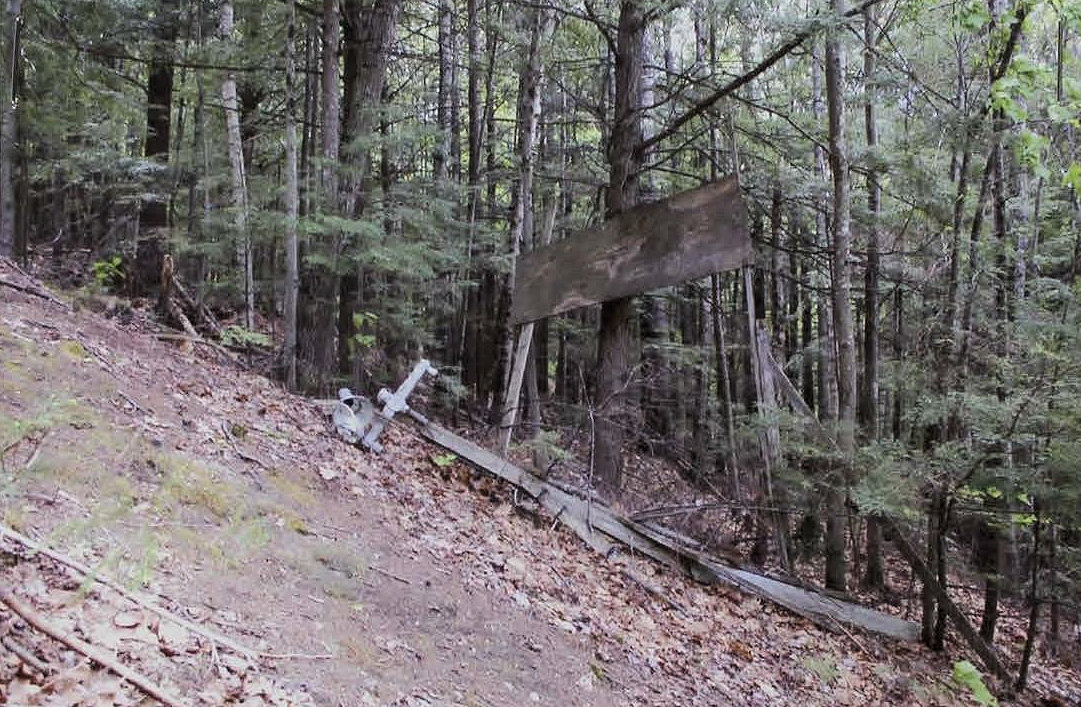
The remains of the 1970 Ski Jump are located in the woods to the southwest of the Lodge Building. All that remains of this jump is the extremely steep slope, a level spot at the landing, a small hill at the top (with stairs), and the remains of a sign and light near the landing.
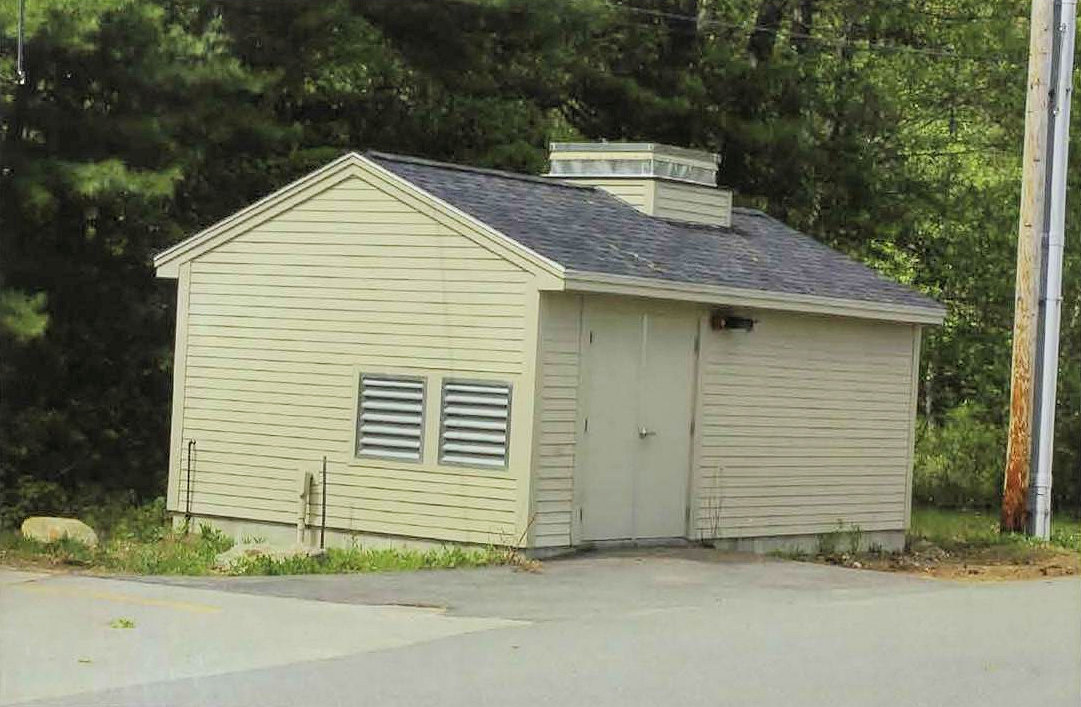
Another structure on the property is the ca. 2007 Pump House. This modern structure is located next to the pond and was constructed to pump water up the hill for the snowmaking equipment that was installed ca. 2006-2007. The building has a gable roof, and synthetic wood siding.
Photographs of Abenaki Ski Area