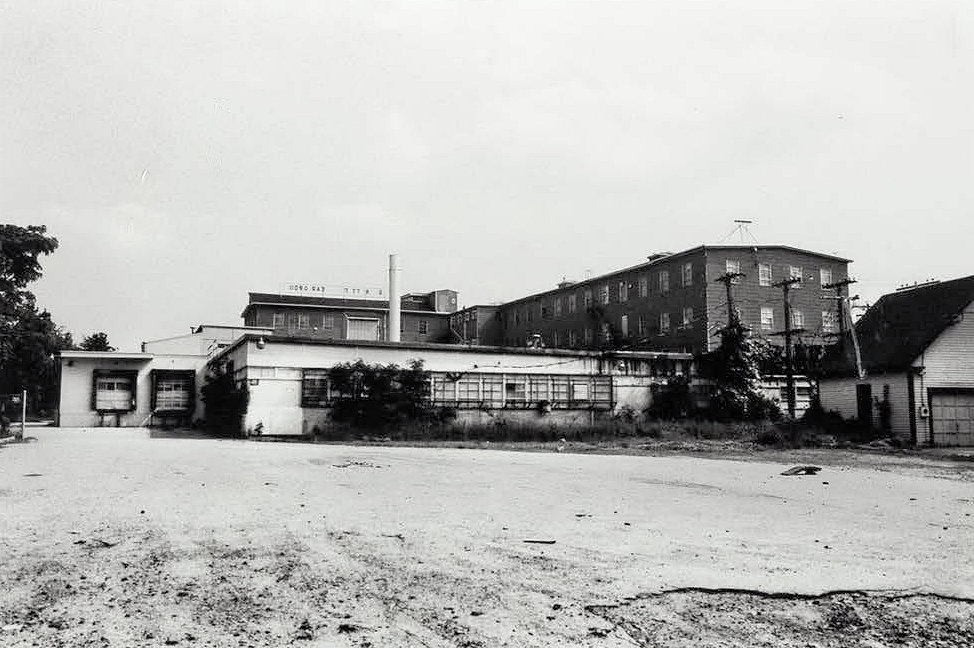
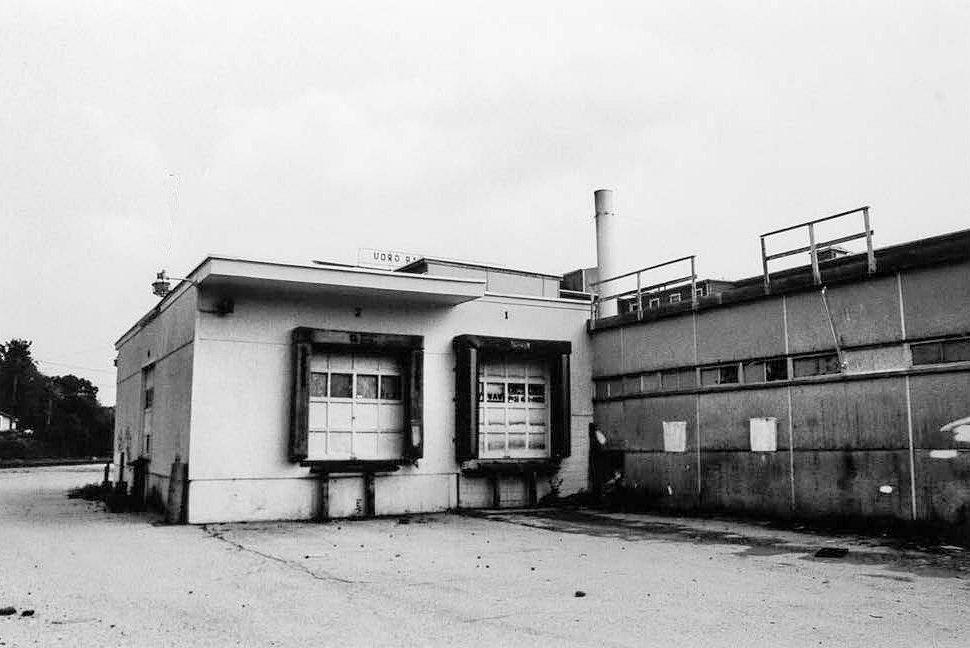
The Encore Shoe Company made Shoes Here Until 2000 when the Factory Moved
Perkins & Jones Shoe Factory, Rochester New Hampshire


- Categories:
- New Hampshire
- Industrial
- Textile Mill
History of the Factory
The Perkins & Jones Shoe Factory was one of the last surviving shoe factories in Rochester, a city once prominent statewide as a shoe manufacturing town. Between 1870 and 1880, Rochester's shoe industry surpassed textiles as the dominant industry in the city.The Perkins & Jones Factory was constructed by the Rochester Enterprise Organization (REO) in 1892, around the chimney, engine room, and boiler house of an earlier factory erected in 1884 by public subscription and leased to the Breed Shoe Company of Lynn, Massachusetts. The 1884 factory burned almost completely in May 1892, resulting in the establishment of the REO two months later. The new shop was dedicated in January 1893 and the celebratory ball held by the employees was attended by 1,200 people. Unfortunately, soon after a strike and labor problems caused Breed to close the Rochester factory in 1895. Later that year it was purchased by Perkins & Jones who extended the building with a 40' addition. By 1901, as Perkins, Linscott and Company, the firm was one of the most important in the city. The factory began to be operated as the Hubbard Shoe Co. in 1932 under new ownership. By 1949 a 4-story addition had been constructed. It was likely at this time that industrial metal sash replaced the original windows and reduced the number of window openings. By 1964 a large one story addition was built on the north end of the structure. In 1973 the factory was sold to Encore Shoe, which by the early 1980s was one of the dominant industries in Rochester. Shortly before operations were moved out of Rochester in 2000, mergers resulted in the mill being operated by Bennett Footwear Group.
The year 1843 marked the beginning of the shoe industry in Rochester when Richard Hayes opened a small factory. The shoe shop only stayed in business for five years but over the years a number of other shoe manufacturers also operated in town for short periods of time. One of the most long-lived and largest was the shoe shop of Edwin and Ebenezer G. Wallace who started business in 1858. (The Wallace shoe factory was torn down in the 1990s.)
In 1884 a committee was formed to build a new shoe factory in Rochester. Using $4,500 raised in public subscription, the committee built a three-story, 150 x 50 building, with a pitched roof and cupola on a lot off Wakefield Street. The factory was owned by George W. Anderson and leased to the Breed Shoe Company of Lynn, Massachusetts for five years with an option for a fifteen year renewal of the lease. The shoe factory employed 250 to 300 people and turned out 2,500 pairs of shoes daily until it was destroyed by fire in May 1892. The fire broke out on the top floor and attempts to save the building were hampered by low water pressure. The factory was nearly entirely destroyed except for the chimney, engine and boiler house and the office. All of the machinery from the sole leather and finishing rooms was saved as was much of the machinery in the stitch room.
The Rochester Enterprise Organization was organized in July 1892 and raised $10,000 to build a new factory. The dedication of the new shoe shop was marked by a ball held by the employees in January 1893. The celebration included dancing with music furnished by the ten-piece Rochester Orchestra, supper and games of whist. At least 1,200 people attended the festivities, making it the largest number of people who, up to that time, had ever assembled in Rochester under one roof. Prizes were given to the two employees who had raised the most funds towards purchasing windows for the shop.
However the celebration was short-lived. The factory experienced a strike and labor problems in August 1893. In May 1895 Francis Breed announced that his Lynn and Rochester factories which employed four hundred persons would close down immediately due to declining profits owing to the rise in the price of leather, low selling prices and sharp competition. Fortunately the factory was not vacant for long. In July 1895 the Rochester Enterprise Association sold the factory to Charles H. Perkins & Arthur R. Jones of Boston for $10,000. Perkins & Jones already had large factories at Springvale, Maine and Whitman, Massachusetts and planned to move the Springvale operations to Rochester. They enlarged the existing building with a 40' addition and built a 35' x 100 storage building (no longer extant) as well. The work was done by local builder CE. March. In order to entice the company to locate in Rochester, the City Council exempted them from paying taxes. The plant reopened in the fall of 1895. Albert H. Linscott came with Perkins Jones & Co. to serve as foreman. After Jones' departure, Charles Perkins made Linscott a partner in 1896.
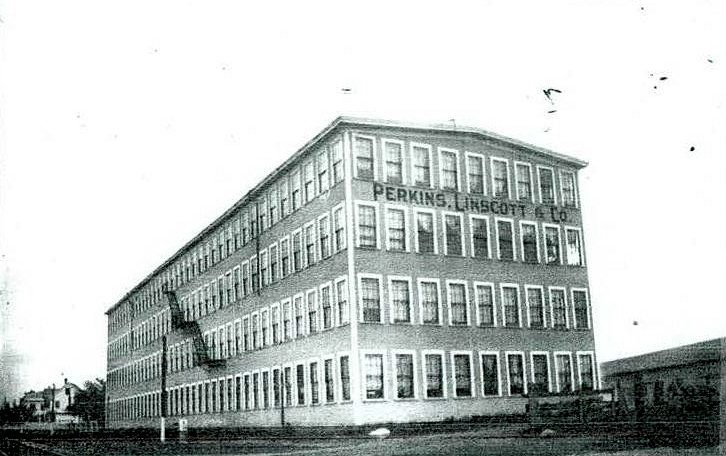
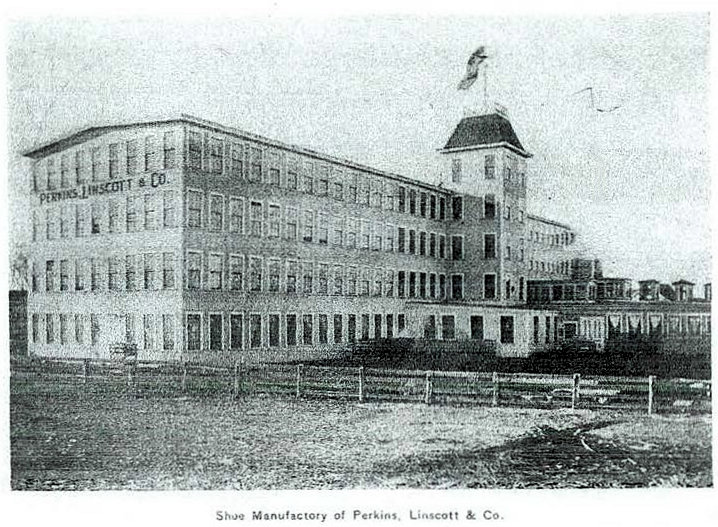
By 1901 the firm of Perkins, Linscott and Company was one of the most important industries in the city. The four-story, 200' x 46' building contained a sole leather room on the first floor, packing and finishing operations on the second, lasting and bottoming on the third floor and cutting and stitching on the fourth floor. There was also a one-story basement annex measuring 86' x 46' which contained the heel making operations. A 50 x 60 brick annex contained the boiler, engine room and repair shops. In 1901 the shoe factory employed about 350 workers and had a daily capacity of two to three thousand pairs of boys', youths' and men's medium grade shoes of machine and Goodyear welt. After Perkins' death in 1907, Albert H. Linscott became the head of the company and took on two young shoe workers, Daniel Tyler and Robert Wilson, as partners. In 1911 the factory had an output of 2,400 pairs of shoes a day. At that time the shop was just beginning to use double dies which allowed the company to double output by cutting two pieces at once. Sometime between 1902 and 1914 the rear ell was raised from one story to four stories to expand the finishing, bottoming and stitching capacity of the plant. Linscott retired about 1923 and died in 1928.
In May 1932 the Linscott, Tyler, & Wilson Shoe Factory was purchased by Samuel J. Katz of Brookline, Massachusetts who operated the Hubbard Shoe Company. Hubbard Shoe had started in business in East Rochester a few years earlier, later taking over a floor in the lower factory of the E.G. and E. Wallace Shoe Factory. With the acquisition of the new building Hubbard Shoe was able to double its employment from 125 to 250. By 1949 a four-story addition had been constructed on the north end of the building. The original windows on the building were probably removed and replaced with industrial metal windows at the same time. Samuel Katz died in 1956. The large one-story addition at the north end of the building was built prior to 1964. In 1973 the Hubbard Shoe Company defaulted on its mortgage and the Rochester Savings Bank sold the property to the Encore Shoe Company.
The Encore Shoe Company, maker of Zodiac-brand shoes, was one of the dominant industries in Rochester in the early 1980s, employing about 800 persons. At the time, it was the largest manufacturer of women's footwear in the state of New Hampshire. The company also operated a branch factory in Newport, New Hampshire. In November 1998 Bennett Importing merged with the Encore Shoe Company of Rochester and the Pentland Company of Nashville, Tennessee to form the Bennett Footwear Group, manufacturing and distributing women's and children's shoes. About 2000, operations were moved from downtown Rochester to an industrial park in Dover.
In 2003 the Encore Shoe Corporation sold the former shoe factory to the Encore Realty LLC. The Rochester Housing Authority hopes to rehabilitate the building to include 53 units of family housing and 5,000 to 6,000 square feet of commercial space.
The building was demolished in 2005 or 2006.
Building Description
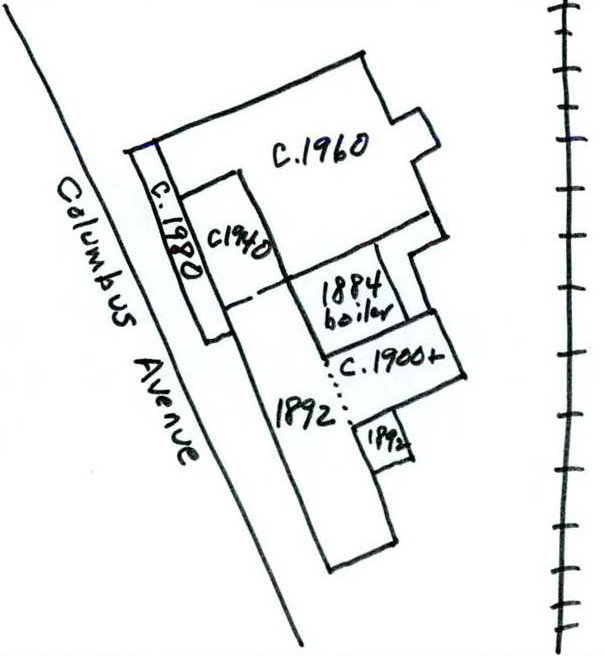
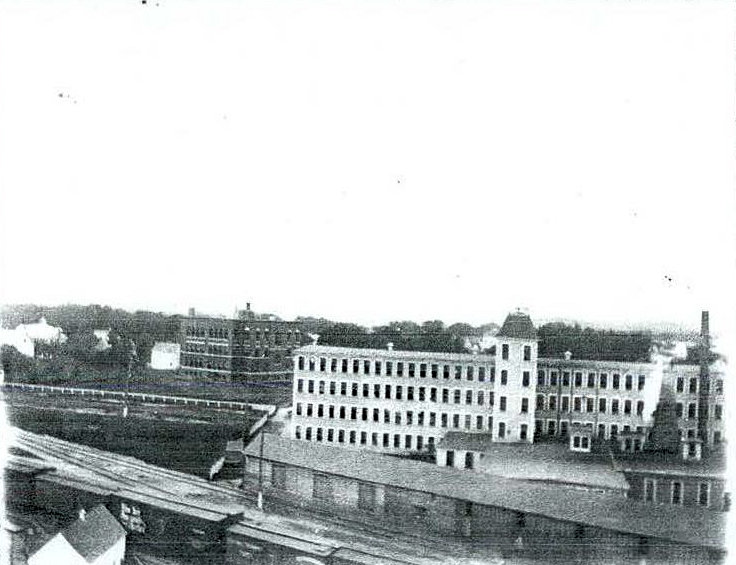
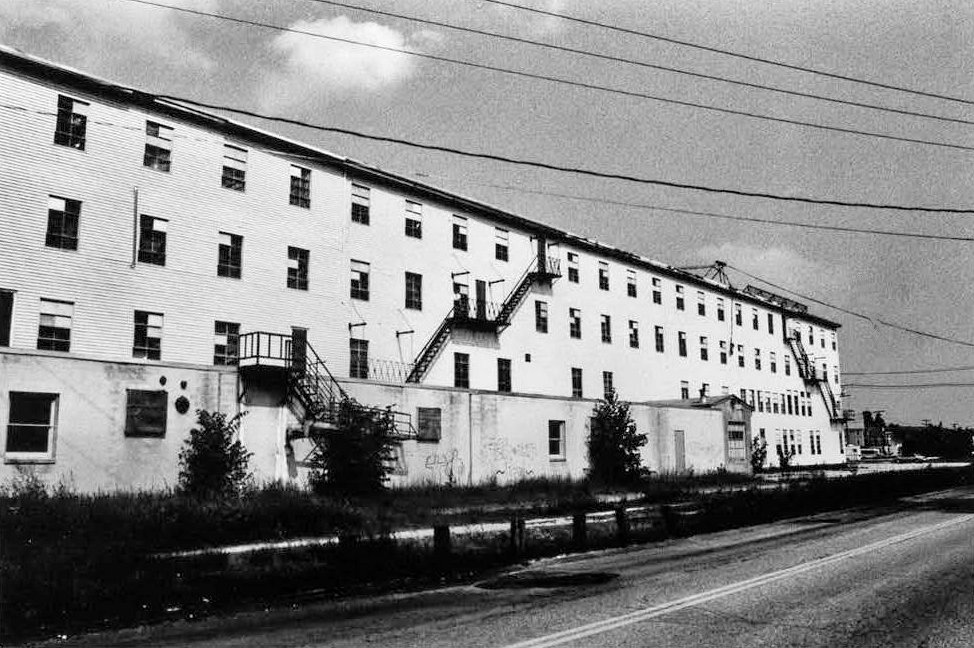
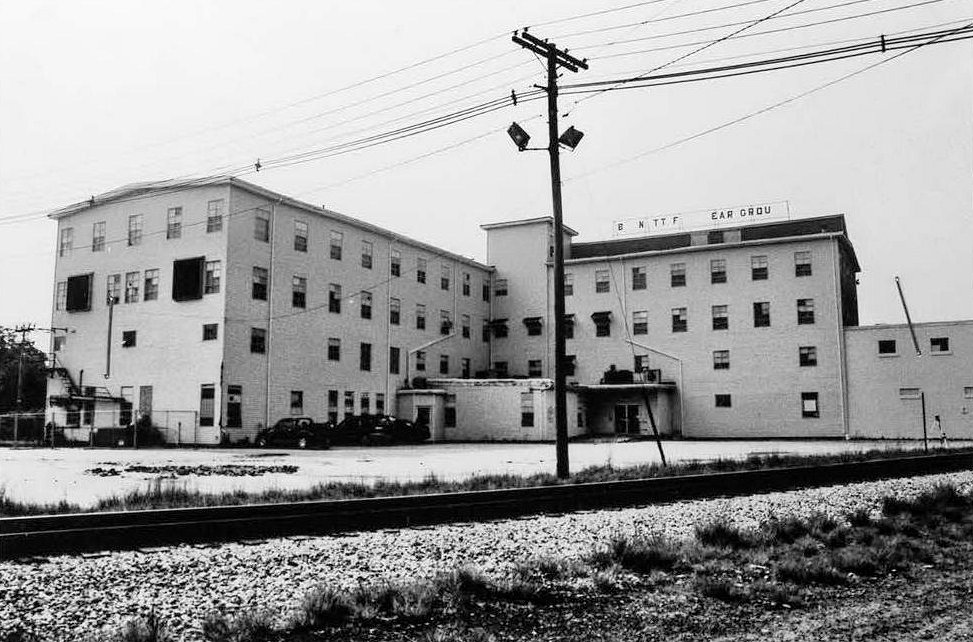
The former Perkins & Jones Shoe Factory (later known as Perkins, Linscott & Co. and the Hubbard/Encore Factory) is a four-story, wood-frame industrial building resting on a brick foundation. The building was originally constructed between two different railroad lines which converge to the south of the property. The alignment of the western track is now Columbus Avenue Extension. Railroad tracks still run to the southeast of the property.Between 1884 and the late 20th Century the structure evolved to its present appearance with various sections and additions constructed over the years. In the late 19th Century the factory consisted of a four-story building, rectangular in plan and measuring roughly 46 feet wide and 200 feet Jong. The building had a one-story office projecting from the east elevation and a five-story, hip-roofed tower containing a 3,400 gallon water tank. A single-story brick boiler room/engine house to the northeast may well have been part of the original 1884 building which was otherwise destroyed by fire in 1892. Between 1897 and 1902 a 46 x 97 single-story heel-making ell was constructed to project from the center of the east elevation. Sometime between 1908 and 1914 the single-story ell was raised to four stories. A four-story addition measuring approximately 46 x 90 was constructed on the north end between 1925 and 1949.
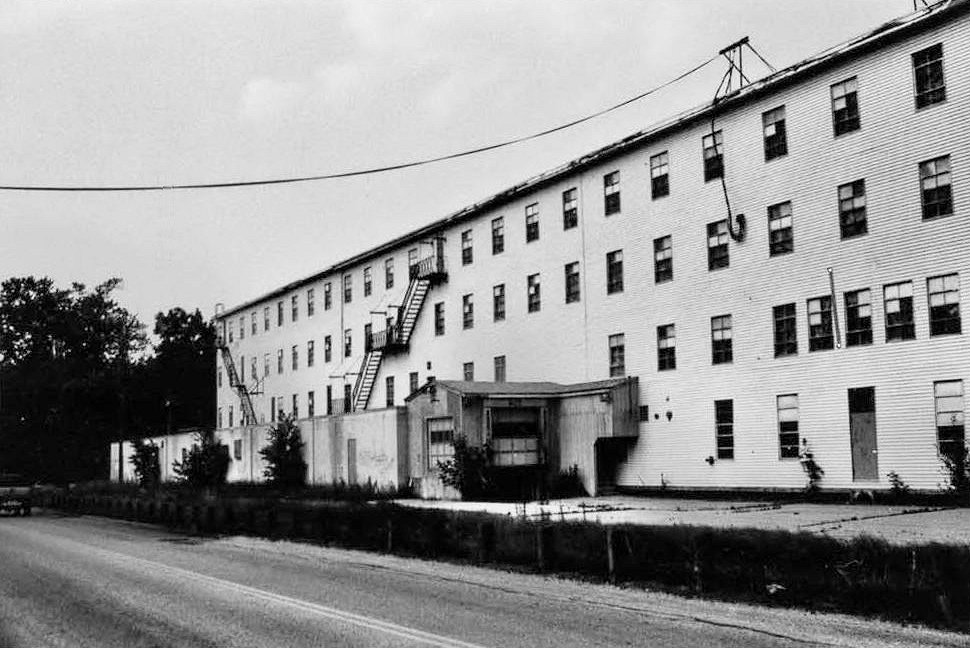
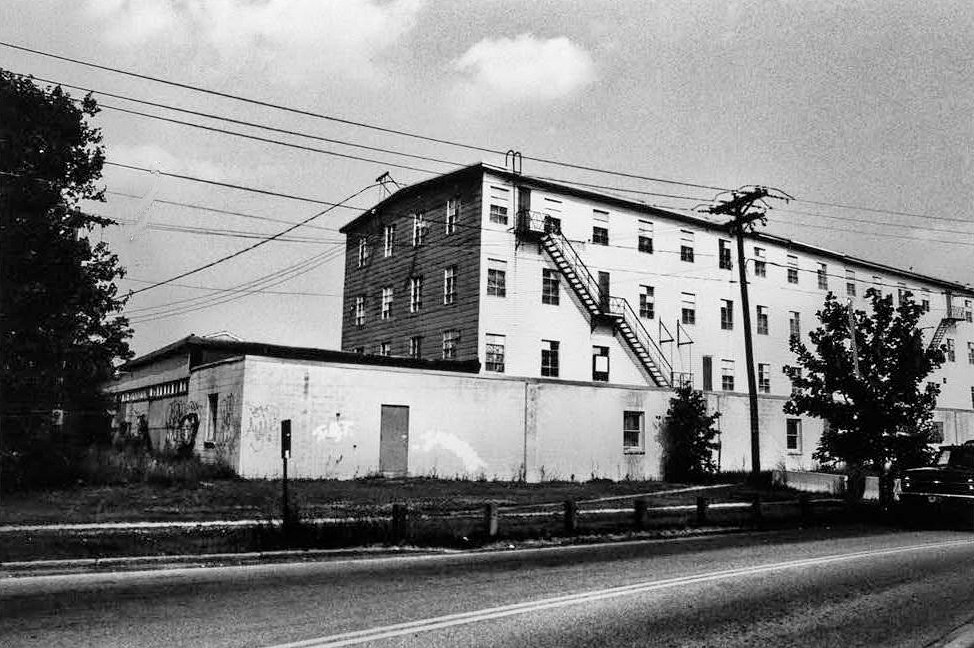
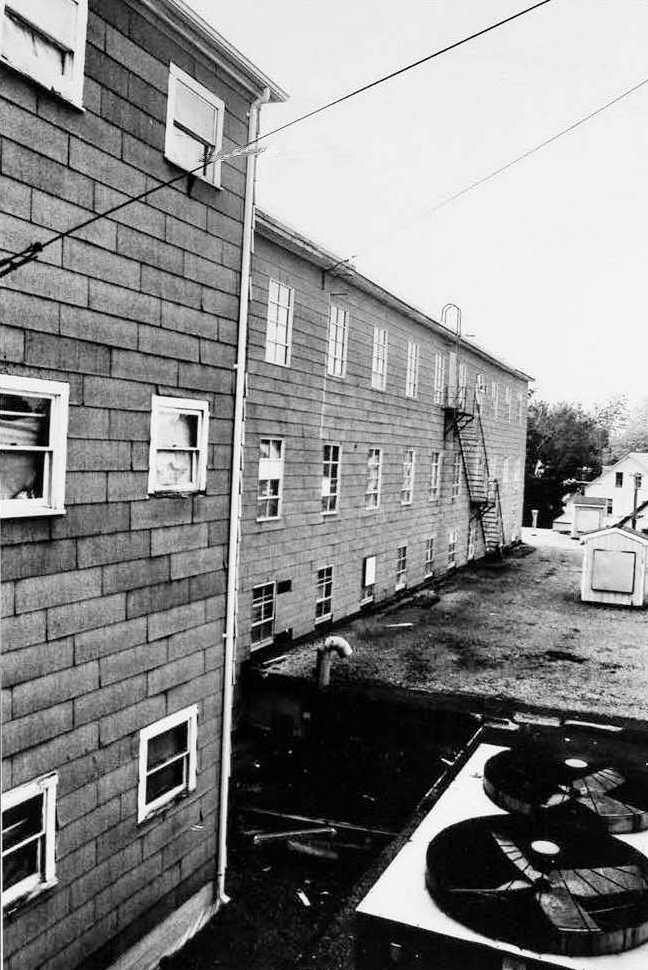
As seen today, the four-story building presents its long elevation to Columbus Avenue. The north and east elevations are sheathed in asbestos shingles. The south and west walls are now covered in vinyl siding. The wood-frame sections are capped by low gable roofs with eaves which project slightly. A flat roofed tower is located at the junction of the main building and ell. The current fenestration pattern reflects the replacement of the original 6/6 windows in the 1940s with industrial metal sash in a 2 x 4-light configuration. At the time the number of window openings on the building was reduced and the wall area between windows was increased. For example, the south gable end of the building originally had nine bays across with the windows nearly touching. There are now five evenly-spaced windows on the op floor. Fenestration on the lower levels of the south end is more irregular and includes three small windows on the second floor and two loading docks on the third. A metal fire escape wraps around the southwest corner of the building.
The 290' long west elevation facing Columbus Avenue is now twenty-nine bays wide, with the upper three stories for the most part punctuated by 2 x 4-light industrial windows and narrow metal doors providing access to three fire escapes. On the south end of the west elevation some of the first and second floor windows contain windows with four horizontal panels and a transom. Much of the west elevation is fronted by a 1980 single-story concrete block addition punctuated by metal doors and 1/1 windows with an adjacent T1-11 loading dock with two overhead garage doors on the south end.
The north end of the building is four bays wide with regularly spaced 2 x 4-light industrial windows on the upper three floors. The first floor is fronted by a large, single-story, flat-roofed addition which was constructed between 1949 and 1954. The north wall is approximately 155' wide with a concrete foundation and paneled walls. Projecting from the cast wall is a c. 1980 loading dock constructed of concrete and T1-11 siding with two garage openings on the north side and one on the east. A two-level concrete-block addition projects in front of the four-story ell's five-bay wide east gable end. The south elevation of the ell is seven bays wide.
Inside, the original mill timber frame mill construction is still visible although on the first floor the walls and posts have been covered with wood paneling and a suspended ceiling has been added. Upstairs the structure remains exposed. In addition to the wood posts and braces, the wood floor and bead board-enclosed stairwells and elevator shafts are still evident.
The Perkins & Jones Shoe Factory is one of Rochester's last surviving shoe factories. Founded in 1858 the E.G. and E. Wallace Shop grew dramatically over the years. The Wallace Shoe Factory was torn down c.1990 to make way for a Walgreen's store. The Colby Shoe Shop on Oak Street in the Gonic section of Rochester is a smaller, single story building. NH Dept. of Natural & Cultural Resources for New Hampshire Division of Historical Resources
Photographs of Perkins & Jones Shoe Factory