
Jefferson Hotel, Richmond Virginia


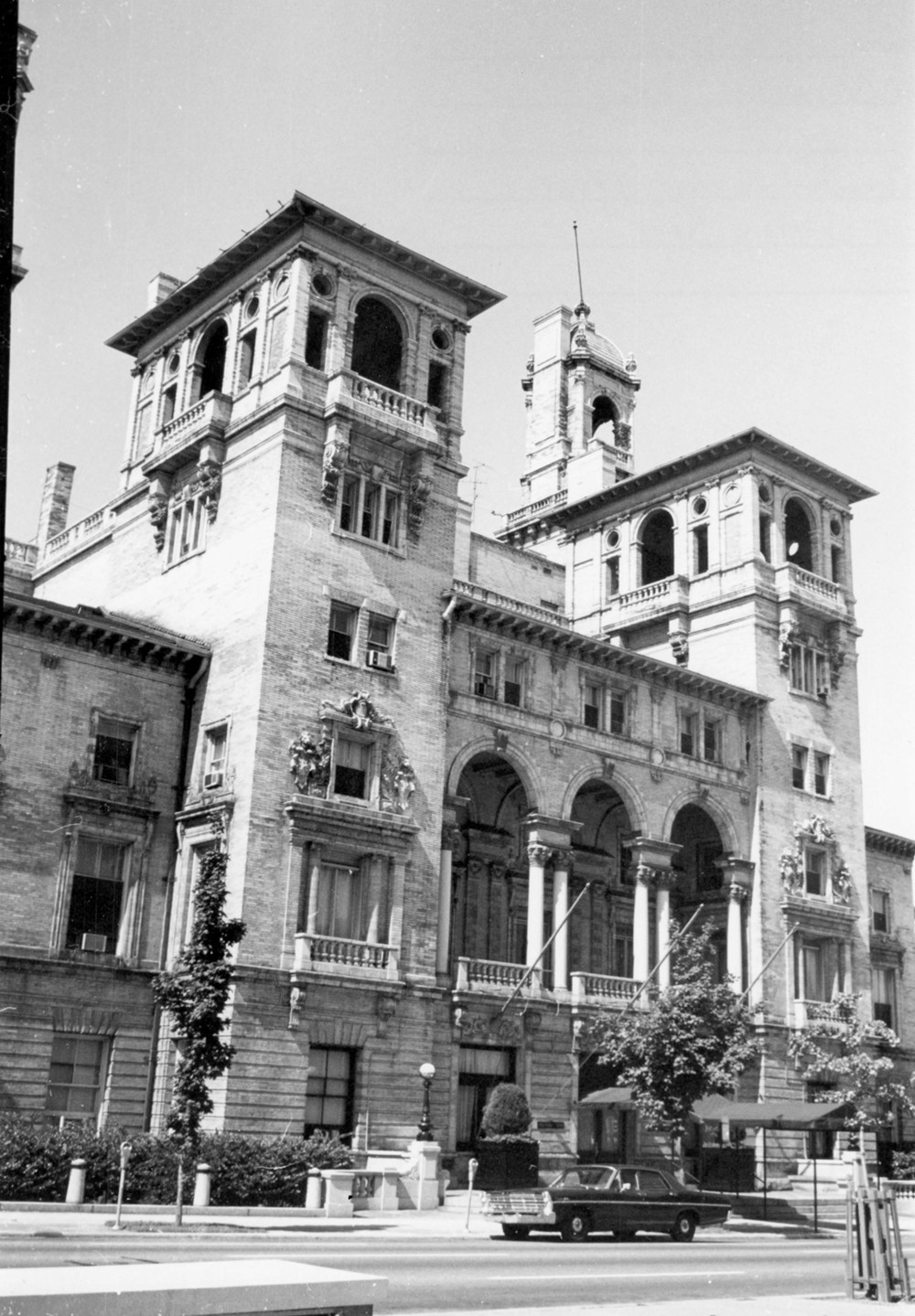
The Jefferson Hotel is one of the nation's outstanding examples of late-nineteenth-century eclectic architecture. In many ways it fulfilled the command of its patron, Major Lewis Ginter, to the architects to provide Richmond with the finest hotel in America, in an era when sumptuous hotels were being erected throughout the country. Aside from its architectural merit, the hotel, as originally completed, contained many advanced technological devices such as service telephones, complete electrical lighting, complete central steam heating, and both hot and cold running water for each of its 342 guest rooms. It should be noted also, that among the fine appointments still contained in the buildings are an exceptional collection of late-nineteenth-century academic paintings as well as the famous life-size marble statue of Thomas Jefferson by Richmond sculptor, Edward V. Valentine. Throughout its early history the Jefferson was "the" place to stay for any important person visiting Richmond. Notable guests included Theodore Roosevelt, Woodrow Wilson, General John J. Pershing; Franklin D. "Roosevelt, Charles A. Lindberg, Benjamin Harrison, William McKinley, and Calvin Coolidge. The Jefferson has also been the scene of many important Richmond social events.
Building Description
The Jefferson Hotel, completed in 1895, is a massive, yet graceful structure of buff brick and stone. Typical of the work of Carrere and Hastings, it is an effective blend of many architectural forms and styles, although the exterior is composed chiefly of Italian and Spanish Renaissance elements. The four towers rising from the main block with its imposing entrances, loggia, varied window forms, and wealth of rich architectural ornament make the structure an important Richmond landmark. Although gutted by fire in 1901, the exterior, for the most part, survives as originally designed. One basic change following the fire was the reconstruction of the wings on the southern end. These were rebuilt to run north-south rather than east-west to allow more light and air into the rooms.
The planning and circulation of the hotel were well thought out to serve the hotel's various functions. There were three principal entrances: The Main Street entrance leading into the Rotunda for commercial travelers; the Franklin Street entrance, known as the "Ladies Entrance" for those attending social functions; and the covered side entrance used by carriages.
The Carrere and Hastings designed public rooms in the north end survive generally intact and display a diverse range of styles. These rooms include the Louis XVI Grand Salon, the Pompeian Palm Court, and a number of small reception and waiting rooms in various French styles. The lower southern end, however, was completely redesigned by J. Kevan Peebles following the fire. Instead of the iron supports fronting a massive arcade in the Rotunda, Peebles substituted a great colonnade and decorated the room and its grand staircase in typical "Edwardian Baroque". Peebles also added an auditorium to the east of the hotel which is now used by the Engineers' Club.


