Large Vacant Iconic Tire Factory in OH Facing Demolition
Firestone Tire and Rubber Company, Akron Ohio


- Categories:
- Ohio
- Industrial

History of Firestone Tire Company
The Firestone Tire and Rubber Company was founded in 1900, and although it was the youngest of the "Big Four" rubber companies in Akron, Firestone quickly grew to be one of the world's most innovative and successful tire companies. When the Firestone Tire and Rubber Company was established, the tire making industry was in its infancy, struggling to keep up with the needs of a rapidly transitioning transportation network. Technological innovations created by Firestone's company continue to have relevance in the tire and automotive industry. Harvey S. Firestone's creativity, business philosophy and acts of social responsibility enabled his company to become the world's biggest producer of natural and synthetic rubber.
Harvey Samuel Firestone
By the time Harvey Samuel Firestone was born in 1868, Akron, Ohio had been one of the leading manufacturing centers in the state for over 20 years. The Ohio and Erie Canal, which provided access for Akron to ship and receive raw materials and finished goods, was completed in 1832. In addition, the rapid construction of railroads during the 1850s provided further opportunities for transportation to and from the Akron area. In 1870, Dr. Benjamin Franklin (B.F.)Goodrich built the first rubber factory west of the Alleghenies in Akron. The new factory was located near the Ohio and Erie Canal on South Main Street. The rubber industry would have a profound effect on the social, economic, and physical development of Akron for almost one hundred years.Born on a farm in Columbiana, Ohio, Firestone attended local schools and briefly attended the Spencerian Business College in Cleveland before moving to Detroit, where he worked as a salesman in his uncle's business, the Columbus Buggy Company. It was here in 1893 that Firestone demonstrated the comfort that rubber tires provided when they replaced steel-rim wheels on carriages. It was here in 1895 that Harvey Firestone met Henry Ford, to whom he sold a set of rubber carriage tires. (The two would later become lifelong friends.) The Columbus Buggy Company closed its doors in 1895, the same year that Firestone married Idabelle Smith. Harvey and Idabelle would later have five sons and a daughter.
Firestone moved to Chicago in 1896, where he purchased a factory and started a retail business with partners. The company was called the Firestone-Victor Rubber Company, and only one worker was employed. The name of the company was quickly changed to Firestone Rubber Tire Company. Two years later, the Firestone Rubber Tire Company and its local rival Imperial Rubber Tire Company were sold to the Rubber Tire Wheel Company of Springfield, Ohio. The two companies then became part of the Consolidated Rubber Tire Company.
The Rubber Industry Era
By the middle of the 1890s, Akron's match industry had moved to nearby Barberton, its coal industry had died, and the existing rubber industry was also on the decline. The panic of 1893 left many factories closed and hundreds unemployed. However, in 1896, an important event turned the rubber industry back around. Bicycle manufacturer Alexander Winston wrote to B.F. Goodrich, asking him to make extra-strong bicycle tires for a "horseless carriage." By 1898, the first automobile was made and sold in the United States, and the rubber industry was about to experience a major boom. Also in 1898, F. A. Seiberling began the Goodyear Tire and Rubber Company. By the turn of the century, Firestone Rubber Company and Diamond Rubber Company had also been established in Akron. The next two decades would witness General Tire, and several more small rubber companies established in Akron. The Firestone Tire and Rubber Company was established in 1900, and by 1905 Firestone was commissioned, exclusively, to supply tires for 2,000 automobiles produced by Henry Ford.
Between 1910 and 1920, Akron's population had increased from 69,067 to 208,435 people. The city known as "the Tip-Top City" in the 1890s became "the City of Opportunity" and "the Rubber Capital of the World" in the 1920s. The boom of Akron's rubber industry occurred between 1910 and 1920, but the industry continued to grow steadily until its peak and faced its gradual decline by 1950.
The Firestone Tire and Rubber Company, 1900 to 1911
Firestone moved to Akron in January of 1900, at the age of 31, with his wife and their infant son, Harvey, Jr. Firestone came to Akron to run the tire department at the company of Whitman & Barnes. Firestone entered the tire industry just as it was coming into its own. In his own words, he said, "It (the tire industry) was really becoming an industry, because the making of automobiles was really becoming an industry. Fewer people were in the automobile game and more in the automobile business … No tire maker could guarantee his tires to go any certain mileage, because none of us knew how to manufacture tires to a uniform grade. We did not know much about the properties of rubber and every process in tire making was pretty much on the rule-of-thumb bases … we thought we knew a little about how a tire acted in service, but actually we knew nothing at all." (Wen and Rubber; the Story of Business. Harvey S. Firestone & Samuel Crowther, 1926)At the time, rubber tires were built to fit tightly onto wheels. Whitman & Barnes had been manufacturing rubber tires that didn't fit standard wheel channels and needed a solution to keep their tires from slipping off the wheel. Other rubber companies had responded to this problem by using mechanical springs to keep the rubber tire in place. But Firestone held a patent on a mechanism for applying rubber tires directly to standard wheel channels; the mechanism applied even tension to hold the tire firmly to the channeled rim.
Three Akron men shared a patent for a sidewire device, which would prevent rim creep and free tires from the danger of wire cutting. (Wire cutting occurred when tires became partly deflated. Without a cushion of air around the rim, the metal rim could become disfigured and cut the wires within the tire's structure.) In addition to the circumferential wires that had become standard in rubber tires, the sidewire used cross bars embedded near the base of the rubber. The ends of the cross bars projected from the channel edges, and the circumferential wires of the sidewire sprung over the channel edges to engage the cross bars. The sidewire device was successful in holding the tire's position in the wheel channel. Dr. Louis E. Sisler, county auditor, was a retired physician who was part owner of the patent. He and partners James A. Swinehart and James Christy, Jr. needed someone who had experience in the tire industry. In August of 1900, Sisler invited Firestone to look at the new tire. Firestone saw potential in the invention, and in just a few days, the Firestone Tire and Rubber Company had been created.
By December 27th, 1900, Firestone's innovation was being manufactured in an existing factory. The company was overloaded with orders for the "Perfect Side-Wire Tire" within a few months, and the sales volume for the first year was $110,000. However, there was no profit. Firestone realized that in order to make a profit, he needed to manufacture his own tires. He bought a small factory in 1902, located at the corner of Miller and Sweitzer Avenues in Akron. On January 2, 1903, Firestone began producing its own tires for the first time. In the summer of 1904, the Louisiana Purchase Expo awarded Firestone a gold medal for its products, and every rubber tire in service at the fairgrounds was made by the Firestone Tire and Rubber Company.
Also in 1904, Firestone applied for a license to make clincher tires, which prevented the rubber tire from expanding with pressure and rolling off the wheel rim. His application was rejected by those who controlled the clincher patents, which weren't due to expire for another 5 years. As a result, the company developed its first mechanically fastened, straight-sided pneumatic tire. This innovation was a significant improvement over the clincher tires, which were difficult to mount, and cut rim wires when partly deflated. The Firestone Tire and Rubber Company soon offered the pneumatic tires for sale.
During this same dynamic era, Henry Ford saw mass production as the future of the automobile and was looking for tires to use on his new four-cylinder runabouts. He had received bids from multiple tire manufacturers, but the bids were all for clincher tires, which were controlled by the Clincher Tire Association and therefore identical. Recognizing the opportunity, Firestone reintroduced himself to Ford, and the two young businessmen sympathized with each other over patent and licensee issues. Ford tested tire after tire, and eventually went to Firestone with his order for 2,000 sets of pneumatic tires.
Firestone was prepared to fulfill the heavy commitment. When Detroit gave pushback to the use of the mechanically fastened pneumatic tires, Ford required Firestone to furnish clincher tires. Firestone once again applied for a license to make the tires; again, he was denied. He decided it was worth the risk to violate the patent restrictions, and asked his engineers to develop drawings for a clincher tire. Recognizing the potential for growth, Firestone immediately hired additional employees. The company went from having 12 employees to having 130. The original one-story factory structure at Miller and Sweitzer was demolished, and a two-story brick building was constructed in its place.
In 1906, the Firestone Tire and Rubber Company produced more than 28,000 tires and sold more than $1 million worth of tires. The following year, the Firestone Tire and Rubber Company developed the first commercial demountable rim, which made it easy for drivers to change their own tires. The Firestone Tire and Rubber Company was in the middle of a four-story addition to the factory when the 1907 bank panic hit; construction was suspended.
Firestone hired his first chemist, John W. Thomas, to institute the company's Research and Development Department, in 1908. (John W. Thomas would later become President of the Firestone Tire and Rubber Company.) A demand for larger tires and, therefore, more contact between the rubber and the road meant that tire manufacturers had to develop protection against skidding to offset the weakened traction. While other manufacturers borrowed solutions from bicycle manufacturers, such as metal rivets, leather protuberances, and rubber buttons, Firestone sought an innovative solution, taking the idea for a non-skid tire to his engineers. In October of 1908, Henry Ford introduced the Model T Ford. A week later, the Firestone Tire and Rubber Company introduced the first angular non-skid tire, which had the words NON-SKID molded into its tread. The non-skid would be one of the company's most significant innovations. Forty percent of the tires sold in 1909 were non-skid.
Tire companies that held rim patents and designs were part of a monopoly called the United Rim Company. Rims by the tire companies involved in the monopoly were made by the Standard Welding Company. Firestone avoided the monopoly and instead, created, used, and marketed his own rim designs. But in 1909, the Standard Welding Company refused to manufacture his design. As a result, the Firestone Tire and Rubber Company began manufacturing tire rims after consulting the general manager of Carnegie Steel Company in Pittsburgh for advice. (Seven years later, the Standard Welding Company had to close its rim factory.)
In just a year, the number of non-skid tires sold had gone up 20%. Profits of the Firestone Tire and Rubber Company in 1910 exceeded $1 million for the first time. All of Akron boomed in 1910; the city's population had grown 61% since the 1900 census, from 42,723 people to 69,067 people. The Firestone Tire and Rubber Company needed to expand, but there was no room to do so at its current location. Firestone began looking for a new site within the Akron city limits. Ideally, he wanted 10 acres, if not 20. He found a site at the south end of town, with railroad tracks nearby. This site would become the subject property.
Firestone envisioned the new facility to serve his manufacturing purposes indefinitely. It was designed with the key characteristic that it could be expanded without interfering with the original building design. Firestone and his architectural team accommodated this concept by providing for a series of wings that could be seamlessly added as needed. Another key consideration for the building design was to eliminate the unnecessary trucking and handling of the product "somewhat after the fashion that Mr. Ford was already making automobiles." (Men and Rubber. 110) Plant 1 fulfilled Firestone's requirements with additional wings quickly constructed to accommodate a fast-changing process.
Firestone hired the Akron firm of Harpster & Bliss Architects (who would also build his since demolished residence, Harbel Manor, in 1912) to plan a modern factory to be built of steel and concrete using brick and glass facades. New equipment would be implemented, and auxiliary buildings would provide power and water. Firestone was keenly aware of Ford's manufacturing model and insistent about improving efficiency within the design of the plant; he worked with Harpster & Bliss construct a scale model of the building and used a piece of string to determine how material would travel through the factory. The health and safety of the workers was also addressed through amenities that were incorporated into the design of the factory. Drinking water was provided through artesian wells, safety devices were attached to machines, and an emergency hospital was included in the design. The estimated cost for Firestone's modern factory and laboratory was $500,000.
Early on, Firestone recognized the marketing potential of the growing popularity of auto racing. The inaugural Indianapolis 500 took place on May 30th, 1911. Ray Harroun led the race for 88 of the 200 laps and won the race. His Marmon "Wasp" used Firestone tires. A few weeks later, on June 8th, 1911, production at Firestone's new plant, Plant No. 1, began. However, the factory's location proved to be detrimental at lunchtime. Firestone initiated a company lunch truck to service the grounds, which was convenient for employees, but also worked to keep them on site instead of leaving for the bars and diners further north into the city. A more permanent solution was found with the construction of the Club House.
The Firestone Tire and Rubber Company, 1912 to 1920
The relationship between Firestone and his employees evolved as his company grew. Beginning with 12 employees handpicked by Firestone in 1902, Firestone Tire and Rubber Company employment had mushroomed to 19,800 by 1920, many of whom were foreign-born laborers. Along with other Ohio and national industrialists, Firestone struggled to balance his bottom line with an equitable and sustainable payroll. As with other evolving industries, ever-changing technology also factored into labor relations at Firestone.Although there were at least twenty specialized factory occupations at the Firestone Tire and Rubber Company, the position of tire builder was "the true royalty of the rubber shop." (Love 55) Prior to the Firestone's first tire-building mechanism in 1912, tire building was a craft, completed almost entirely by a single, highly skilled worker. The integration of machines divided the production process into two steps; the first step, building, was done by machine and the second step, finishing, was done by hand. Influenced by Frederick Winslow Taylor's scientific management movement, which used analysis and standardization as methods to improving efficiency, the Firestone Tire and Rubber Company introduced a new schedule for its workers in February 1913. Workers argued that the new schedule, which outlined a pace for which work should be done, was impossible to accomplish. Some of them walked out in protest. A demonstration at the entry gate, organized by the Industrial Workers of the World (IVWW), influenced others to strike. The strike grew quickly, spread to the other rubber companies in Akron and in Cleveland, and lasted 5 weeks. However, workers made no gains and did not manage to shut down the industry.
After the rubber strike in 1913, Firestone's joined Ohio's list of progressive industrial companies that dealt with labor issues through a program of extensive worker welfare programs. Firestone addressed employee health, recreation and education. In order to retain control of employee relations, he needed to provide the best environment for his workers that he could. In July 1913, Firestone created a shop committee within his company to provide worker representation through his management staff. This committee, called the Industrial Service Department, would maintain and improve facilities. Firestone and his Industrial Service Department encouraged employees to provide feedback for improvement of the corporation. A suggestion box was initiated and records show that often 20 or 25% of the suggestions were implemented on an annual basis (Love).
To promote a sense of teamwork and cooperation, the company created and sponsored sporting teams. A new baseball diamond was laid out, across from the factory. A restaurant was opened across the street from the company's main gate. Open at lunch, the restaurant provided meals at cost to Firestone employees. At one point, Firestone asked the department to study employee turnover. However, before the department's report was complete, Firestone incorporated a plan to encourage workers to participate in the company's stockholding.
In addition, Firestone embarked on one of the most important developments of his Industrial Service Department - the construction of the Firestone Club House. The project involved creating a meeting place with a lounge, library, classrooms, swimming pool, auditorium, barber shop, bowling alley, and medical and dental services, which would be available to all employees. In August of 1915, the company approved additions to Plant No. 1, as well as the construction of the four-story Club House to be built across the street from the main gate. Trowbridge and Ackerman Architects were hired for the design of the structure; Hunkin-Conkey Construction Company of Cleveland was hired as the contractor. This round of construction at the Firestone Tire and Rubber Company began late in 1915.
Influenced early in his career by the housing shortage due to Akron's dramatic growth, and in an effort to stabilize his workforce, Firestone hired Trowbridge and Ackerman Architects to design a housing community for its employees. Firestone's business sense was different from that of his competitors. Goodyear co-founder, Frank A. Sieberling, personally financed the construction of a housing development (called Goodyear Allotment, now known as Goodyear Heights) and offered the homes for sale, at cost and with low to no down payment, to Goodyear employees. Firestone on the other hand, used corporate financing to organize the Coventry Land and Improvement Company. The Coventry Land and Improvement Company then built 600 houses near the Firestone Tire and Rubber Company factories. Firestone Park was originally designed on 600 acres, with 16 acres in the middle of the park dedicated to public recreation. With a low down payment, housing within Firestone Park was offered at cost to Firestone Tire and Rubber employees.
When the United States officially joined World War I, over 154,000 Ohioans were drafted, and a total of 200,293 Ohio troops participated in the war. Like many other industries, Firestone Tire and Rubber Company hired women to maintain production. As 721 of Firestone's employees were drafted into the war, the company hired 500 women to take their place. The Firestone Tire and Rubber Company was actively involved in the war effort; the company's War Industries Board cut down production of tires for automobiles to provide rubber tires, tubes, leak-proof airplane tanks, and accessories for the United States Army. Firestone wrote to every employee who had been drafted to ensure him that his job would be waiting for him when he returned home
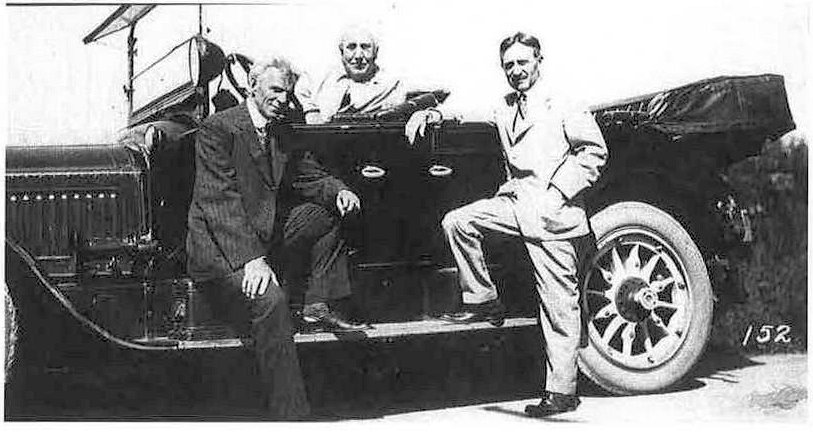
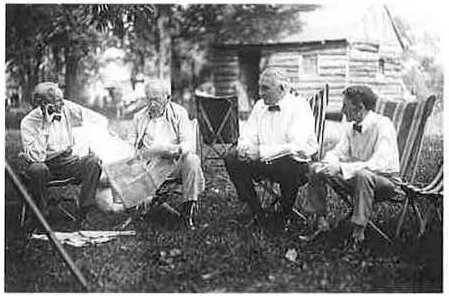
In 1916, Firestone, Thomas Edison, and Henry Ford went on what would become the first of many camping trips together. Calling themselves the "Vagabonds," the men would travel across the nation, enjoying time away from their busy lives for exploration, adventure, and discovery. They were often accompanied by other important American figures such as naturalist and essayist, John Burroughs, whose works were important to the conservation movement in the United States. President Warren G. Harding joined the men on their 1921 camping trip. Firestone, Edison, and Ford would be lifelong friends.
Some called 1916 "the year of the employee" (Dickson) as many improvements were made within the nation's corporations. This was due, in part, to the Adamson Act, which established an 8-hour workday for railroad workers, and the Federal Employees' Compensation Act of 1916, which set requirements for compensating workers for job-related injury, disease, and death. The 8-hour day was initiated at all of Akron's rubber factories. Firestone, along with other South Akron manufacturers and merchants, organized the Rubber City Savings Bank (later renamed Firestone Park Trust & Savings). The Akron Home Owners Improvement Company was founded as a subsidiary to Firestone Tire and Rubber Company to provide affordable and desirable housing for the workforce (Firestone was President in 1916). Within the Firestone Tire and Rubber Company alone, many benefits were made available to employees. The Club House was dedicated on October 14th, 1916, a week after Firestone Park opened. Just a few weeks later, Firestone set aside $1 million for employees' welfare fund, which included provision for free life insurance. A stock distribution plan was also initiated for the company's 500 superintendents, foremen, and department heads.
Firestone insisted that the company's actions were not in response to widespread labor disputes across the nation. In the December 1st, 1916, volume of India Rubber World, a monthly journal of the rubber industry, Firestone was quoted "There is nothing sentimental, paternalistic, or philanthropic in our adoption of the eight-hour system. But you can't make men do their best unless you get them fully interested, proud of what they are doing, happier in mind, better in body and spirit, and producing something for themselves while they produce something for the business organization in which they are a part."
Construction projects continued at the Firestone Tire and Rubber Company in the following years. A new plant, Plant No. 2, was under construction for the manufacture of tires and tubes. An addition to the Power House was approved. In May of 1917, construction of a new building in front of Plant No. 1 was underway. This new structure would house the company's Hospital and Employment Building; it was connected to the Club House across the street via a tunnel, which is extant.
Firestone made news not only for his business, but also for his contribution to national affairs. In 1918, Firestone pioneered the nationwide "Ship by Truck" movement. He saw the opportunity to couple a social need with promoting the rubber industry. World War I had ended, but had proven that truck transportation was not only cheaper than railroad transportation, but reduced delay, damage, and labor costs without the complications of transfer and junction points. As the movement gained momentum, focus shifted to the efficiency of the nation's roads. In August of 1918, the Motor Transport Corps was formed to control the design, production, organization, and technical training of motor vehicles and motor transport personnel. In the summer of 1919, the Motor Transport Corps began a journey from Washington, D.C. to San Francisco to test the feasibility of motor transport with a complete military unit. The convoy, which included Dwight D. Eisenhower as a young lieutenant colonel, made a stop at the Firestone Homestead in Columbiana. Harvey S. Firestone provided dinner for the convoy as he spoke to them about the importance of the nation's roads. This project, called the Army Transcontinental Motor Convoy, was not only successful in its journey, but also gained public support for improving the nation's roads. It marked the beginning of state funding for roadway infrastructure through gasoline taxes and auto license fees for road building and maintenance. (Later as President of the United States, Dwight D. Eisenhower signed the Federal Aid Highway Act of 1956, which created the interstate system and helped eliminate unsafe roads and inefficient routes.)
By 1919, the tire industry thrived. Ohio led the nation in every branch of the tire industry, with more rubber workers than any other state (a total of 63,637 workers in Ohio). Akron was one of the fastest-growing cities in the country as its population grew 200%. The Firestone Tire and Rubber Company had a spectacular year, with sales exceeding $91 million. Additional facilities were once again required. A new Steel Products Building was constructed for the production of rims, wheels, beverage containers and stampings. A Mechanical Building was also constructed to relieve space for manufacturing. (The Steel Products Building and Mechanical Building were built adjacent to the property.) And by the end of 1919, the number of homes completed in Firestone Park had risen to 1,000.
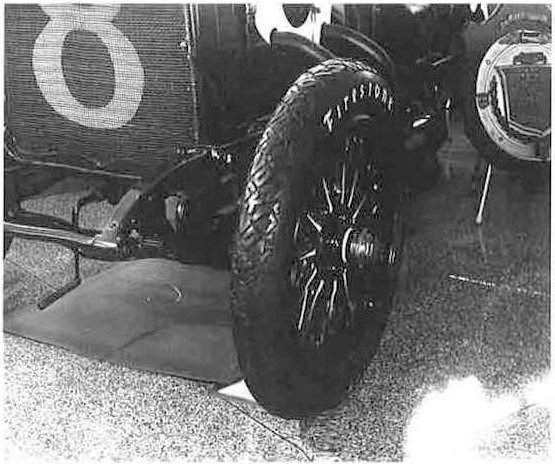
In 1920, the Firestone Tire and Rubber Company developed a method of insulating tire cords against internal heat (and therefore blow-out), called gum-dipping. This innovation led to the company's first 5 million tire production year. In May of 1920, the company made news at the Indianapolis 500 again as Gaston Chevrolet won the race on Firestone tires; more impressively, it was the first race in which the winner only used one set of tires. For the next 46 years, every car that won the Indianapolis 500 race would use Firestone tires.
A railroad strike in the spring of 1920 brought attention back to the Ship by Truck movement, as freight accumulated at railway terminals and an alternative mode of transportation was needed. Firestone had organized "National Ship by Truck - Good Roads Week" to educate the public about the necessity for a national highway system. Due in part to the timing of the railroad strike (which was initiated on the eve of National Ship by Truck - Good Roads Week) and Firestone's financial support of the educational campaign, the importance and utilization of the nation's roadways was recognized. The Federal Highway Act of 1921 allowed for continued funding of highway construction, with over $10 billion invested in roads nationwide during the 1920s alone. Firestone's commitments to national affairs were recognized when former President William Howard Taft made a visit to Firestone while on tour to discuss the League of Nations.
Also in the spring of 1920, the United States began to see the effects of post-war inflation. Firestone's cautious and conservative business sense proved effective during this crash. The tire industry's condition was worse than ever, but Firestone saw opportunity before his competitors. He initiated the nation's first tire sale in history. This business move originally shocked his competitors; once they realized that the sale brought success to the Firestone Tire and Rubber Company, they followed suit.
The Firestone Tire and Rubber Company, 1921 to 1929
The company's annual report for 1922 indicated that it was the highest point of efficiency to date. In October of 1922, the Firestone Tire and Rubber Company made yet another important innovation for the tire industry. The first suitable low-pressure tires, called balloon tires, were invented. Balloon tires provided mileage that had not been experienced before. Production of balloon tires began on April 5th, 1923. By 1924, the balloon tire had become the standard tire for the next model year.Also, by 1924, the Firestone Tire and Rubber Company had paid off all debts to any bank. This was a tremendous accomplishment, considering the financial troubles that nation had faced in the years prior. In 1925, the Firestone Tire and Rubber Company celebrated its first 25 years. By this time, the company had accrued over 3 million square feet of floor space in its factories and reached annual sales of over $125 million. Firestone Stadium and Athletic Field was constructed for use by the Firestone league teams. Dedicated in 1925, the stadium was built at the south end of "The Firestone Mile," across from the Steel Products building. In October of 1925, Firestone announced plans for the lease of one million acres of land in Liberia to grow the company's own rubber.
Company expansion in 1926 included the completion of a new Warehouse and Shipping Facility and a Fabric Warehouse (once located on the property, the Fabric Warehouse is no longer extant). The Warehouse and Shipping Facility (also known as the Triangle Building) was constructed with the same philosophy as Plant No. 1. Following a pattern of industrial efficiency for manufacturing plants of the period, efficiency and movement of products through the building was top priority. Movement of products off the production line and into the warehouse was facilitated by enclosed bridges that connected to Plant No. 1. Loading docks and large ramps connecting the floors of the building helped improve efficiency when moving products and preparing for shipment. Construction had also begun on an addition to Plant No. 2. It was during this year that Harvey Firestone made an innovative (and controversial) move. Because of increased competition from chain stores and mail order, he wanted to reduce distribution costs and alleviate seasonal sales slumps.
Firestone established the One-Stop Service Program, which opened company-owned retail stores and allowed the company to remain profitable. The company's 1929 annual report indicated that the One Stop Master Service Stores were successful in providing good service to customers. The 1930 report noted that there were 25,000 fewer tire dealers this year than the two previous years. This was due to the fact that one could go to a Firestone Service Store to purchase tires while having the car serviced, rather than go to a retailer to purchase tires and then to a dealer to have the car serviced. Within a period of 13 years, the program had grown to include 575 stores across the nation, and offered 2,200 items.
In October of 1928, Firestone was voted one of nine "Pioneers of American History" by 1,700 industrial leaders. He shared this title with friends Henry Ford and Thomas Edison, among others such as Orrville Wright and George Eastman. A few months after Firestone received this honor, the company began the first commercially sponsored radio program, Voice of Firestone. The family-friendly, half-hour radio show featured classical music and "short talks" with Firestone, who discussed important topics of the time. The series ran for 36 years. (After Firestone's death in 1938, Harvey Firestone, Jr. hosted the radio show.)
The Firestone Tire and Rubber Company, 1930 to 1938
By 1930, 40% of the nation's tires were made in Akron. It was during this year that the Great Depression hit the auto industry and tire business. Not unlike other companies across the nation, the Firestone Tire and Rubber Company faced financial challenges as a result. Sales declined 17% and would continue to decline over the next five years. The company still showed profit, but Firestone was cautious. In 1932, the company was proactive as it bought back stock to relieve the company of having to pay dividends. Firestone lowered production in an effort to keep everyone employed. Six-hour work days were initiated, and employees were rotated to give work to as many people possible. Extra work was provided by cleaning and improving the company's facilities and equipment. The company dealt with the challenges as they came, but did not let them get in the way of innovation. To diversify, Firestone Tire and Rubber Company developed the first practical low-pressure pneumatic tractor tire in 1932 and began its "Put the Farm on Rubber" campaign. The innovation, along with the campaign, aligned Firestone with the agricultural transition away from animal labor to mechanization. A mechanical rubber goods division was started to manufacture rubber gaskets, radiator hose, fan belts, and other automotive parts and accessories. The company also began experimentation with synthetic rubber, which helped eliminate the nation's dependence on natural rubber from other countries.In 1932, Firestone retired from the firm's active management and became Chairman of the Board as his son replaced him as the head of the firm. The following year, in recognition of his leadership in the tire and rubber industry, Firestone was selected to represent the rubber industry at the Chicago World's Fair. With technological innovation as its theme, the 1933 World's Fair was aptly named "A Century of Progress."
As Akron's rubber companies began to see a turnaround after the Great Depression, their workers organized a union after the passage of the National Labor Relations Act of 1935. This legislation, also known as the Wagner Act, allowed workers to organize into unions to work toward improving wages and working conditions. The United Rubber Workers Union created 29 local chapters within its first year, and organized its first strike in 1937. Originally begun in protest to Goodyear's plan to reduce wages and increase production, a sit-down strike and long picket lines were organized. The Mayor of Akron sent the city's police to end the strike, but once the police officers realized they were against thousands of organized workers, they refused to intervene. Akron's rubber companies were shut down for two months as a result of the strike. A contract with the union was signed April 30th, 1937, marking the first major agreement in the industry. As a result of the successful strike, the United Rubber Workers Union set a precedent for labor activity in the auto and steel industries.
On February 7th, 1938, Firestone died in his sleep at his vacation home in Miami Beach, Florida. At the time of his death, the Firestone Tire and Rubber Company had sales of more than $100 million. On December 20th, 1938, which would have been Firestone's 70th birthday, Akron celebrated his life with the dedication of the Harvey Samuel Firestone Memorial Bridge, a project which his son Harvey Firestone, Jr. described as close to his father's heart because of the benefits it would bring to the City of Akron and its people. A parade followed the ribbon-cutting, and an evening banquet was held at the Mayflower Hotel in downtown Akron.
The Firestone Tire and Rubber Company, 1939 to 1949
The year after Firestone died, war was brewing in Europe. At the end of 1939, it was estimated that a rubber supply of two and a half months' worth was available for national consumption. When Adolf Hitler attacked Norway and Denmark in the spring of 1940, the United States government began to stockpile rubber in the event that the nation would become involved in the war. A few months later, in July 1940, Harvey Firestone, Jr. used The Voice of Firestone as an instrument to educate listeners on the importance of rubber during wartime. He emphasized that "speed is the very essence of modern warfare" and rubber was the material that made speed possible. In addition to the rubber tires used on tanks, which allowed them to move much faster, the armed forces also used rubber for equipment such as gas masks, raincoats, and airplane seats. During his radio broadcast, Firestone, Jr. suggested drastic conservation measures, collecting reclaimed rubber, and producing synthetic rubber.By the end of 1940, like many of the nation's industries, the Firestone Tire and Rubber Company and its subsidiaries were providing cooperation to all branches of the United States armed forces. The Firestone Tire and Rubber Company began to manufacture items for national defense. Tank tracks, airplane fuel cells, and gas masks were among the items manufactured. In 1940, the company began production on metallic belt links for machine gun cartridges. The company also initiated a synthetic rubber plan, a preventative measure in the event that imports were cut off as a result of the war in Europe.
By 1941, the Firestone Tire and Rubber Company had constructed two plants for the production of synthetic rubber. Firestone had been experimenting with synthetic rubber for over a decade; production of synthetic rubber meant that the reliance on natural rubber from foreign countries was eliminated. The same year, the company constructed a Gun Mount Factory near its Mechanical Building in Akron for the manufacture of its redesigned Bofors 40-mm anti-aircraft gun carriages. The wide open space of the company's Club House auditorium was converted to help run the defense effort. Weekly national defense meetings were held at Firestone's headquarters in Akron, and discussed every potential partnership between its manufacturing and the armed forces. In addition to airplane and combat tires, the Firestone Tire and Rubber Company produced barrage balloons, life belts, life vests, life rafts, rubberized fabric pontoons, and oxygen cylinders - all before the bombing of Pearl Harbor and the nation's involvement in World War II.
In 1942, the company constructed its Airwings Building for the production of airplane wing panels and barrage balloons. It also operated a bomb-loading plant. Firestone became the first of the government's defense plants to produce GR-S synthetic rubber, a material that was to replace natural rubber for most purposes. On August 31st, 1942, the Firestone Tire and Rubber Company was the first rubber company to win the Army-Navy "E" award for achievement in wartime production, a symbol of unity between the armed forces and the forces of production. In 1943, ground broke on the construction of the Firestone Research Laboratory. The building was completed and dedicated in March of 1945. When the Firestone Tire and Rubber Company celebrated its 45th anniversary on August 3rd, 1945, the United States was preparing to drop atomic bombs on Hiroshima and Nagasaki. Soon after, Japan surrendered and the war ended.
After World War II ended, all five of Firestone's sons were on the company's Board of Directors. In the two years following World War II, the Firestone Tire and Rubber Company exceeded all previous production records as a result of its expanded facilities and improved production efficiency. Innovation at the company continued. In 1947, Firestone developed a balloon tire with a larger footprint that required lower pressure; this tire was called the Super-Balloon. Also in 1947, the Firestone Tire and Rubber Company introduced its Polar Grip tread for increased traction on snow and ice. A year later, the company perfected the cold process of manufacture for GR-S production of synthetic rubber. In 1949, the open-center curved bar tractor tire was developed and introduced by the Firestone Tire and Rubber Company.
Rosie the Rubber Worker
During World War II, Rosie the Riveter and Rosie the Rubber Worker became famous, in part, because of the federal agencies that recruited women workers for the war effort, and the federal agencies and industries that used the patriotic women for promotional purposes. The War Advertising Council (made up of the country's leading advertising professionals) and the Office of War Information's Bureau of Campaigns often collaborated, with the Council providing copy and the Bureau disseminating information, news releases, and even arranging tours.Celebrities involved themselves in the efforts by appearing on radio or television with the working women who were specially selected for their speaking abilities. Harvey Firestone, Jr., and Band Leader Xavier Cugat appeared with Firestone rubber worker Mrs. Robert Mikesell in the company newspaper after Cugat visited the factory. Mary Snader was the first woman to build airplane tires for the Firestone Tire and Rubber Company, and for that was honored at the Second War Congress of American Industry in New York City. She was the Firestone Tire and Rubber Company's first female supervisor and instructor in the company's tire-building division. Because she was also quite articulate, she was scheduled to speak on Adelaide Hawley's radio show.
The Firestone Tire and Rubber Company's Non-Skid (company newspaper) often featured profiles of female rubber workers. Regardless of the massive coverage across the country, female workers were only taken seriously as infill for a missing male workforce. "From the time when she is just 'Mrs.' again …" The Akron Beacon Journal reported that women of all ages and classes worked primarily for patriotic reasons and would gladly return home in peacetime. The Beacon reports emphasized the upper-middle-class women workers and the bored West Hill housewives.
The fact that many female rubber workers were the third generation of women in these plants is generally overlooked. The World War II Rosie the Rubber Worker followed the footsteps of their grandmothers who had worked in rubber manufacturing before World War I. Women in Akron had experience in industry before becoming Rosie - some of them in other industrial jobs, some in smaller rubber factories. It was more difficult for Akron women to fit the rosy picture painted for the Wartime posters. They were, however, ready for work in the factory, having already assimilated to the culture and social organizations of the clubs, cafes, and restaurants that catered to the rubber workers.
During World War II, 80% of the Firestone Tire and Rubber Company's aircraft division consisted of female workers. The Firestone Tire and Rubber Company's Non-Skid company newspaper proclaimed that the "… bloomer girl is here to stay. She is doing a man's work and doing it very well and when the war is over she will have made a niche for herself in American industry in which she can meet and compete with men on their own plane … women are the equals of men in handling jobs that require quickness and deftness … women as a rule are often more loyal to those they serve and more studious to the little details that go to make perfection in any class of work."
To supplement the female workforce, Firestone hired African American women (1942). While they started in a segregated, third shift environment, less than a year later (1943), Harvey Firestone, Jr. followed the recommendations of his production manager and vice president of production to integrate these women into the production process. The Firestone Tire and Rubber Company recruited handicapped women about the same time. There was already a history of deaf workers (men) in the rubber industry, so this was the next logical step. By 1944, the Firestone Tire and Rubber Company (and other rubber companies) understood the advantages of allowing women to work part-time, thus enhancing their workforce further.
Transitions during and after World War II did not go as many women had planned. The unions promised that women would be hired back in "order of seniority" and the Department of Labor said that women would be hired back by "accumulated company service credit." But it did not really happen. The Firestone Tire and Rubber Company did keep women workers, but only a few. The women and African Americans were at the bottom of the seniority list and had no job protection when production was curtailed. The Secretary of Labor predicted that women workers would marry and give up their jobs and stay home. "Nature will take care of that problem as 90% of our women want to live in homes and have families."
The women quoted in the newspapers apparently met that expectation. Women who tried to return to work in the Firestone Tire and Rubber Company's anodizing department and the Firestone Tire and Rubber Company's Aviation Products business found the shops empty and were told that they had been laid off.
The Firestone Tire and Rubber Company, 1950
The years during World War II were a period of growth and innovation in Akron, as the rubber industry rose to action to provide goods for the United States armed forces. The years immediately following the war were also successful as the rubber companies began to catch up with the production of everyday items such as tires and tubes, which had been put on hold to meet wartime needs. However, it wasn't long before Akron's industries began to decline. There had been a shift in the way business was conducted. Rubber work was no longer centralized in Akron; it had spread across the globe. The Firestone Tire and Rubber Company alone had offices in 9 countries, factories in 11, and distribution in 141 (Distributing Points Abroad). Efficiency and innovation achieved during the war meant that the demand for rubber goods was met more quickly than ever before. The number of workers in the rubber production industry would sharply drop from 49,813 in 1947 to just 34,660 in 1954 (and would continue to drop). Akron residents faced financial hardships as the industries that they had relied on no longer needed the high levels of employment as they had in the past.On August 3rd, 1950, the Firestone Tire and Rubber Company celebrated its 50th anniversary. All five of Firestone's sons were present; Harvey Firestone, Jr. led the festivities. Life magazine published a special issue commemorating the anniversary, NBC planned a nationwide radio broadcast, and a series of ceremonies took place in Akron. A bronze statue of Firestone was designed for the entrance to Firestone Park; the sculptor was not quite finished in time for the ceremonies, so the event planners painted the full-size plaster model and set it in place. During the ceremonies, no one could tell that the statue was not made of bronze; it was replaced with the actual bronze statue soon after. The celebration of the company's golden anniversary would be its last celebration of such grandeur.
The Firestone Tire and Rubber Company, 1951 to 1988
The Firestone Tire and Rubber Company would continue to make advancements in the rubber industry as a result of its Research and Development department. The "Firestone Supreme" was introduced in 1950; this tubeless tire was blowout safe and puncture-proof. In 1953, the "500," an all-nylon tubeless tire was developed for high-speed passenger car travel. And in 1958, the Firestone Tire and Rubber Company introduced "Diene," a synthetic rubber which reduced running temperature, improved skid resistance, and made tires more crack-resistant. However, none of these developments would revive the industry as it struggled to maintain its relevance.In the 1960s, American rubber companies were faced with competition from foreign companies. Akron's once-modern rubber factories had become outdated. Improvement projects began throughout the industry, as the rubber companies attempted to renew their facilities. In the early 1960s, Goodyear spent $12 million to update its Plant No. 2 building in hopes of increasing productivity; after years of not meeting those goals of productivity, the structure was closed in 1978. In 1972, the Firestone Tire and Rubber Company announced a four-phase renovation of its Club House complex. Six years later, in March of 1978, Firestone announced that it would close its Plant No. 2 facility. (Demolition at the Firestone Tire and Rubber Company's Plant No. 2 began the following year.) By August of 1978, the company asked its workers at Plant No. 1, all 1,300 of them, to accept a pay cut to keep their jobs. In October, the company experienced a major setback, as it had to recall over 7 million of its Firestone 500 tires. The Firestone Tire and Rubber Company would later report a loss of $148 million for the fiscal year of 1978.
A new President entered the Firestone Tire and Rubber Company in 1979. At the time John Nevin took office, the company was in debt by over $1 billion. Nevin closed 9 of the company's 16 manufacturing plants. In October of 1980, the Firestone Tire and Rubber announced that it would close its Plant No. 1 facility. The same year, Nevin began discussions with Japan's Bridgestone Corporation. The conversation led to the sale of Firestone's plant in LaVergne, Tennessee in 1983. By March of 1988, the Firestone Tire and Rubber Company had been sold to Bridgestone; the company then became known as Bridgestone/Firestone.
The remaining buildings are set for demolition.
New on Demolition of the Firestone Tire Company Complex
As of September, 2025, the city has approved demolition of the entire complex, including the iconic clock tower. It is hoped that a a developer will step in and rescue the historic factory. See the articles below for more information.
Should this historic Akron clock tower be demolished?
Akron's historic Firestone plant to be demolished - unless new use is found in 60 days
'It's family for us': Protestors plea Akron reconsiders demolishing Firestone clocktower
'This has a lot of meaning to Akron': Fate of historic Firestone building in limbo
Property Description
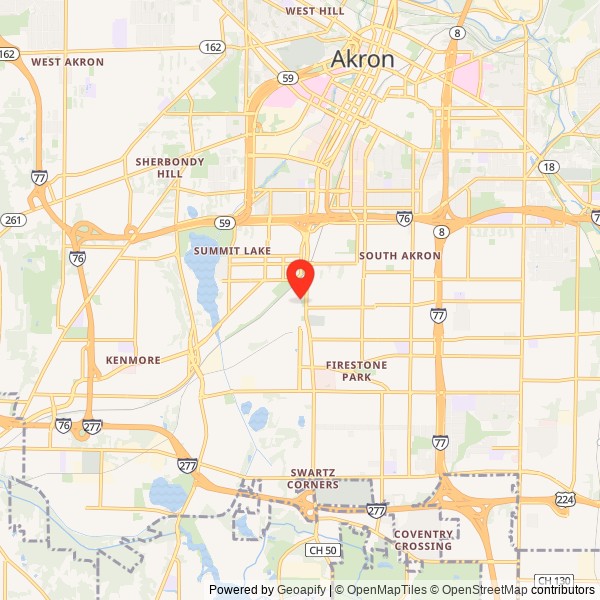
The Firestone Tire and Rubber Company property in Akron, Ohio, is the site of the first buildings that were built specifically for the company and the last buildings to remain in Akron that can be associated directly with Harvey Samuel Firestone. Harbel Manor, the Firestone private residence designed by Harpster and Bliss, as well as the foundry Firestone purchased to start his company, have both been razed. The area is industrial in nature, though when Firestone purchased the property, it was farmland just outside of the city limits. The property consists of three buildings: Plant No. 1, the Triangle Building, previously known as the Warehouse and Shipping Facility, and the Club House. These buildings each had a different function but were closely associated in purpose, style, and materials. Plant No. 1, the largest of the buildings and first to be constructed, was designed by Harpster and Bliss in 1910; the Club House, designed by Trowbridge and Ackerman Architects, in 1915; and the Triangle Building, in the company's next construction sweep in 1926. (The Firestone Tire and Rubber Company 1926 Annual Report claims that the work for the Warehouse and Shipping Facility was "designed principally by our own engineers.")The three buildings are of concrete structure and brick walls. Plant No. 1 and the Triangle Building exhibit a glazing-to-wall ratio of 3:1. The large area of light and ventilation through generous windows typifies industrial building construction of the time and was articulated at Firestone's specific request. Art stone (imitation stone that is made of concrete) is utilized for trim, sills, and headers. The brick is a yellow or buff color common to this geographic area. The buildings respond to the site in their placement. Plant No. 1 is rectilinear and parallels Main Street and the railroad tracks to the west of the site. The Triangle Building is so called because its shape is defined by its east facade (in line with Plant No. 1) and its northwest facade, that also follows the direction of the railroad at the rear of the site where the railroad cuts westward on an angle. The basic footprint of the Club House is square, but it is rotated 45 degrees to address the common space between the buildings. Interestingly, the Club House was built "across the street" from the Plant and so addresses the property but now, because streets have been realigned, appears to turn its back on Main Street.
These remaining buildings are placed within an industrial setting, multiple train tracks run northeast - southwest in the northwest corner of the campus. Directly to the south sits a grouping of industrial buildings occupied by the company Steel Structures of Ohio. Based on the Sanborn Map of 1913 and Atlas of 1921, these buildings were constructed around the same time as the Firestone Tire and Rubber Company and were owned by the Burger Iron Company. When the Firestone Tire & Rubber Company expanded, they built west of the Iron Company and then moved south along Firestone Parkway. A parking lot and circular drive for the purpose of drop offs are located between the southern half of the east facade of Plant No. 1 and the Club House. This is where the Hospital and Employment Building once stood. North of the parking lot and the Club House is a lawn with multiple non-historic landscaped features, gardens, and pathways. Firestone Parkway, at one time, traveled through this green space, continued in front of the Triangle Building, veered to the northeast, and terminated at South Main Street. Today, Firestone Parkway is bisected by the front lawn where it terminates in front of Plant No. 1 and is forced to turn on to Gottwalt Street. The remaining portion of Firestone Parkway is a small 200-foot drive ending in a large parking lot in front of the Triangle Building. East of the Triangle Building, across Firestone Parkway Drive, a Firestone Retail Store is currently located. This structure was built in 1958. Prior to that, Stanton Avenue ran through that lot and terminated at Firestone Parkway.
All three buildings are well constructed and in good condition. Alterations over the life of the property generally followed the needs of the company, and often paralleled the demands of the market. Recent changes include replacement windows on the east facades of Plant No. 1 and the Triangle Building, alterations to the facade of the Club House and the demolition of the combined Hospital & Employment Building as well as the Power Plant.
Plant No. 1
Plant No. 1 is an east-facing, common bond, buff brick, industrial building constructed of reinforced concrete. Built in 1910 as a factory and office building, it was originally nineteen bays across, eighteen bays deep and four stories tall. Sitting on a concrete foundation, the partially raised basement and first floor had a rectangular footprint, while floors two through four were shaped like two capital H's placed next to each other within the rectangle with a central corridor connecting them through the middle. Each leg or wing of the "H-H" is three bays wide and eight bays long. Soon after completion, the north and south sides of the building were extended eight bays, stretching the rectangular footprint on the first floor and lengthening each wing to sixteen bays.A second addition was added before 1916, in which the three most northeastern wings were extended an additional eight bays, giving the building its current footprint of approximately 650 feet wide by 300 feet deep. At this time, a fifth floor was added to the entire building. Lastly, a new main entrance was placed at the base of an eight-story clock tower, producing the existing 46 bay, five-story front facade with a three-bay main entrance tower located four bays to the north of the center of the facade. Enclosed bridges connect portions of the wings where a connection was necessary to facilitate the needs of the production line; some are original or were added very early. This is evident when the Sanborn Maps of 1913 and 1940 are compared.
Brick pilasters define each of the bays as they travel through the belt course at the fourth floor (original building termination) and come to an end in the corbelled brick cornice. It is the original four-story coping stone that forms the belt course below the fifth-floor addition. The brick wall pilasters provide the rhythm and ornamentation to the exterior of the building, breaking its colossal scale into more human-scaled spaces. The wall of multi-light steel windows on the front (east) facade have been replaced with two-light fixed bronze glass windows. Most of the lower window openings on the remaining three elevations have been infilled with brick. Some of the multi-light steel sash windows remain on the west or rear facade looking out over the railroad tracks. Historic windows remain on the upper floors in the courtyards between the facing wings. The windows consist of nine-over-nine double-hung steel sash windows, clustered three to a bay.
Rows of monitors that once let light into the manufacturing spaces can be found on the flat roofs. The monitors are on the upper roofs as well as on the roof of the first floor between the legs of the "H". The monitors are now covered with corrugated metal and ethylene propylene diene monomer (EPDM) roofing material. There is speculation that during times of war production the company's signs were removed and the monitors were covered to ensure anonymity and provide better security from possible enemy air surveillance. The current roof is a flat roof of varying materials with numerous equipment penetrations.
Notable to the appearance of Plant No. 1 is a large neon sign on the northeast corner of the building that advertises the Firestone name and shield. The sign addresses the city. It is not the first sign that held that position. The first sign was removed before or during World War II. Plant No. 2 (further down "the Firestone mile" and now demolished) also had a sign that was removed. A new sign was replaced on Plant No. 2 that faced those entering the city from the highway. This sign was salvaged from Plant No. 2 and placed on Plant No. 1 when Plant No. 2 was razed.
The monumental entrance and clock tower is slightly off-center of the building. The three-bay tower holds the one-story main entry at its base with a decorative brick and stone entablature. A three-story unornamented body fills the tower and is capped by a two-story crown with decorative brick corbelling and a one-story clock face that sits at the top of the tower.
Plant No. 1 was the main building for the company for several years; it housed everything from manufacturing, research and development, administrative offices, and shipping and receiving. The building primarily manufactured tires and tubes while the original factory on Sweitzer Ave. produced rims. The main entry through the clock tower leads to the main lobby in the building. The lobby space itself is of fitting scale to complement the tower. A large, open, two-story, circular space welcomes guests into the building and emphasizes the grandeur of the company with granite floors and a granite circulation desk. A circular, "Firestone red" carpet is placed in the center of the space with a large circular granite table. The finishes and decoration in the current space were added in 1982. Seating is available against the curving walls of the large room while thick white columns support the open space. As one enters the building, three elevators to the north and an open stair to the south along with double doors on either side of the room, allow access to the rest of the building.
Heading upstairs from this point, one would bypass the manufacturing, research and development, and shipping and receiving spaces, instead heading to the original administrative wing of the factory. The Board Room and Firestone's office along with the rest of the administrative offices are on the fourth floor (not the top, as the fifth floor was an addition) in the southeast corner. These two rooms retain their historic materials and appearance with tall plaster ceilings and light oak paneled walls. Firestone's office has an ornate marble fireplace and an adjacent "secret room" with a closer. When closed, the door blends in seamlessly with the oak paneling. This secret room is a small coat closet and personal bathroom for Firestone. The additional administrative offices are finished with the same materials, however significantly less elaborate.
In the manufacturing spaces, the three bay wide concrete structure and the concrete floors and ceilings are exposed except in some areas where they have been painted. Utility pipes and wires are hung from the ceiling and span the length of the wings. The main aisles, where equipment would be driven, are lined with original square steel floor tiles that, except for surface scratches, are in excellent condition. The manufacturing spaces are located on the outside bays to allow for manufacturing on both sides of each wing, much like a loaded corridor. Large industrial windows along both walls once allowed light to flood the space, however, many of the windows have been infilled or replaced with smaller non original windows but the openings are evident. Depending on the product manufactured in the specific wing, the equipment would vary. Some equipment remains. Some areas are full of racks and some tires remain.
Multiple wings were home to research and development departments. These areas are evident because much of the equipment remains. Chemical laboratories with rows of soapstone countertops, sinks and hood vents helped develop and refine the products produced within the building. Testing facilities ensured products meet the company's standards. Steel chain blast shields and thick walls protected workers from tire shrapnel while testing standards such as tire pressure, expected mileage and puncture resistance of the products. Dissecting areas have shelves of tire sections cut in half with a large band saw located within the room.
The shipping and receiving department occupied the rear of the first floor, the western portion, closest to the train tracks and loading docks. In these spaces, large overhead cranes (capable of lifting ten tons), moved raw material pallets and finished products through the space. Much of the floor is covered in the steel tiles previously mentioned. Large monitor windows located between the wings allowed light into the space. These windows have since been covered over with corrugated metal and EPDM roofing.
Currently, the building is largely unoccupied, though Bridgestone/Firestone USA still makes specialty race tires for Indy races in this building, occupying approximately fifteen percent of the space. Some of the wings, primarily on the front, east side of the building, had been converted into office space in the latter half of the 20th Century as the manufacturing moved to plants outside Akron. These spaces now have acoustical ceilings, institutional carpeting, demountable partitions, and conduit throughout the space. Most of the windows have been infilled with masonry or smaller tinted windows.
The Triangle Building (Warehouse and Shipping Facility)
The Triangle Building, located north of Plant No. 1, is also a common bond, buff brick, industrial building constructed of reinforced concrete. Built in 1926, the building's east facade is fifteen bays, approximately 360 feet wide. Its south facade is thirteen bays, approximately 300 feet deep. The rear facade connects the southwest and the northeast corners approximately 450 feet with a chamfered single bay at each corner, forming the hypotenuse of the right triangle.This four-story building, sitting on a concrete foundation with a partially raised basement and a flat ballasted roof, was originally the Warehouse and Shipping Facility. While this building is architecturally compatible with Plant No. 1, it has very little ornamentation. Much like Plant No. 1, the front (east) facade windows have been replaced with bronze glass windows with only two fixed lights. Historic multi-light steel sash windows remain on the south and northwest elevations. Only a few openings have been infilled. However, some windows remain in place but have been blocked with wall finishes at the interior side.
The interior of this structure reflects very little change from its original configuration. Historically, all floors consisted of an open plan except the second floor. Like it is today, the second floor was originally cut short along the northwest wall, creating a two-story space where a long, thin mezzanine, used as offices, sits on columns in the center of the space. Currently, the upper floors have non-original concrete masonry walls breaking up the original open plan. Three large freight elevators and a maze of steel tile pathways kept supplies and products moving through the building. Multiple bridges connected the building to Plant No. 1, which allowed for easy movement of products off the production line and into the warehouse. Large ramps connecting each floor to the next also helped with the flow of materials. These ramps were so large that the building was converted into a parking garage for employees when the building outgrew its need as a warehouse and shipping facility.
When the products were ready to ship, seven loading docks, (five smaller ones, where the trucks would back up to; and two large ones, where the truck or possibly a train car could back into the building), facilitated the loading of the products. Although there is no existing evidence that train rails enter the building, there is ample room to back a number of train cars into the two-story space at the rear of the building nearest the existing train tracks. Furthermore, a lack of a basement in this area of the building suggests heavier loads in this portion of the building. The industrial nature of the building is evident. The concrete floors and ceiling are connected by the round concrete columns and mushroom capitals. The concrete columns in Plant No. 1 are square or rectangular and in line with concrete beams; 16 years later, the Triangle Building reflects changes in modern concrete construction by the use of round columns and mushroom capitals with a structural slab. Aside from soil and peeling paint, the building is in good condition.
The Club House (Firestone Restaurant and Club Building)
Built in 1915, the Club House resides east of Plant No. 1, on the opposite side of Firestone Parkway and is connected to it via an underground tunnel, which allowed employees to travel between buildings without stepping outside. The tunnel is approximately 12 feet wide and 240 feet long at the basement levels, under Firestone Parkway. This tunnel has been in place since at least 1913, but was most likely built into the original building with the forward thinking of expansion in future years.The Club House is a square-shaped, four-story building constructed of a protected steel frame, reinforced concrete floors and roof and covered with a brick exterior. While its foundation is unknown, the building has a basement and an underground tunnel along with a flat built-up roofing system. Similar to the Triangle Building, this building is architecturally compatible with Plant No. 1; however, it has very little ornamentation or architectural features of significance.
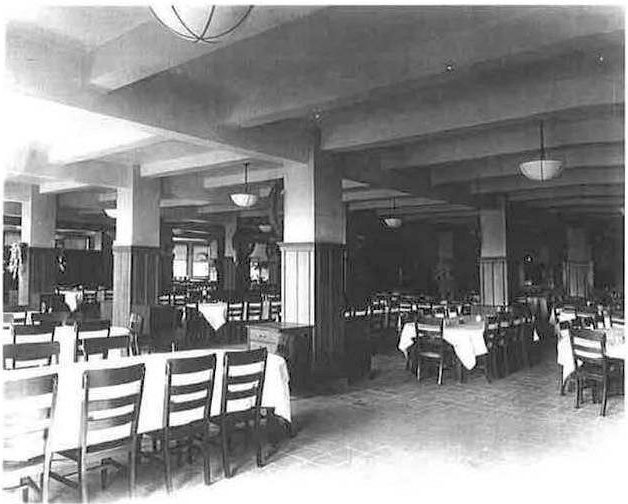
The building's function and interior layout have not changed much since its construction. As its name states, it was designed as a restaurant/cafeteria, a Firestone Club meeting area, and a gymnasium/ auditorium. Employees could enter the building through the front door facing Plant No.1, or through the existing underground tunnel connecting the two buildings at the basement level. Convenience shops such as a barber, a dentist and a bank were located at the basement level of the building. Upstairs, on the first floor, the restaurant/cafeteria catered to the employees. There was a large kitchen in the back of the building that served the main dining room to the south as well as the executive's dining room at the north portion of the building. Again, these spaces still function as originally designed; however, the finishes have been modernized. The second floor held most of the club and organization activities, including meeting rooms, classrooms, and a library. Currently, the second floor has been converted to rentable office space. The third and fourth floors were originally occupied by the gymnasium/ auditorium two-story space; it is here that many of the historic architectural features and finishes of the building remain, emphasizing the grandeur of the company.
The Firestone basketball court is located in the center of the building on the third floor. To the side of the court, a stage is located in the eastern portion of the building. A balcony, wrapping around the remaining portion of the room is located on the fourth floor with auditorium seating for both the stage and the basketball court. Locker rooms and other fitness activity rooms, with terrazzo floors and plaster walls, are located to the east of the basketball court.
Historic, clear-stained maple wood floors are present, with the Firestone shield located at the center court and the original dimensions of the National Basketball League court still painted on the floor. Oak paneled wainscoting wraps the east wall, creating a base for the apron of the auditorium's proscenium stage. Columns below the balcony seating are wrapped in matching oak paneling. A scoreboard is to the north of the stage. In the balcony, original wood and metal auditorium seats created ample seating for basketball games as well as performances on stage. The Firestone shield is located below the armrest at the aisles. A frieze with decorative molding separates the two stories of the gymnasium/ auditorium, while crown molding is present at the ceiling level. The ceiling includes a raised center space with panel molding; non-original acoustical tiles have been added to the ceiling.
The Akron Firestone Non-Skids, one of the founding members of the National Basketball League, formed in 1937, played here. The team was made up of Firestone Tire and Rubber employees and went on to win two National Titles in the league. Employees used the stage and court floor for other activities, including play productions, band concerts, and dance competitions. A projection booth was added to the balcony for lighting for the productions as well as projecting motion pictures.
Currently, the building is unoccupied, the restaurant /cafeteria has been renovated but still remains on the first floor. Many of the original finishes and decorative elements of the building have been lost over the years with the exception of the basketball court/stage and auditorium seating. The front facade, on the western side of the building underwent a renovation in the 1980s and currently exhibits a modern glazing system and brick wall pilasters topped with a sheet metal coping.