The Historic Williamsburg Bridge in NYC Was the Longest Suspension Bridge in the World When It Opened
Williamsburg Bridge, New York New York


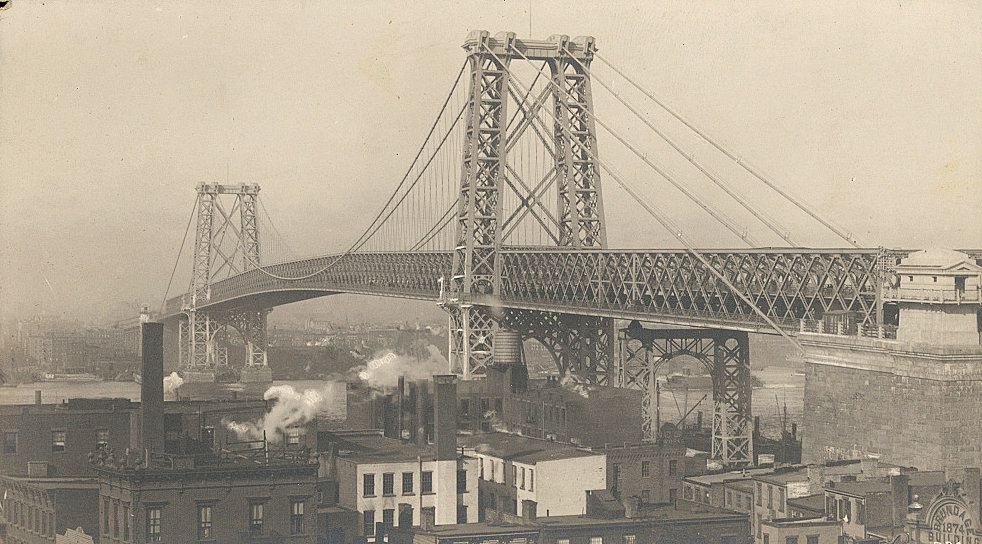
The Historic Williamsburg Bridge
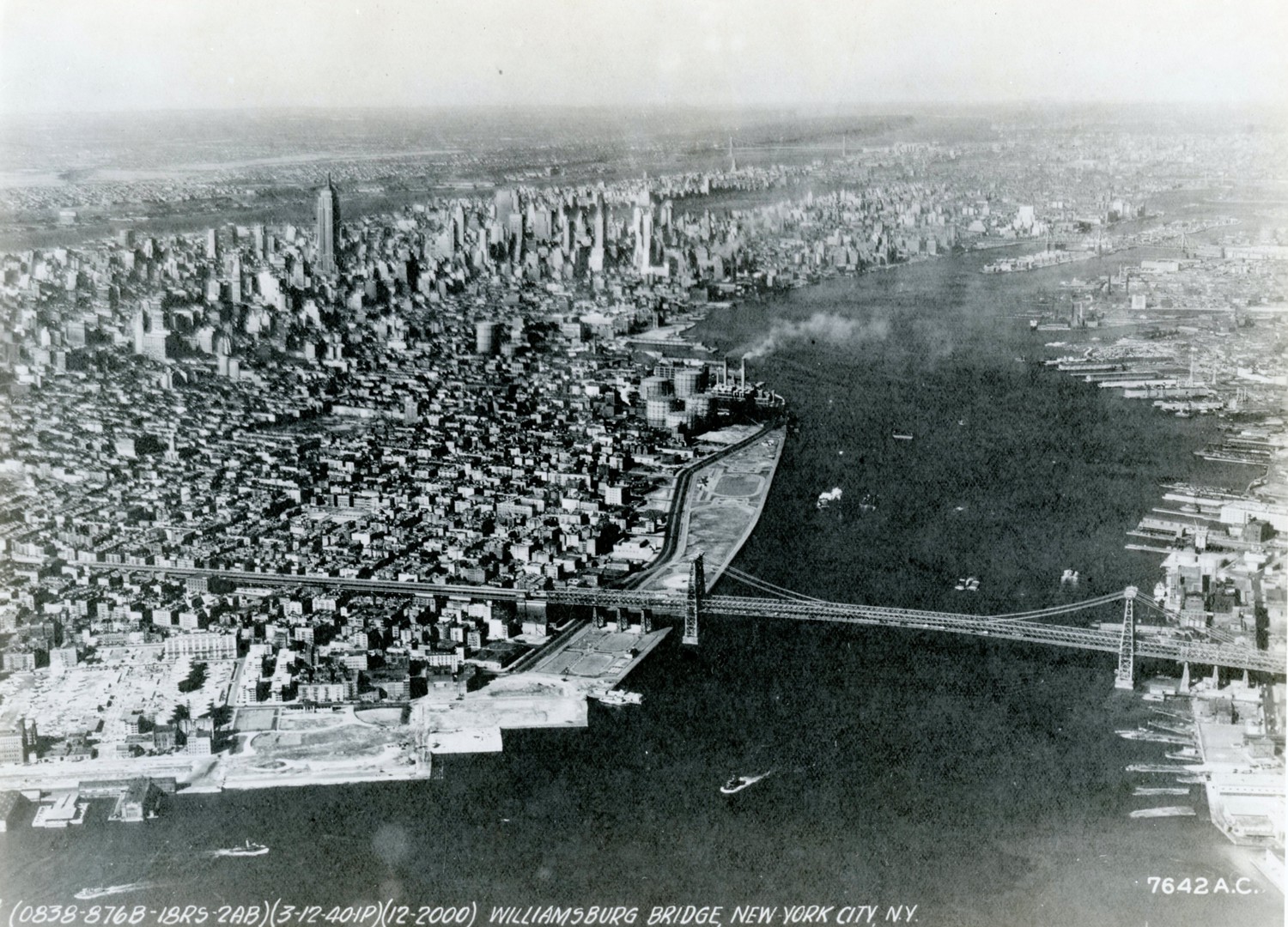
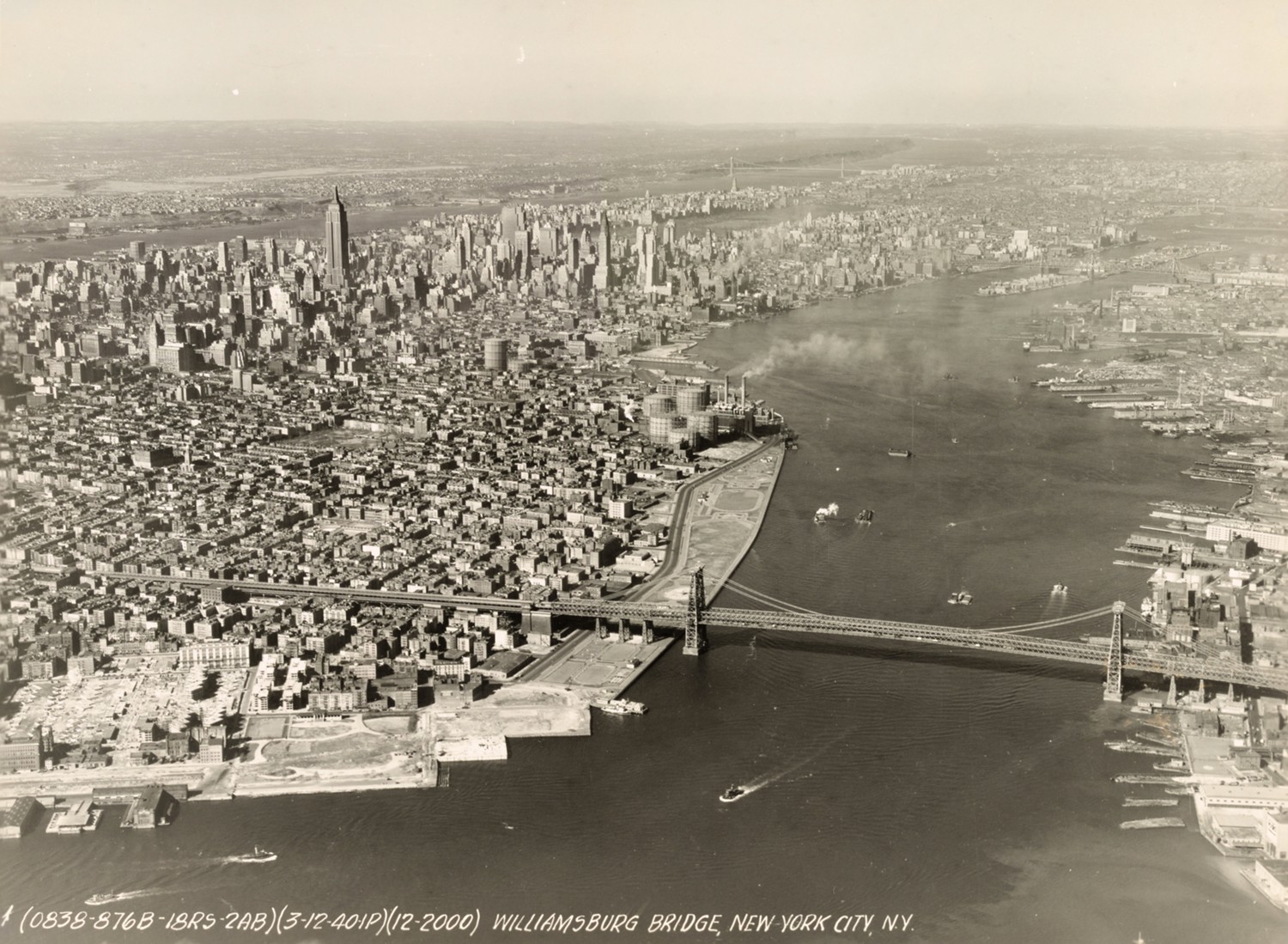
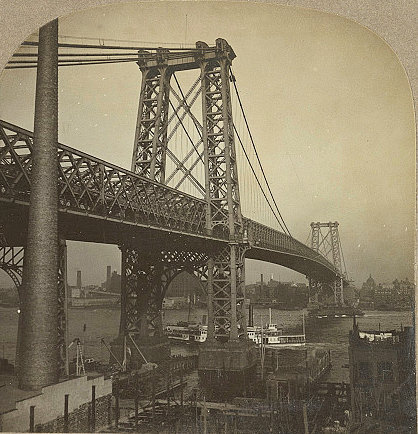
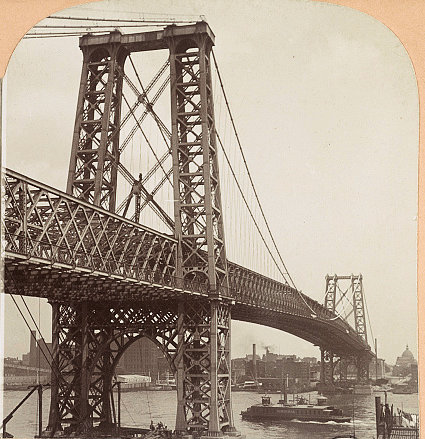
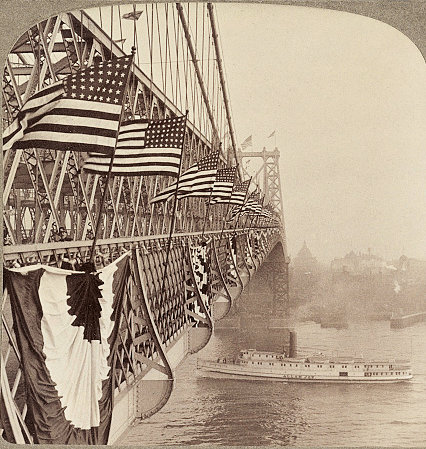
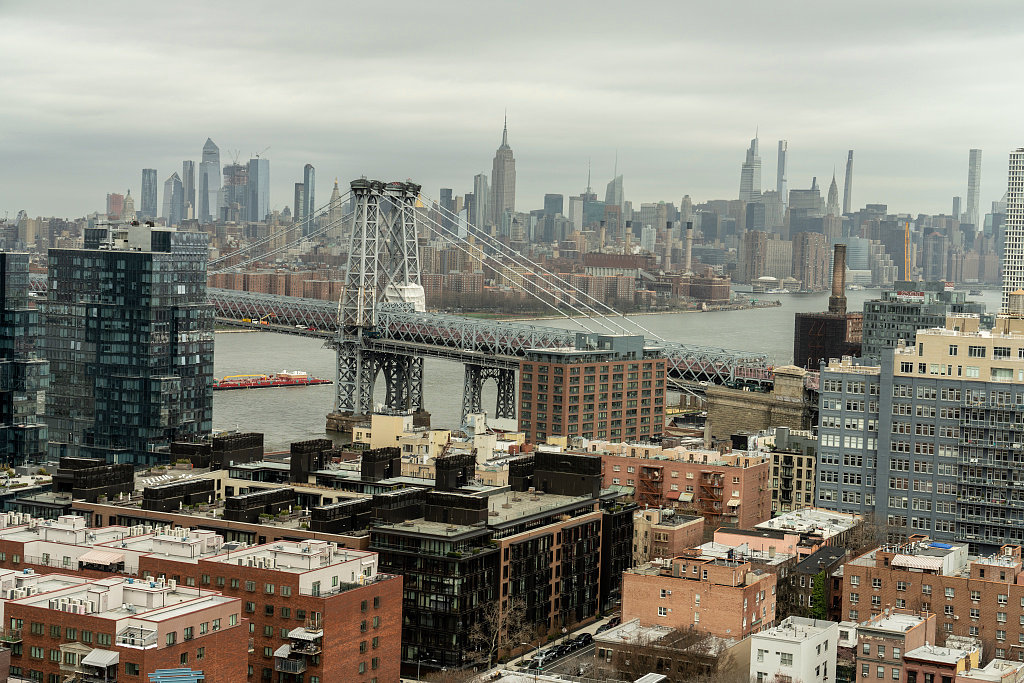
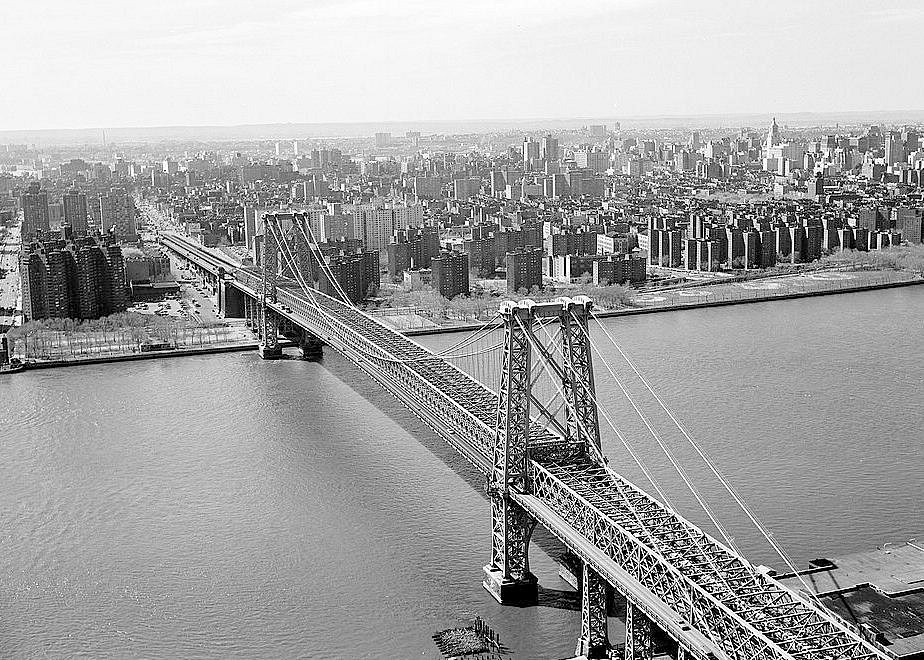
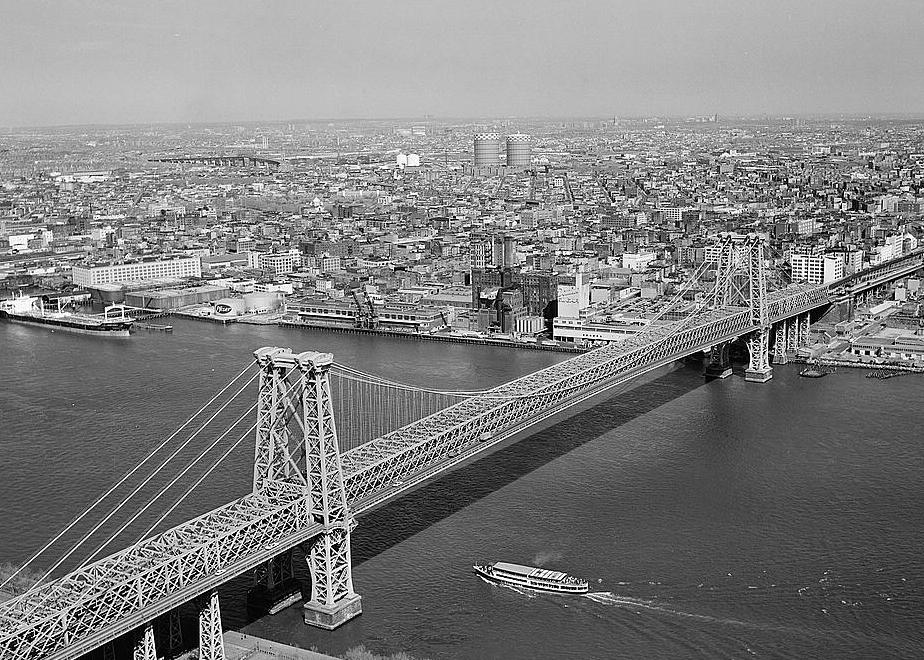
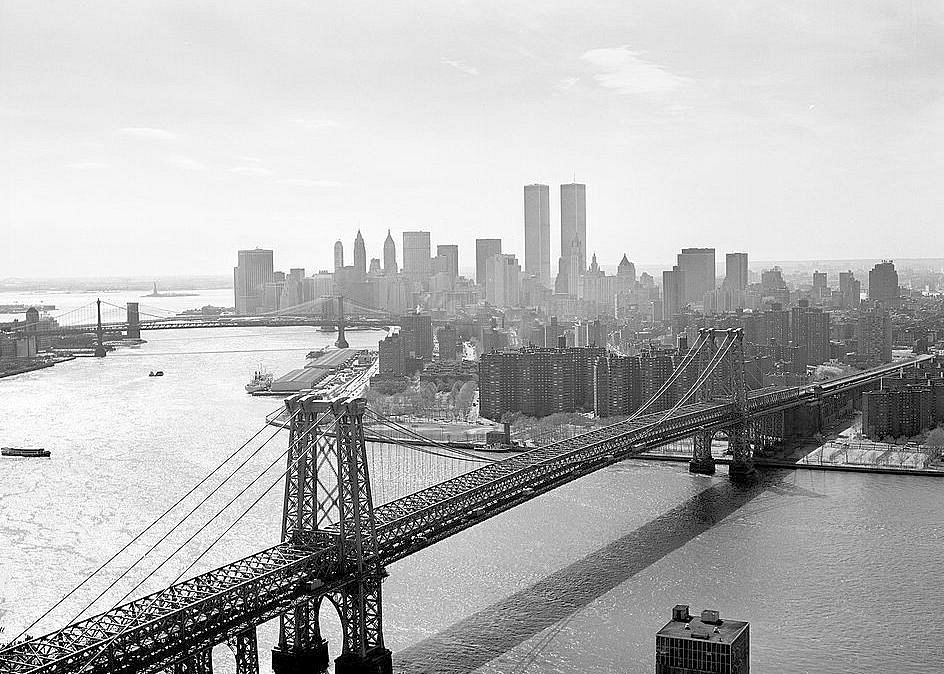
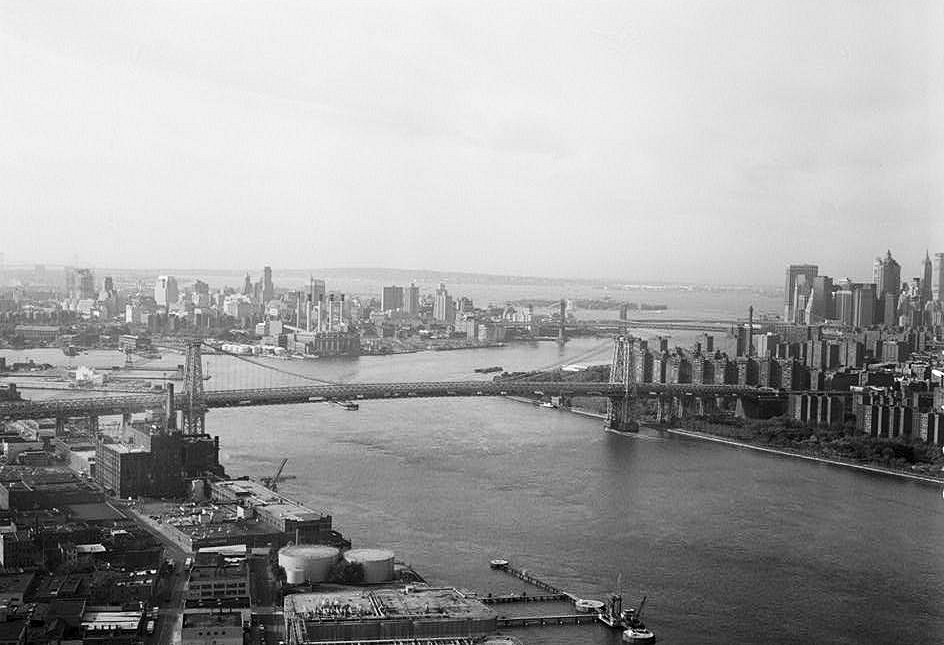
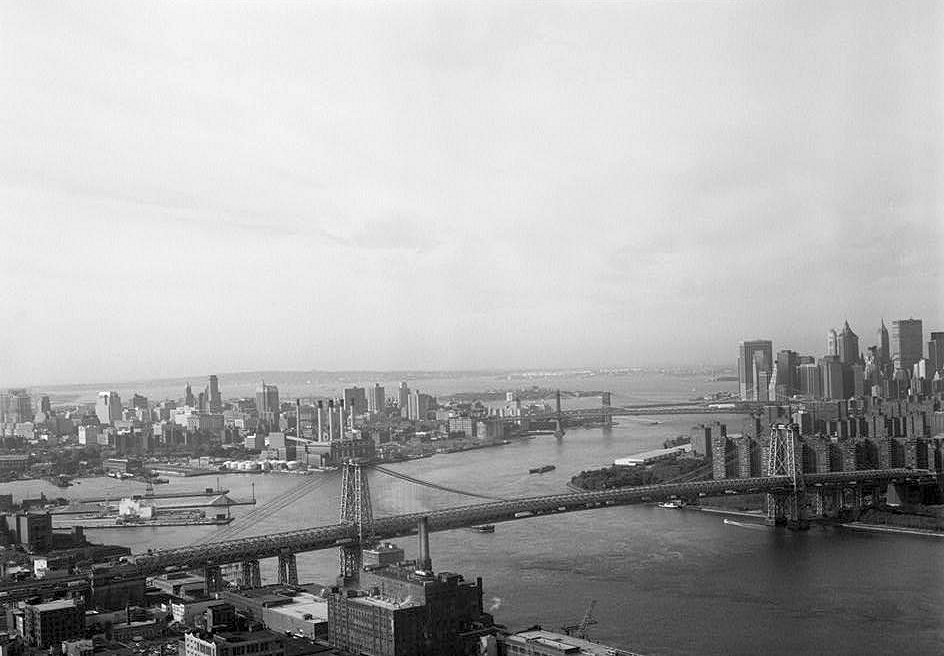
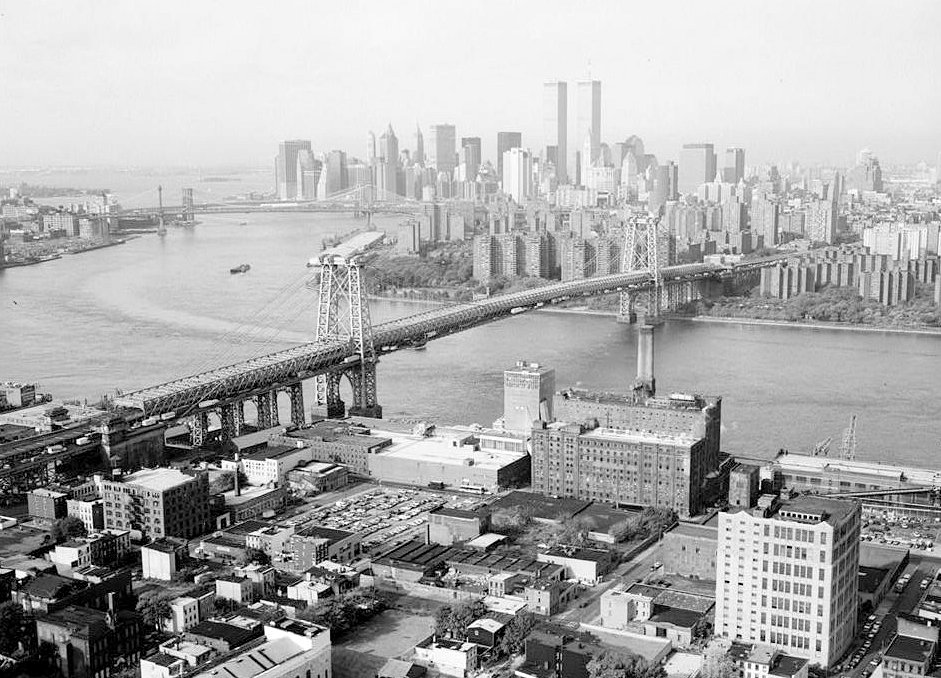
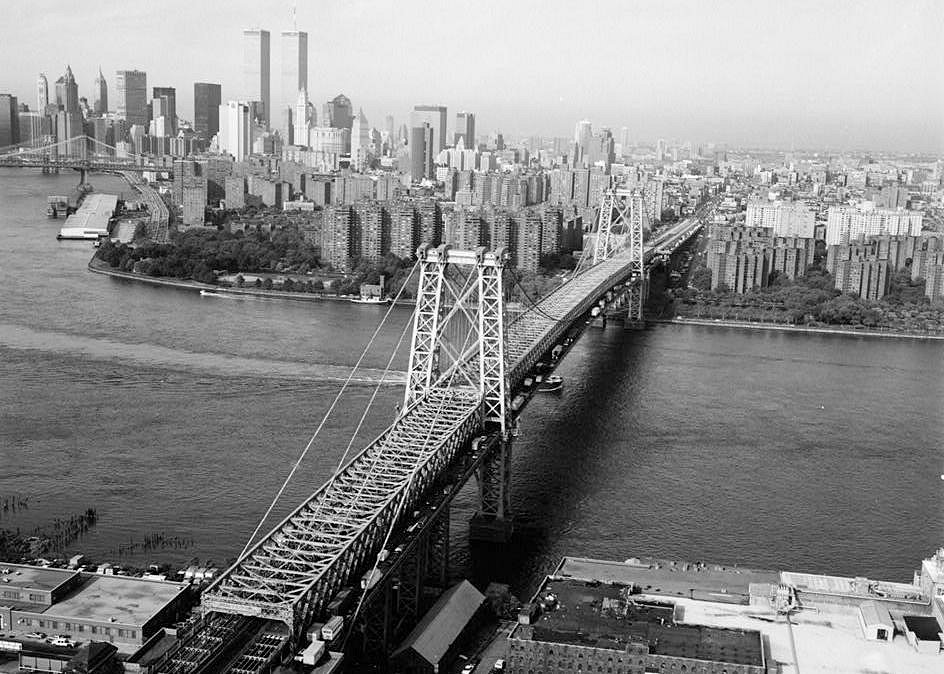
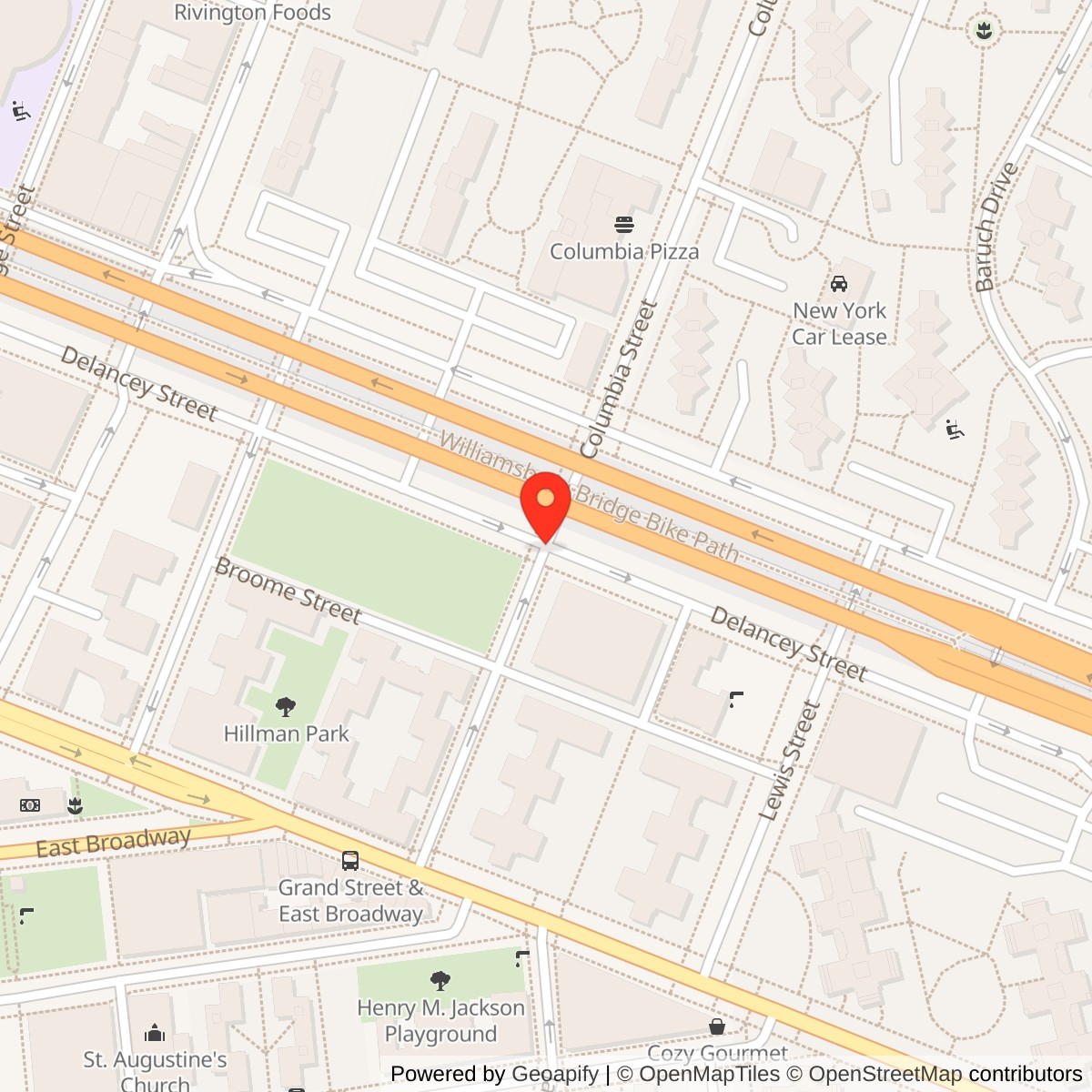
The Williamsburg Bridge is a suspension bridge in New York City across the East River connecting the Lower East Side of Manhattan at Delancey Street with the Williamsburg neighborhood of Brooklyn at Broadway near the Brooklyn-Queens Expressway. Completed in 1903, it was the longest suspension bridge span in the world until 1924. It was designed by Leffert Lefferts Buck as one of the last major suspension bridges for the horse and carriage. Following the Brooklyn Bridge, which captured the imagination of engineers, poets, and artists after it opened in 1883, the Williamsburg Bridge was considered an "ugly duckling" by comparison. L.L. Buck countered the aesthetic criticism of the bridge with the words "but it is strong". This first major suspension bridge to use steel towers to support the main cable, over 100 years later, is still strong. With a wooden carriageway replaced previously by a concrete deck and currently by an orthotropic steel deck, and its pedestrian foot walk replaced with a new foot walk/bikeway system that is barrier-free, the bridge has worked its way into the hearts of New Yorkers.The bridge is one of four toll-free vehicular bridges connecting Manhattan Island and Long Island. The others are the Queensboro Bridge to the north, and the Manhattan and Brooklyn Bridges to the south. The Williamsburg Bridge once carried New York State Route 27A and was planned to carry Interstate 78, though the planned I-78 designation was aborted by the cancellation of the Lower Manhattan Expressway and Bushwick Expressway.
After the Williamsburg Bridge opened in 1903 thousands of Jews from Eastern Europe moved to the Williamsburg neighborhood from the Lower East Side. Lithuanian, Polish, and Russian Orthodox communities also developed, as did the Italian one between Bushwick and Union avenues. Coldwater flats and six story tenements replaced brownstones, and by 1917 the neighborhood had some of the most populated blocks in the city. Jewish communities continued to grow and a large number of refugees escaping Nazism moved in and formed Hasidic synagogues and schools. Manufacturing, which employed more than a million people in 1950, attracted many Puerto Ricans during the following decade.
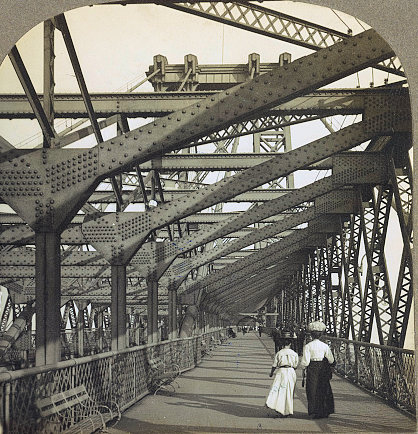
A steel suspension bridge, it also crosses the East River, connecting Manhattan to Brooklyn several miles north of the Brooklyn Bridge. At the time, Scientific American called it "an engineer's bridge pure and simple." Critics considered it utilitarian but unsightly, with a complete lack of beauty and grace. While designed for rail traffic, trains did not run on the bridge until 1908 because of disputes between greater New York and private rail companies.
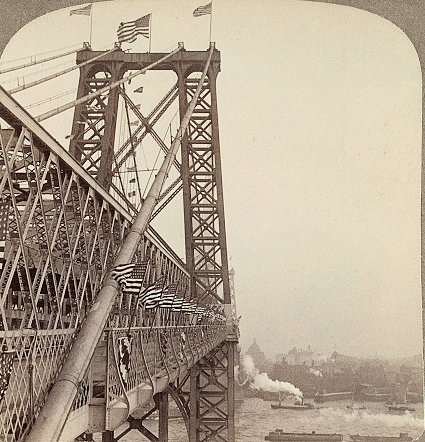
When it opened, the Williamsburg Bridge was the longest suspension bridge in the world, with a span of 1,600 ft and a total length between approaches of 7,308 ft. Its two all-steel towers reach a height of 310 ft, supporting four steel 18-in.-diameter main cables. Steel arches, not the cables, support the side spans. Massive 40-ft-deep steel stiffening trusses carry the decks.
Construction took only seven years, half the time it took to build Brooklyn Bridge. Its final cost came to $24.2 million, including land and approaches. Despite the increased costs, economics guided much of the design. Since the main cables don't support the relatively short (300 ft) side spans, they were made to be shorter and lighter. The towers, made from less expensive and lighter steel rather than masonry, required smaller foundations. Steel-supported approaches also reduced construction time and expense.
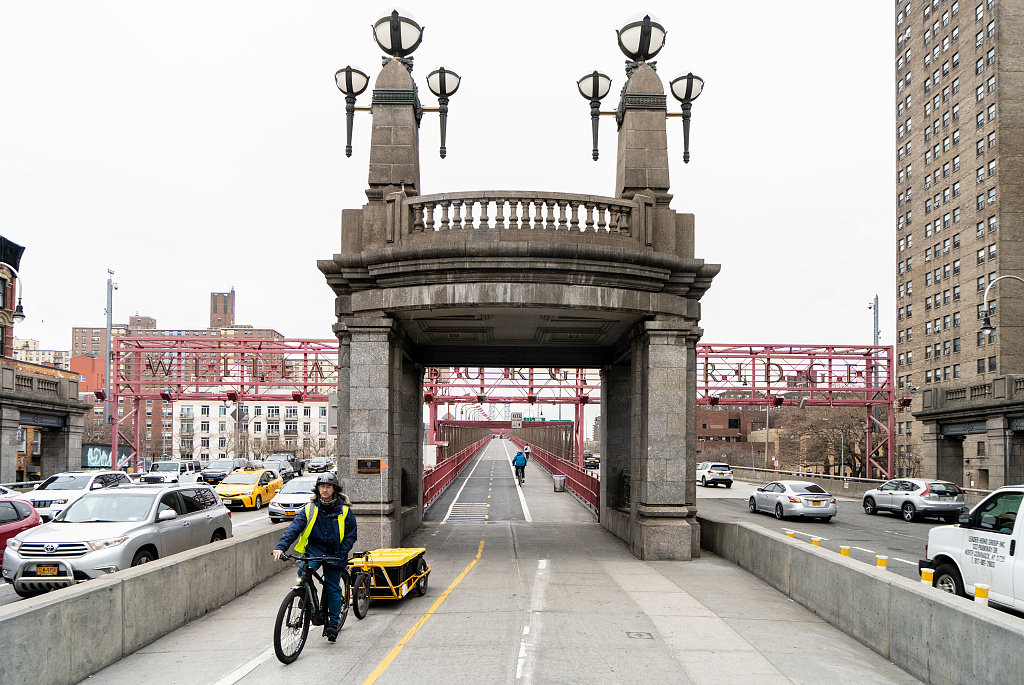
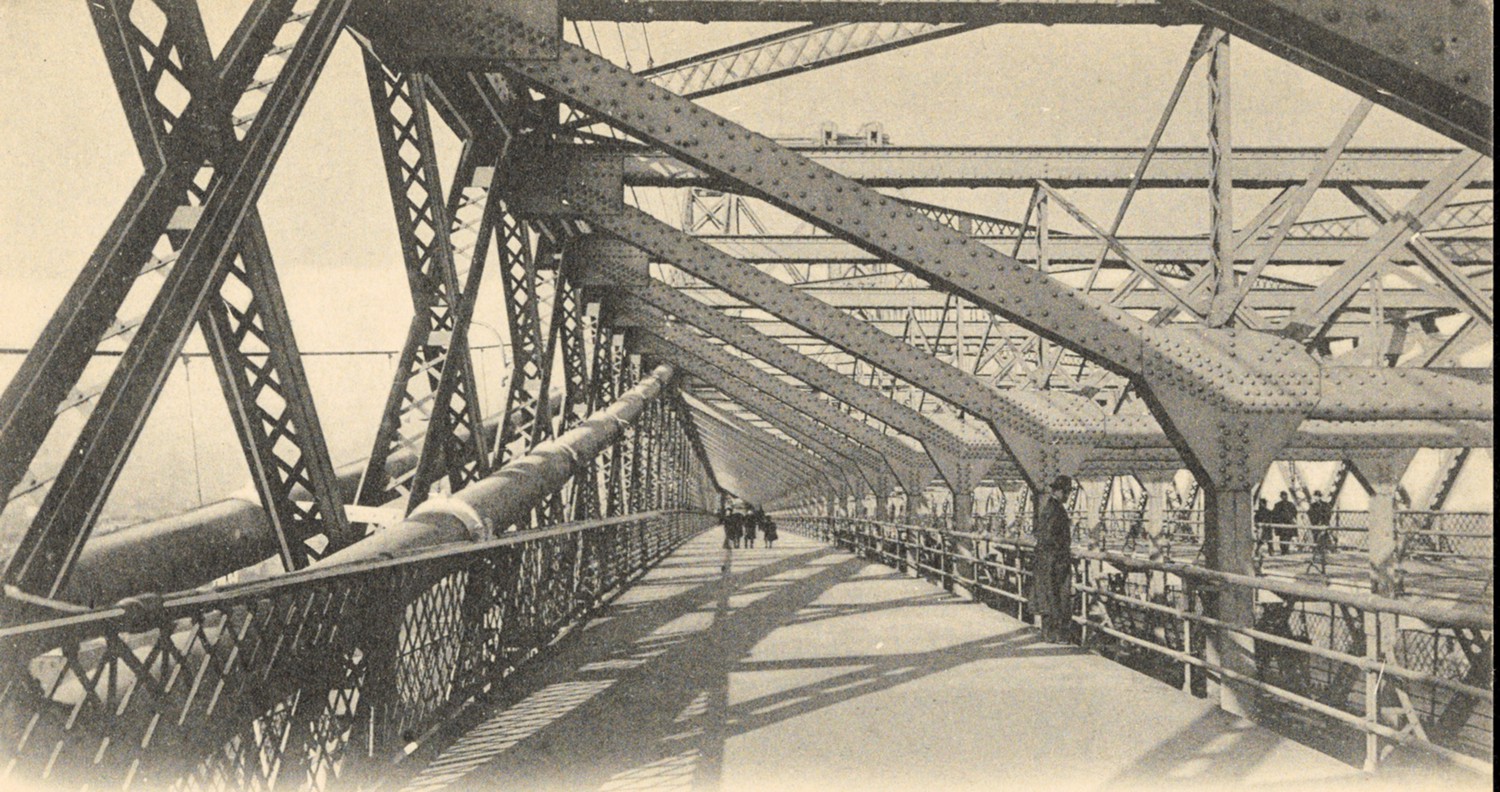
Currently, the Williamsburg Bridge still represents a major crossing of the East River. It carries eight lanes of traffic divided by two rapid transit tracks for subway lines. Daily, about 140,000 motorists and 92,000 transit riders cross the bridge. These are supplemented by 600 bikers and 500 pedestrians who cross on upper pathways.
Williamsburg Bridge Construction History
Early in the 20th century, first- and second-generation Irish and German settlers populated the Williamsburg section of Brooklyn, which was not yet part New York City. They began agitating for a bridge once it became clear that the Brooklyn Bridge was contributing heavily to growth, trade and prosperity of its surroundings further south. But powerful ferry interests and many officials in New York City did not want the new bridge.Finally, a commission received appropriations and came to terms with Frederick Uhlmann, a railroad owner who had acquired a prior charter to build crossings at the site. The new commission appointed Leffert L. Buck as the chief engineer. He announced plans for the new $7 million bridge in an 1896 issue of Engineering News. Construction began that November.
The East River at this site was about 60 ft deep at high tide and the current flowed at six miles an hour. Like the Brooklyn Bridge, the piers reached down to bedrock using large wooden pneumatic caissons. According to a magazine report, each caisson weighed nearly 2,000 tons and required nearly "3,000 wagon loads of concrete to sink it."
Workers with picks, drills and shovels excavated the bottom. Dynamite blasted loose boulders and large rocks. Men pushed the water, mud, clay and stones toward flexible tubes that carried the excavated material to the surface by air pressure. The caissons descended at a rate of about 4 inches a day. As they descended, the men worked fewer hours a day and received higher rates of pay.
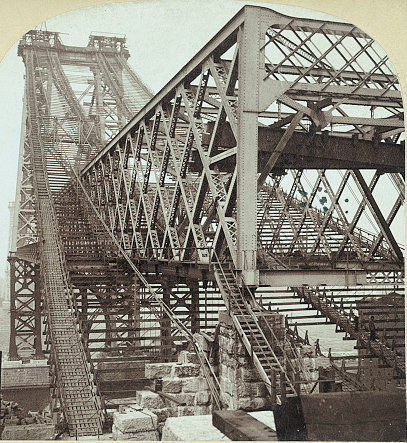
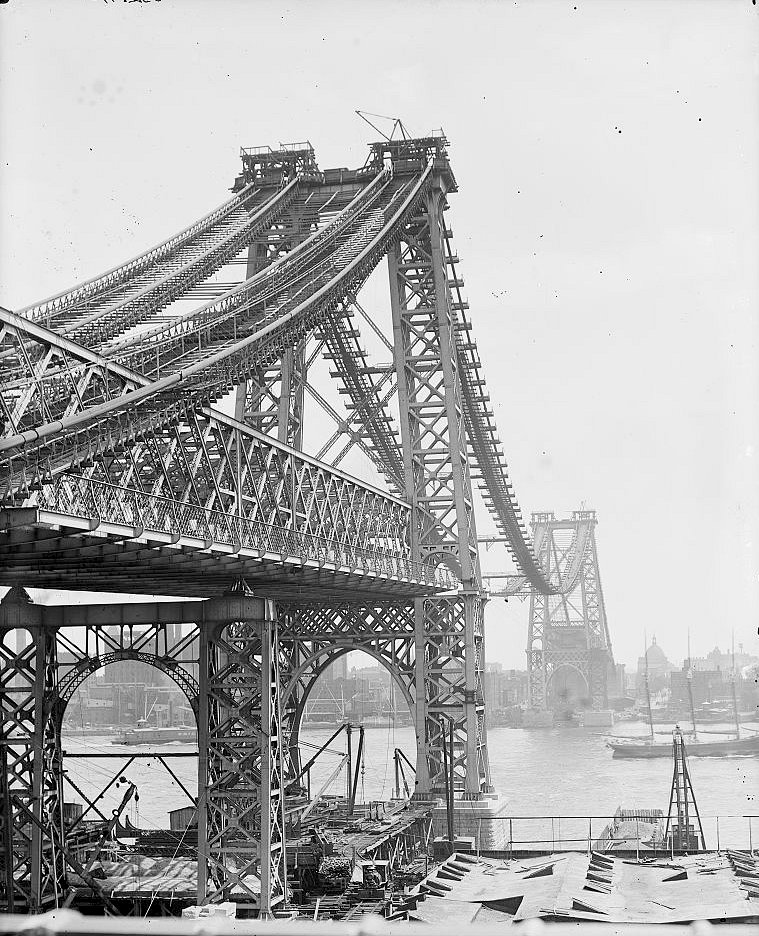
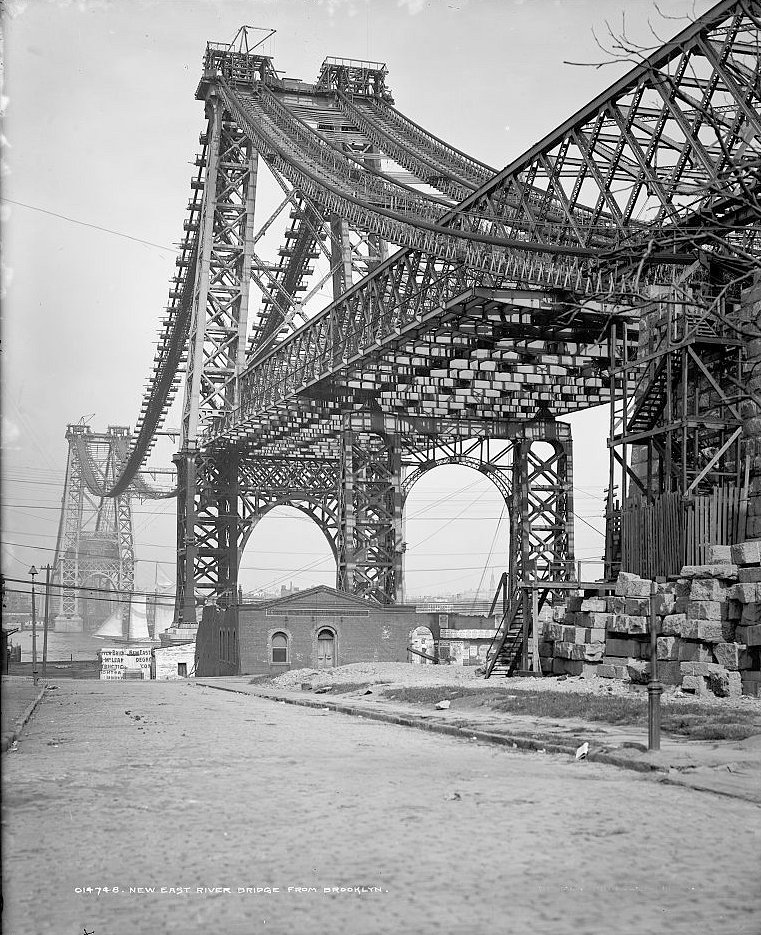
Each of the bridge's two steel towers sit on two separate masonry piers. Contractors built a 125-ft-high wooden temporary tower between the two piers and assembled large derricks on top. The derricks set huge steel castings, weighing nearly 25 tons apiece, onto the piers to carry the weight of the main steel tower posts. Large steel bolts anchor each tower to its piers.
The derricks continued to assemble the columns, struts and braces, taking the towers to the level of the deck. Workers then built a steel beam-supported platform at this level, took down the wooden temporary tower and reassembled it on top of the platform. Work then continued, connecting the steel parts until the towers reached their full height, about 100 ft higher. Meanwhile contractors constructed the riveted steel arches that reach from the towers over land and water to the anchorages.
Saddles atop the towers support each of the four 4,344-ton main cables. Each cable consists of 37 strands of 208 wires, and nearly 17,500 miles of wire in the cables suspend the bridge 135 ft above the river. Buck specified that the wires not be galvanized. While this made them less susceptible to hydrogen embrittlement, it laid them open to possible rusting. Once a cable's wire was all in place, workers tightly clamped it into a cylindrical bundle, which was waterproofed and covered with a plate steel shell.
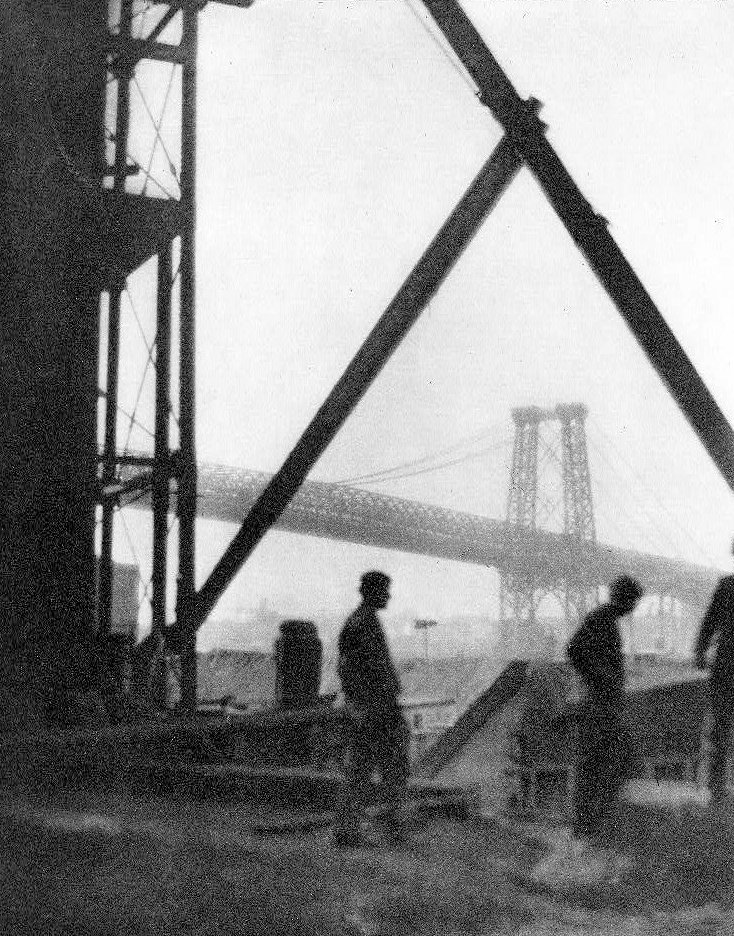
In 1902 a severe fire in a worker's shack above one of the towers damaged some of the main cable wires, creating some doubts about the bridge. But Roebling Company, which provided the wire rope and wove the cables, simply spliced new wires into the burned-out section with wires of even greater strength. That same year Gustav Lindenthal became chief engineer of the Williamsburg Bridge. He stressed its strength, twice that of the Brooklyn Bridge, rather than its design.
Once the bridge opened, it greatly influenced the migration of ethnic groups. By that time Brooklyn had become part of New York City, and many Manhattanites from the densely populated lower east side moved into the Williamsburg section of Brooklyn.
In 1910 the city banned tolls as a way to finance bridge construction and maintenance. Shortly thereafter, engineers noticed some sagging under the increasing weight of locomotives, cars and trucks. Originally, Buck had designed the bridge for lighter vehicles. To accommodate these and future traffic conditions, contractors added additional supports to the side spans and more steel to the deck. Reconfiguration of the bridge took place in the early 1920s to provide eight lanes for road traffic.
Over the next few decades the bridge fell into disrepair. At one time in the 1960s, a newspaper reported that rust was raining down on pedestrian and cycling walkways; the city closed these walkways in the 1970s after a maintenance worker was mugged. In April of 1988 an inspection revealed severe corrosion throughout the bridge's cables and steel supports. The city shut the bridge to all traffic for two months to make temporary repairs and initiated a study on whether to replace or repair the bridge.
A panel of design experts reviewed several replacement designs as well as rehabilitation plans. By November of 1988 the New York City Department of Transportation (NYCDOT) decided to repair the bridge while keeping it open to minimize disruption to traffic patterns and surrounding communities. What followed was a 15-year, $1 billion reconstruction project with design and engineering support by Parsons Brinckerhoff. The rehabilitation work included:
• Replacement of both the north and south roadways with lighter and stronger orthotropic steel decks as well as a completion of the upper pedestrian-bicycle path
• Added supports and new approaches for the two subway tracks; about 100,000 daily transit riders had to find alternative crossings for several months during 1999
• Reconstruction of a viaduct to connect the bridge with Interstate 278 (the Brooklyn-Queens Expressway)
By 2002, all eight lanes were open to traffic and final work began in 2003 and finished up in 2012. This project involved the rehabilitation of the tower bearings, the truss system, the steel structure of all the towers and painting of the stiffening trusses. Additional work included the updating the interiors of anchorage houses, restoration of decorative lighting and installation of an Intelligent Transportation System to better understand the how commuters use the bridge and increase its transit efficiency.