Socks were Manufactured here Until 1968, in 2011 it was Converted into Shopping
Hollar Hosiery Mills - Knit Sox Knitting Mills, Hickory North Carolina


- Categories:
- North Carolina
- Industrial
- Textile Mill
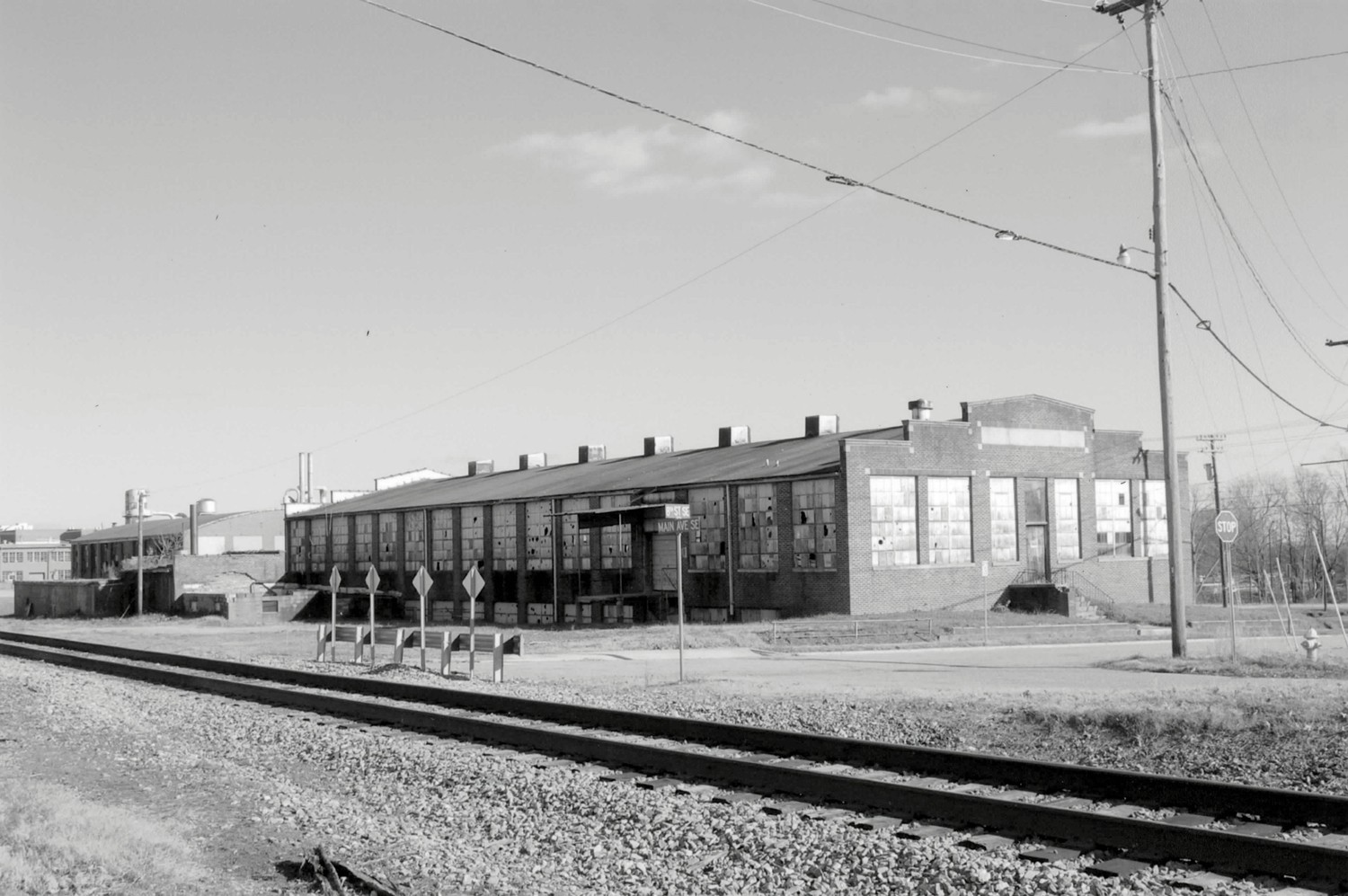
Hosiery production contributed significantly to the emergence of Hickory as one of the leading manufacturing cities in the Piedmont. In 1930, the city boasted seven hosiery mills. By the end of the decade, thirty-two hosiery plants operated in Hickory and employed roughly half of the city's industrial work force.
Constructed ca. 1930 by Hollar Hosiery Mills, the mill grew and prospered with the rise of knit-hosiery manufacturing in Hickory. The operation was significantly expanded ca. 1940 by Knit-Sox Knitting Mills which added a yarn mill to the east side of the complex. Owned and operated by the Lavitt family of Hickory, Knit-Sox Knitting Mills was among the city's major hosiery companies, making women's and children's knitwear. The company enjoyed a national market with a sales office in the Empire State Building. The property today is comprised of two discrete east and west sections (originally free-standing mills) connected by a mid-1960s, brick hyphen. The two principal sections retain brick walls punctuated by banks of tall, steel-sash factory windows, roofs supported by steel trusses, and interiors with open production rooms. Hollar Hosiery Mills-Knit-Sox Knitting Mills is one of the most intact hosiery mills in Hickory.
The Hosiery Industry in Hickory
Constructed ca. 1930 and expanded ca. 1940, Hollar Hosiery Mills-Knit-Sox Knitting Mills was among a host of knitting mills and other industries that by the early twentieth century made Hickory one of the leading manufacturing centers of the Carolinas. With the end of the Civil War, and the reconstruction and expansion of the Piedmont's railroad network, business leaders throughout the region envisioned a new order based on industrialization and urban growth. Proponents of this "New South" campaigned especially for the construction of textile mills, which they declared would be the industrial centerpieces of economic and social progress.Strategically situated along the Western North Carolina Railroad roughly fifty miles northwest of Charlotte, Hickory became one of the most important of these New South towns. Incorporated in 1869 as Hickory Tavern (the name was shortened to Hickory in 1873), the town rapidly developed from a frontier community on the Catawba River into a thriving center of manufacturing and commerce. Like other communities of the North Carolina backcountry, Hickory owed its growth to the railroad. Upon the arrival of the Western North Carolina Railroad in 1860, the town became the nearest depot for a vast area of western North Carolina that extended to the borders with Virginia and Tennessee. With access to the extensive forests of the North Carolina mountains, Hickory attracted tanneries and large woodworking and wagon-making factories. Early manufacturers included architectural millwork companies and the largest producer of wagons in the Southeast, the Piedmont Wagon Company, which occupied a thirteen-acre site just west of downtown.
By the end of the nineteenth century, Hickory found itself particularly well-positioned within the state's expanding railroad network. During the nationwide rail consolidation that followed the economic depression of the 1890s, the Western North Carolina Railroad was subsumed within the mighty Southern Railway system. Subsequently, Hickory prospered with rail connections to large and lucrative urban markets. Improved transportation links encouraged greater industrial development, and by the 1900s new furniture factories and textile mills were added to the local manufacturing base.
Hickory also benefited from its proximity to Charlotte which was located some forty-five miles to the southeast along the Southern Railway main line between New York and New Orleans. During the first decades of the twentieth century, these rail connections made Charlotte a major transportation nexus and the center of Piedmont textile production. By World War I, there were over 300 cotton mills within a 100-mile radius of this city, and during the 1920s the Piedmont of North Carolina and South Carolina surpassed New England as the leading textile producer in the world.
During the early twentieth century, textile mills played an increasingly vital role in Hickory's industrial success. Although some of these mills produced the cotton cloth and coarse yarns typical of Piedmont mills, Hickory also became one of the region's major producers of knit hosiery. The production of knit products emerged as a particularly important sector of the state's textile industry following World War I. After years of accelerated wartime demand, cotton cloth production slumped during the 1920s. Seeking to diversify the industry, textile manufacturers began to specialize in the production of knit hosiery as a means of surviving the reduced demand for cloth and meeting the new market for women's full-fashioned, or form-fitting, hose. Excellent rail connections in the Piedmont and a ready source of the mercerized cotton used to produce hosiery made this specialized form of production feasible. Hosiery production required more highly skilled labor that other forms of textile production, and with demand high, hosiery mill employees earned higher wages throughout the 1920s. By 1930 there were 147 knitting mills in North Carolina, making a variety of cotton, seamless silk, and rayon hosiery. In that year, Hickory, which then had a population exceeding 10,000, contained seven hosiery mills (as well as five other textile mills), making the town the fourth largest hosiery manufacturing center in the state. By comparison, Burlington in Alamance County was ranked first, with thirty-two knitting companies in 1930.
The Hickory Hosiery Mill opened on the west side of town in 1906 as Hickory's first hosiery mill. In 1909, A. A. Shuford Hosiery Mill was built in the industrial subdivision of Highland, which was platted along the Southern Railway just east of downtown. In the ensuing decades hosiery mills and other factories filled this railroad corridor. Elliott Knitting Mill was erected in 1910 along the Southern Railway at Third Street. In 1920, Best Hosiery Mills constructed its knitwear plant on Highland Avenue beside the tracks. Over the next decade, Whisnant Hosiery Mill, Lyerly Full Fashion Mill, Real Knitting Mills, Setz-Right Hosiery Mills, and Hollar Hosiery Mills began operations along the Southern Railway's downtown industrial corridor.
The Highland subdivision and other industrial enclaves on the outskirts of Hickory were developed, in part, because of the diversified nature of the local manufacturing base. Unlike other towns that grew solely as textile centers, Hickory also contained numerous furniture factories as well as auxiliary suppliers and by-products manufacturers by the early twentieth century. Moreover, the highly skilled and better paid hosiery workers, who often owned automobiles by the late 1920s and 1930s, did not typically live in company housing. Thus, the traditional pattern of clustered mills and mill villages did not hold as true in Hickory as it did elsewhere in the Piedmont. Although a few textile firms built housing for their workers in industrial areas such as Longview (west of Hickory) and Brookford to the south, hosiery workers and other factory employees by this period typically lived in residential neighborhoods built north and south of the Southern Railway's main industrial corridor.
In 1938, a local newspaper article surveying the town's knitting enterprises recorded thirty-two hosiery mills in Hickory and forty-two in Catawba County. These mills, the article reported, produced eighty-four million pairs of socks and hose annually, employed some 4,000 workers, and accounted for approximately half of Hickory's industrial payroll. The furniture industry accounted for most of the remaining industrial work force. A number of these hosiery businesses were short-lived ventures, and over the decades small operations disappeared or were replaced by furniture factories, warehouses, or other manufacturing or commercial endeavors. But some hosiery mills, such as Knit-Sox Knitting, Lyerly, Elliott, and Whisnant persisted into the latter twentieth century, producing hosiery goods and playing leading roles in the local economy. Elliot Hosiery, Hickory's major mill in the first half of the twentieth century, employed 800 workers who produced 800,000 pairs of hose annually on the eve of World War II. In the 1950s, Elliot merged with Lyerly mill to form the massive Elliott-Lyerly Mills that was the town's dominant knitting company into the 1990s.
History of Hollar Hosiery Mills-Knit-Sox Knitting Mills
The Hollar Hosiery Mills-Knit-Sox Knitting Mills tract in Hickory has been occupied by several hosiery producers since initial construction began ca. 1930. As with many mills and other manufactories, the various owners and executives of the Hollar-Knit-Sox mills reflected the connections of work, kinship, and friendship among the small business class of Hickory. The first occupant of the parcel at Highland Avenue and Eighth Street S.E. (originally Fourth Street) was Best Hosiery Mills, a manufacturer of cotton knit goods, which opened in 1920. According to the 1924 report by the North Carolina Department of Labor, Best Hosiery was the third largest hosiery mill in Hickory with sixty employees and eighty knitting machines. Dr. O. L. Hollar of Hickory served as company president, and his son, W. Long Hollar, was secretary/treasurer. Best Hosiery Mills was housed in a one-story brick plant (no longer extant) that had a long, roughly L-shaped plan oriented to Highland Avenue).In 1926, Best Hosiery Mills was dissolved and restructured as Hollar Hosiery Mills, Inc. Formally incorporated in 1931 with $200,000 in capital, Hollar Hosiery Mills was a family-owned and operated business. W. Long Hollar served as president, and his wife, Minnie Hollar, was vice-president. The couple owned 898 of the firm's 900 shares. Their son-in-law, Charles W. Knott, was secretary/treasurer. In 1928, Hollar Hosiery was located in the former Best Hosiery plant on Highland Avenue. By 1930, Hollar Hosiery had opened its new, larger, free-standing mill at the northeast corner of Highland Avenue Eighth Street S.E., immediately west of the Best Hosiery plant. The ca. 1930 Hollar Hosiery Mills now forms the western section of the present mill complex.
During the early 1930s, the former Best Hosiery facility was occupied by the Sterling Overall Company, but by 1935, the Best building was occupied by Hollar Hosiery's finishing plant. The finishing plant operated under a separate corporate structure known as Kramer-Hollar-Brown Hosiery Mills. Theodore Kramer was president, W. Long Hollar served as vice-president, and P. J. Brown was secretary/treasurer. In 1938, the Hickory Daily Record noted that together, these two mills ranked "among Hickory's largest industrial plants", employing some 300 workers and producing 15,000 dozen pairs of hose per week.
Hollar Hosiery Mills occupied this site until 1939 when the company moved to a new location on Twelfth Street in Hickory. In the same year, Hickory businessman, Louis Lavitt, purchased the two-acre parcel from Hollar Hosiery. Lavitt had recently created the Louis Lavitt Company, a yarn manufacturer, and together with other family members established Knit-Sox Knitting Mills, Inc. to produce children's hose in conjunction with the yarn mill. The entire knitting and yarn weaving enterprise soon functioned under the corporate name, Knit-Sox Knitting Mills, with the Louis Lavitt Company serving as a division of Knit-Sox Knitting.
The Lavitts were experienced hosiery mill owners. In 1916, father, Pincus Lavitt, moved the family to Asheville, North Carolina, from Norfolk, Virginia. Shortly thereafter the Lavitts relocated to Marion, North Carolina, where he and his two sons, Louis and Sam, began manufacturing knit goods, but by the mid-1920s, the Lavitts were residing in Hickory.
Around 1940, the Lavitts constructed a free-standing, two-story, brick yarn mill to the east of the original Hollar Hosiery building. This ca. 1940 mill now forms the easternmost section of the present mill complex. A one-story warehouse (now gone) was also constructed at the same time just north of the yarn mill alongside the railroad tracks. Although the Lavitts had bought the Hollar Hosiery building, during the ensuing decade of the 1940s, the Hollar building was occupied by Duke Hosiery, Inc. Incorporated in December 1938 with $50,000 in capital, Duke Hosiery had close ties to the Kramer-Hollar-Brown Hosiery Mills, which in the 1930s had combined operations with Hollar Hosiery Mills. Theodore Kramer was president of both companies. In the late 1950s, Duke Hosiery became a division of the hosiery manufacturer, Kaysar-Roth, Inc., of Greensboro, North Carolina, and the Duke division moved to a new location in Hickory. Kramer then became head of Kaysar-Roth's Hickory operations.
By 1951, the Lavitts' successful and expanding hosiery business encompassed the entire two-acre mill complex. As depicted on the 1951 Sanborn map, the hosiery operations took place in the ca. 1930 western building (formerly Holler Hosiery Mills) while the associated yarn weaving and knitting functions were housed in the ca. 1940 eastern building. Tucked in between the two was the smaller, ca. 1920 building erected for Best Hosiery that housed the hosiery finishing operations. A 1962 newspaper piece on the Knit-Sox Knitting Mills complex described the firm as "one of the area's larger and progressive industries." The company's large line of hosiery, which included both women's and children's socks by the 1960s, was distributed to jobbers and chain stores nationally, and the company had a prestigious New York City sales office in the Empire State Building. Louis Lavitt, president, ran the New York office while his brother Sam, "who is equally well known in North Carolina textile circles," lived in Hickory and was secretary/treasurer. The Lavitts' sister, Mrs. M. L. Nolanbogen, was vice president of the company, and Hickory resident, Joe Dale, was superintendent. Dale had been a veteran knitting machine fixer with the Adam-Millis Corporation in High Point, North Carolina. In 1962, Knit-Sox Knitting Mills contained 140 Komet knitting machines producing up to 18,000 pairs of socks weekly.
Knit-Sox Knitting Mills remained in business at this location until 1968. In the mid-1960s, the original Best mill building was demolished and replaced by the hyphen that now connects the two principal sections of the complex. By 1968, the two-acre tract had been sold and was subsequently used for storage by the Hickory Box Company as well as by other businesses. The property has been vacant since the early 1990s.
Hollar Hosiery Mills-Knit-Sox Knitting Mills is one of only five early-to-mid twentieth-century hosiery plants remaining in Hickory. It stands among the most intact of these mills, clearly representing the city's industrial heyday as a hosiery center. Of Hickory's surviving hosiery mills, including the Lyerly Full Fashioned Mill (56 Third Street S.E.), only Whisnant Hosiery Mills (74 Eighth Street S.E.), now Moretz Mills, Inc., continues to operate as a hosiery mill.
The mill was converted into shops and restaurants in 2011.
Description of the Hollar Hosiery Mills Buildings
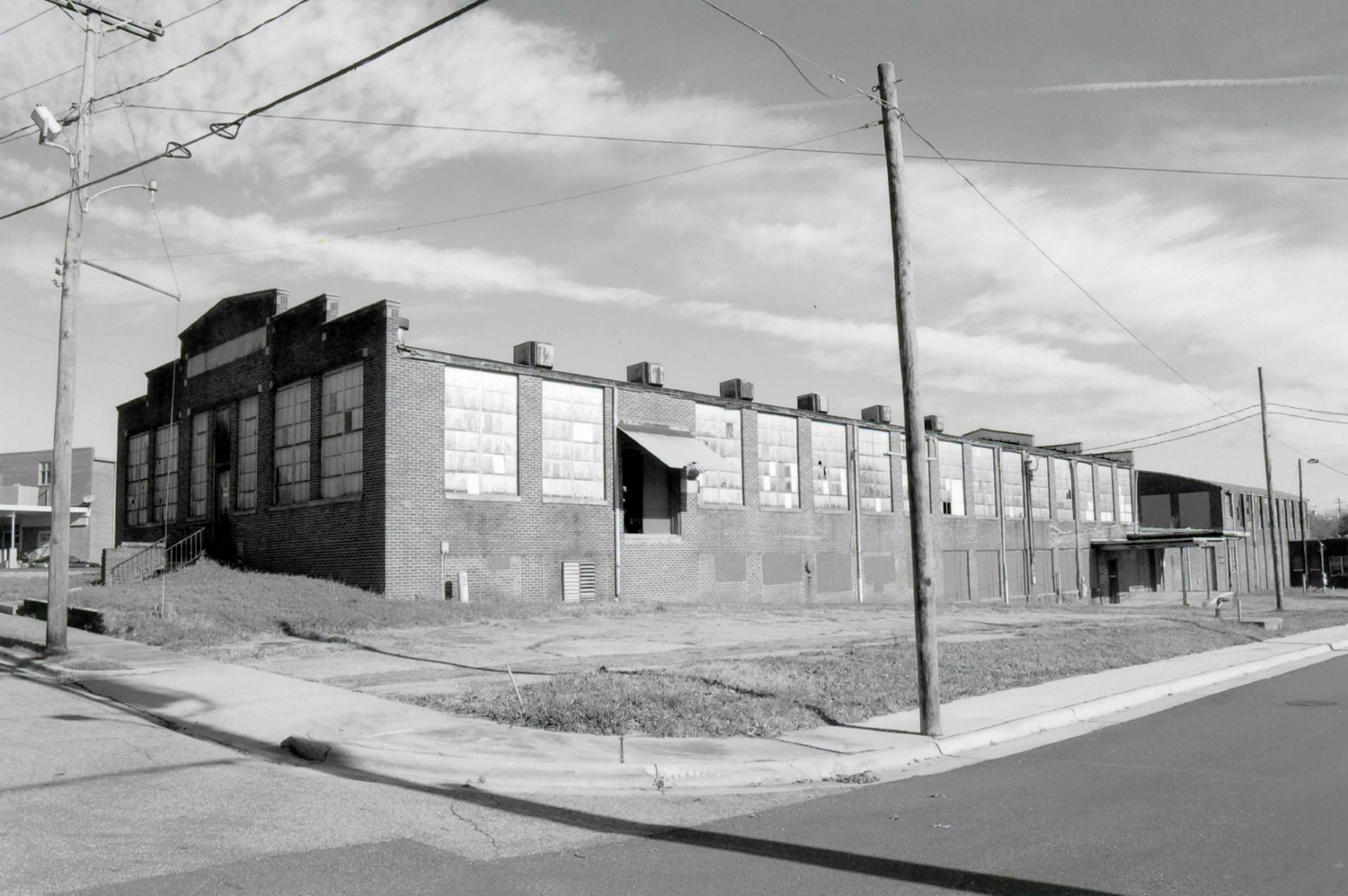
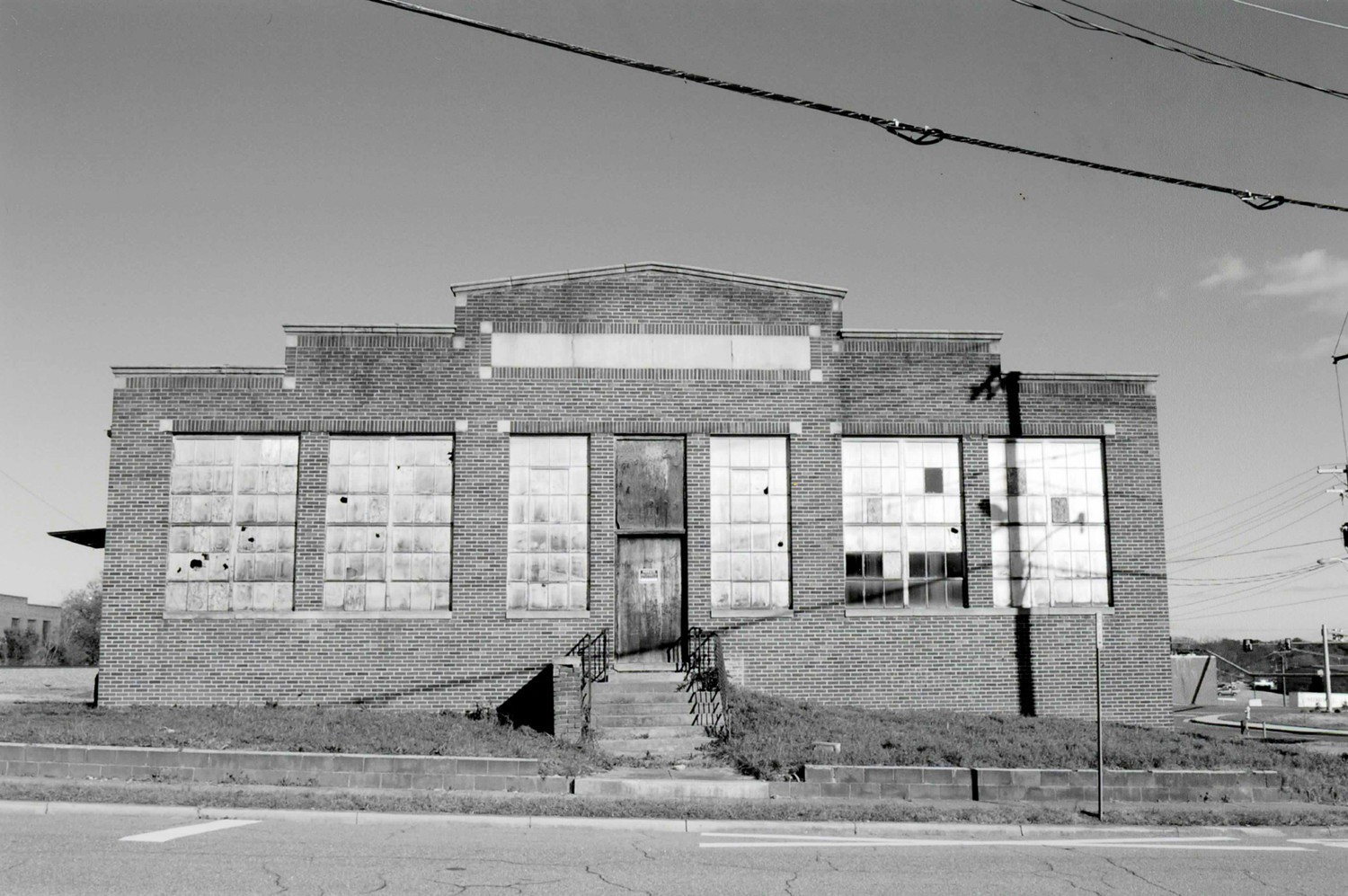
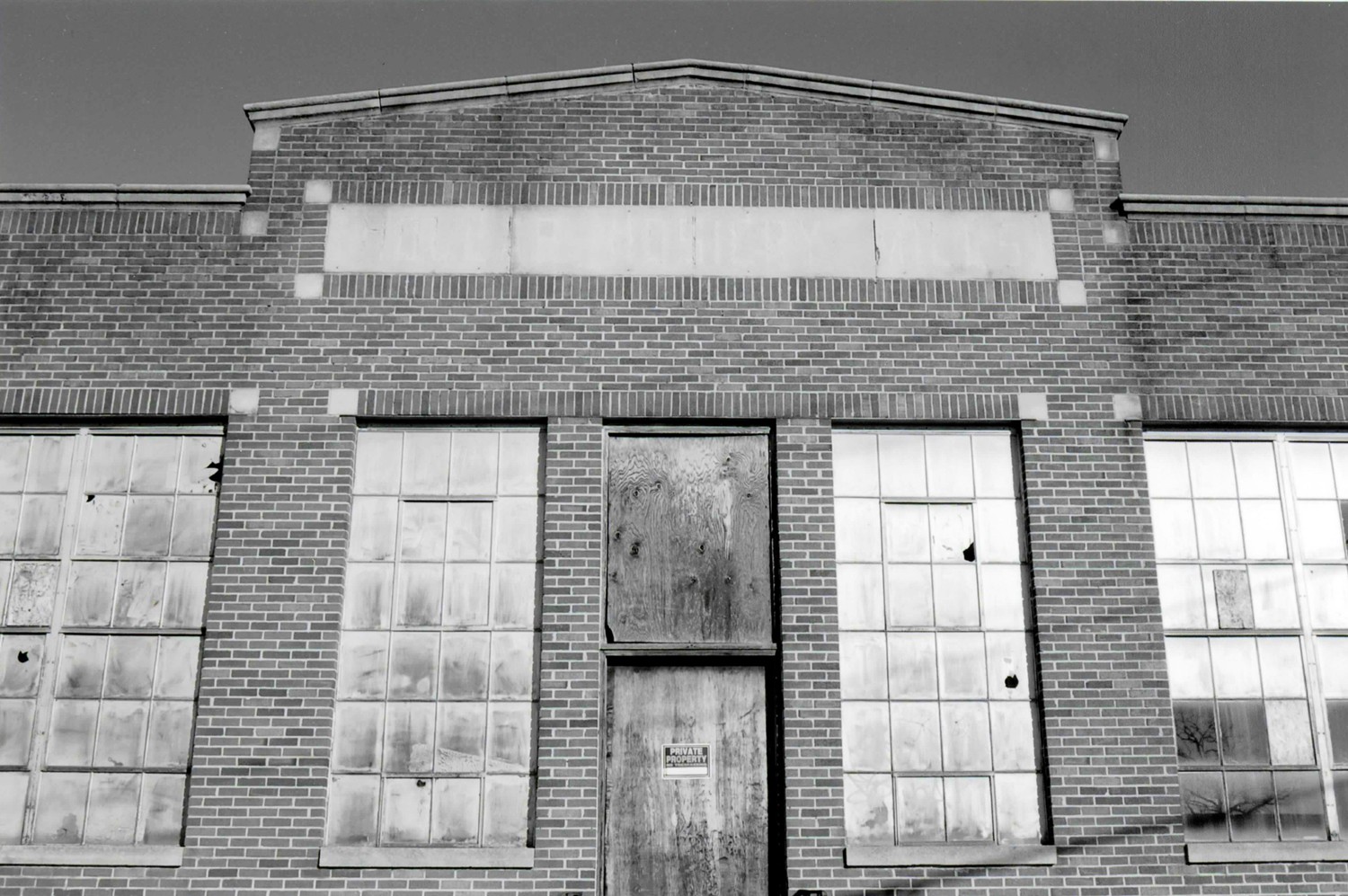
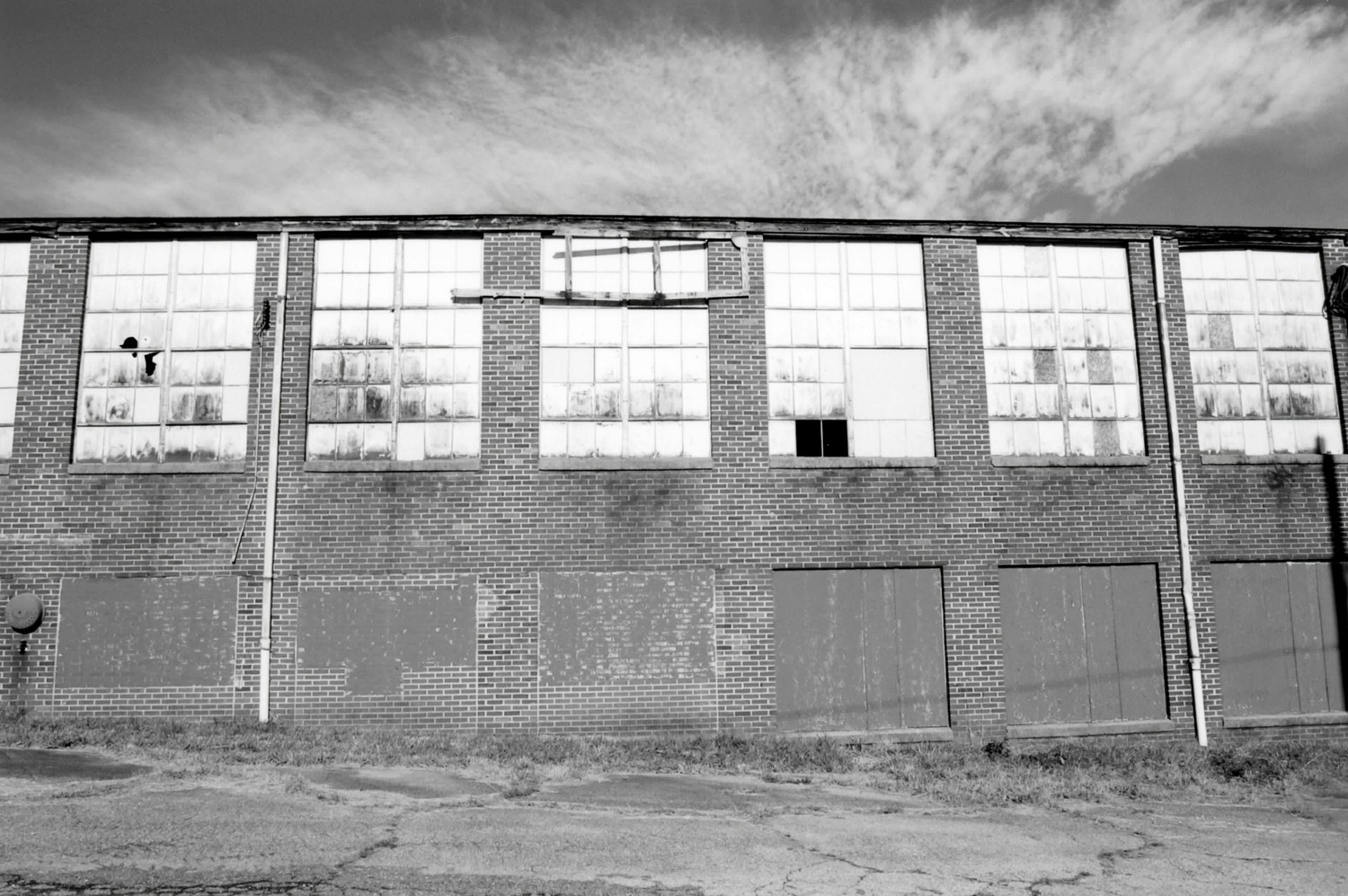
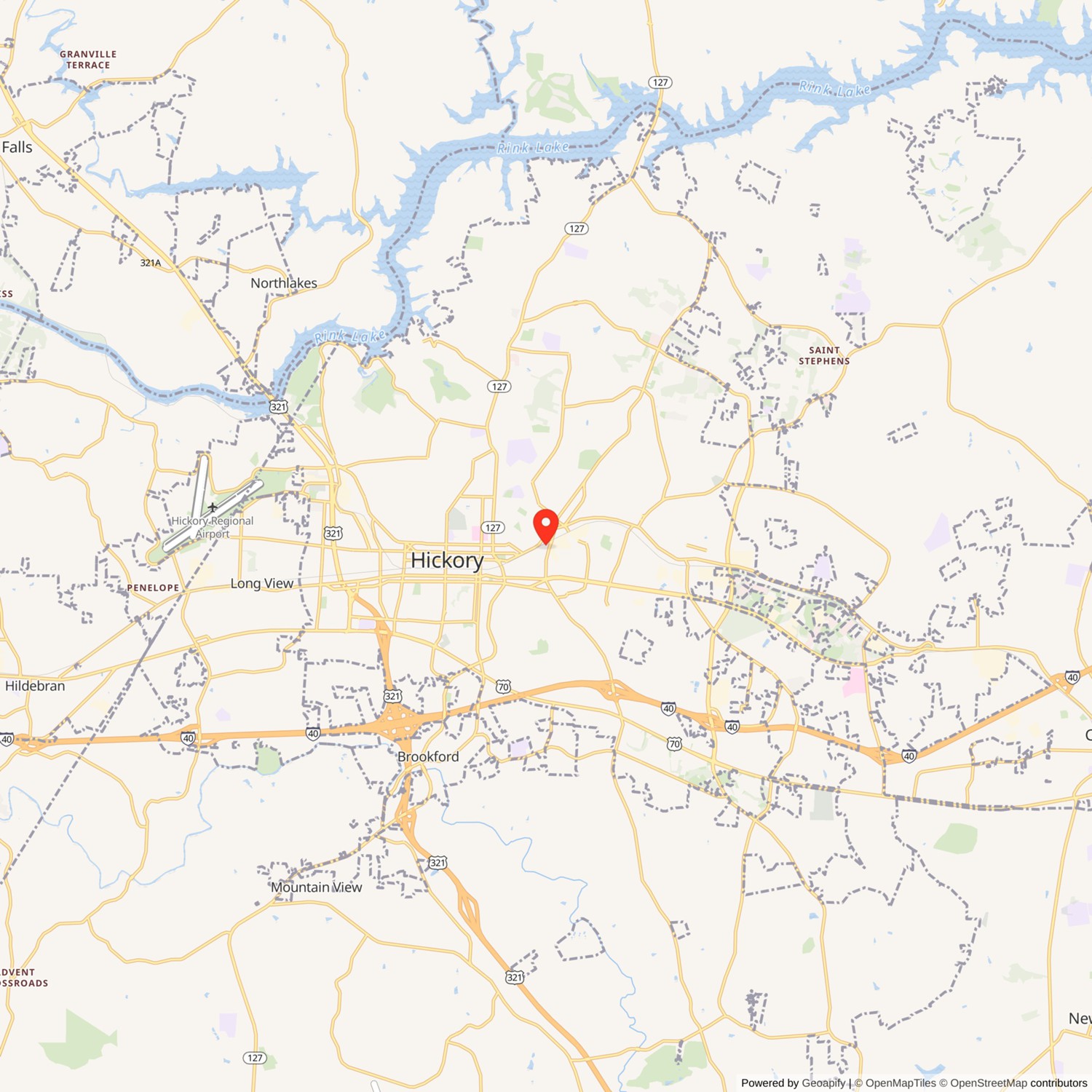
Located on the east side of Hickory, the Hollar Hosiery Mills-Knit-Sox Knitting Mills occupies a long, roughly rectangular tract that measures 2.15 acres. The property is defined by the former Southern Railway right-of-way to the north, Eighth Street S.E. to the west, Highland Avenue S.E. to the south, and Lenoir-Rhyne Boulevard S.E. to the east. At the time of its construction ca. 1930, the mill was located within the incorporated industrial community of Highland which was annexed to Hickory in 1931. Sited east of the center of Hickory, Highland was bisected roughly east to west by the Southern Railway, and these long stretches of rail frontage property were quickly developed for industrial and warehousing use. Many of these rail-side factories and warehouses are still found in the former Highland community with residential neighborhoods north and south of the industrial corridor.The Hollar Hosiery Mills-Knit-Sox Knitting Mills property consists of two mill brick manufacturing buildings and a boiler house that were connected by a hyphen in the mid-1960s. The earliest, westernmost building was constructed ca. 1930 by Hollar Hosiery Mills to face west toward Eighth Street S.E. (originally Fourth Street). Sited on land that slopes sharply west to east, this building has a one-story facade along Eighth Street S.E. with rear bays that rise to a full two stories. The ca. 1930 mill has a rough-cut brick veneer, banks of tall, steel-sash factory windows, and a low-pitched, tarred gable roof. The facade features restrained Commercial Style detailing ornamenting the symmetrical, seven-bay facade. The facade has stepped parapets with molded, concrete coping, concrete corner blocks embellishing both the parapet and the flat arches over the windows. The tall, central entrance (now boarded over) is capped by a transom that has also been boarded over. The staircase leading to the entrance has one of its original brick wingwalls and metal railings that appear to have been added later. "Hollar Hosiery Mills" is incised in the concrete nameplate above the entrance. The door is a metal-sash, glass replacement that is visible only from the interior. The side (south and north) elevations are less ornamented than the front (west) elevation.
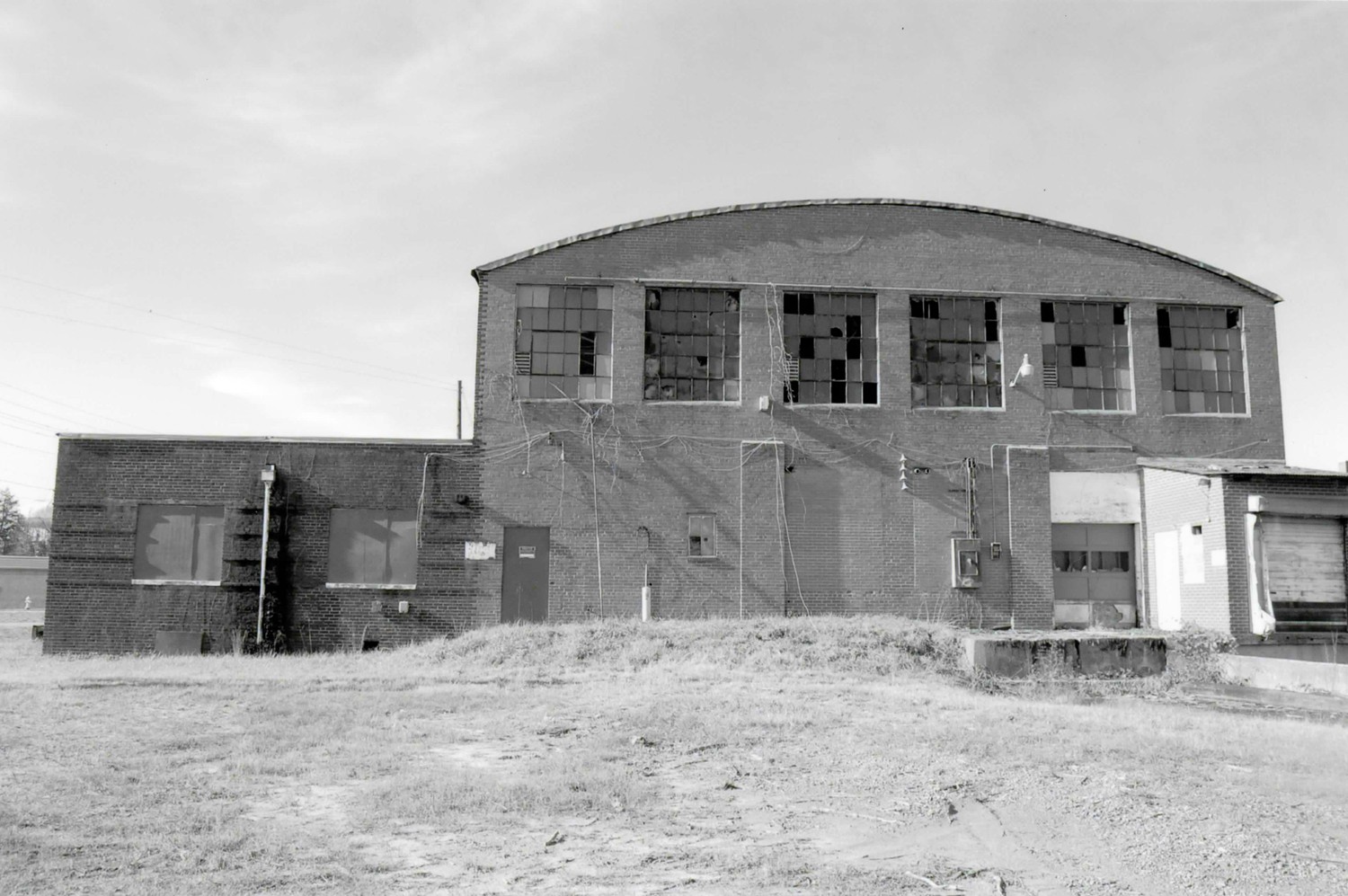
The two-story east (rear) elevation of the ca. 1930 mill is similar to the one-story front (west) elevation with its stepped parapets and six bays. Plainer in design, the parapets have terra cotta coping. The windows on both levels of the east elevation have been brick infilled, and a fire door on the first floor leads to the mid-1960s hyphen.
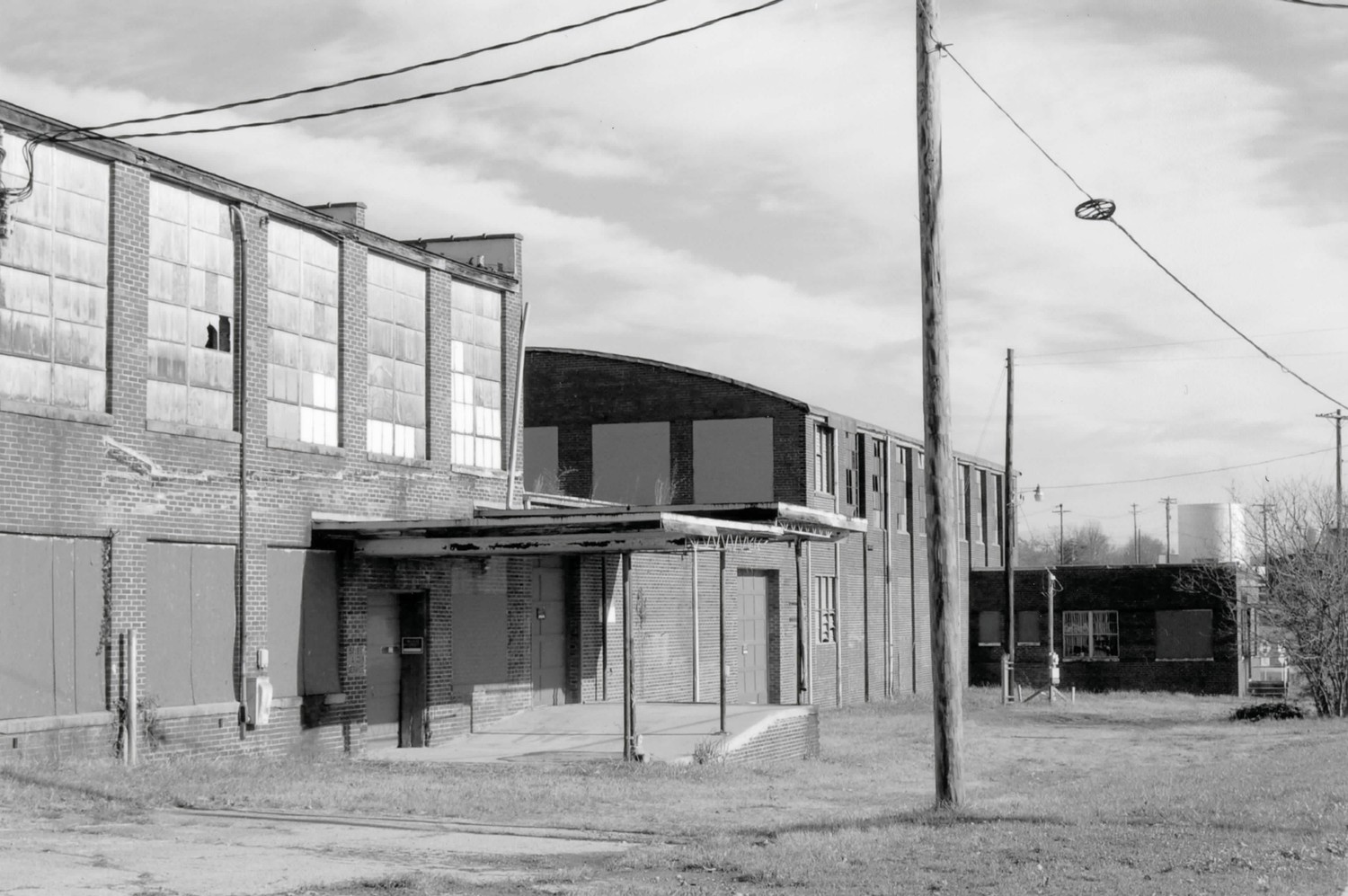
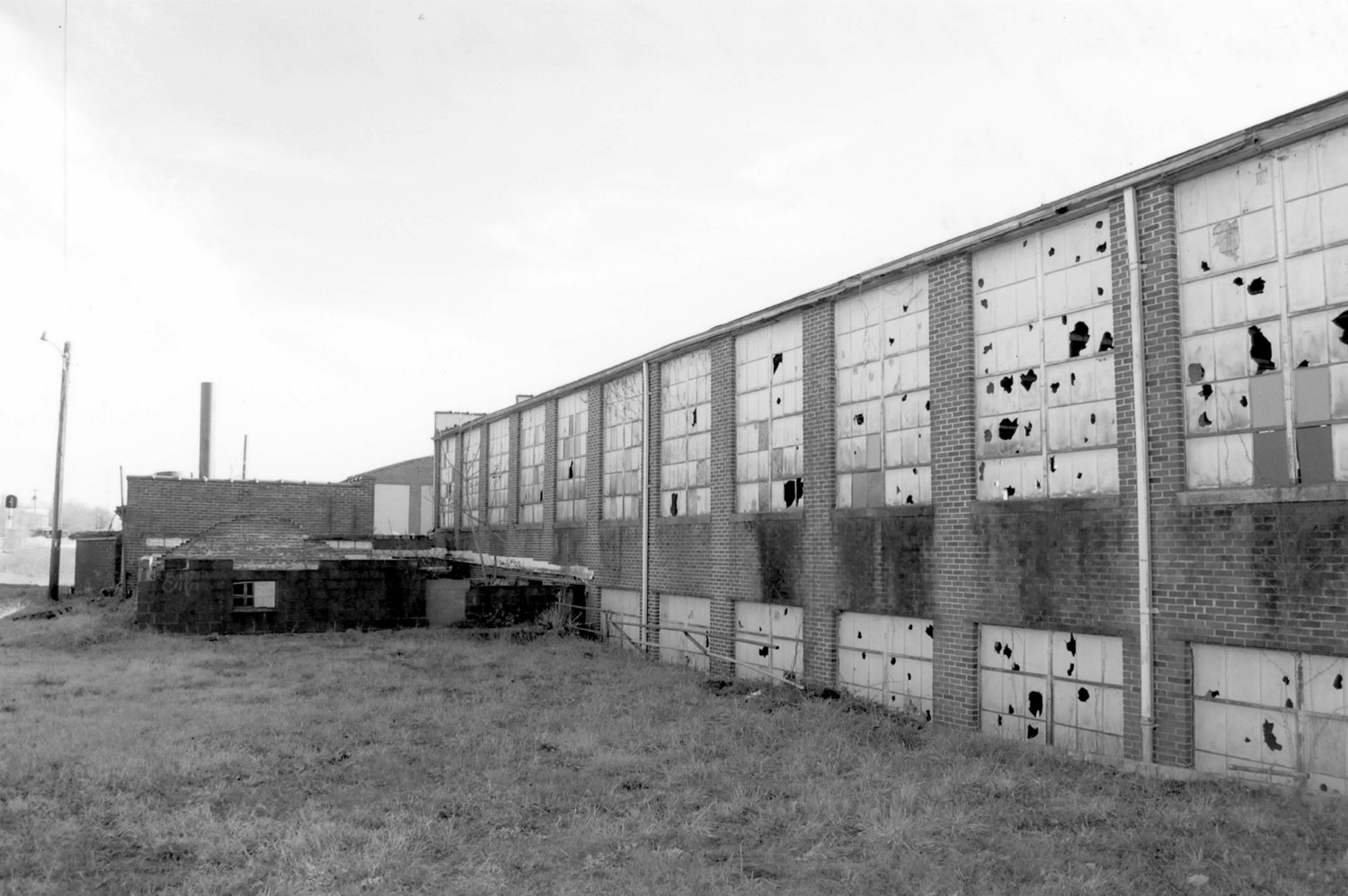
The sixteen-bay side elevations of the ca. 1930 mill have a main level defined by large banks of steel-sash factory windows. The lower level of the north elevation also has full-height factory windows, but only the upper windows sections are at or above grade. The lower sections open into light wells. On the nine eastern bays of the south elevation, where the mill rises to two full stories, the lower level window bays are fully exposed. All of the lower-level windows on the south side are now either boarded or bricked. There are two loading bays along the south elevation, the westernmost of which has original, double-leaf, wood and glass doors sheltered by a bracketed, corrugated-metal roof. The eastern loading dock has a modern overhead door and a concrete dock covered by a flat, metal roof that is supported by metal poles. The north elevation also has a covered concrete loading dock on the main level with concrete deck piers, corrugated metal roof, and modern overhead door.
At the northeast corner of the ca. 1930 mill building is a boiler house, which was originally detached but now adjoins the hyphen and the ca. 1930 mill. The small, brick building, with its flat roof and terra cotta coping, was built ca. 1930, contemporary with the Hollar Hosiery mill building. By the date of the 1961 Sanborn Map of Hickory, a concrete-block addition had been constructed along the west elevation of the boiler house. This addition has been severely damaged by fire and no longer retains its roof.
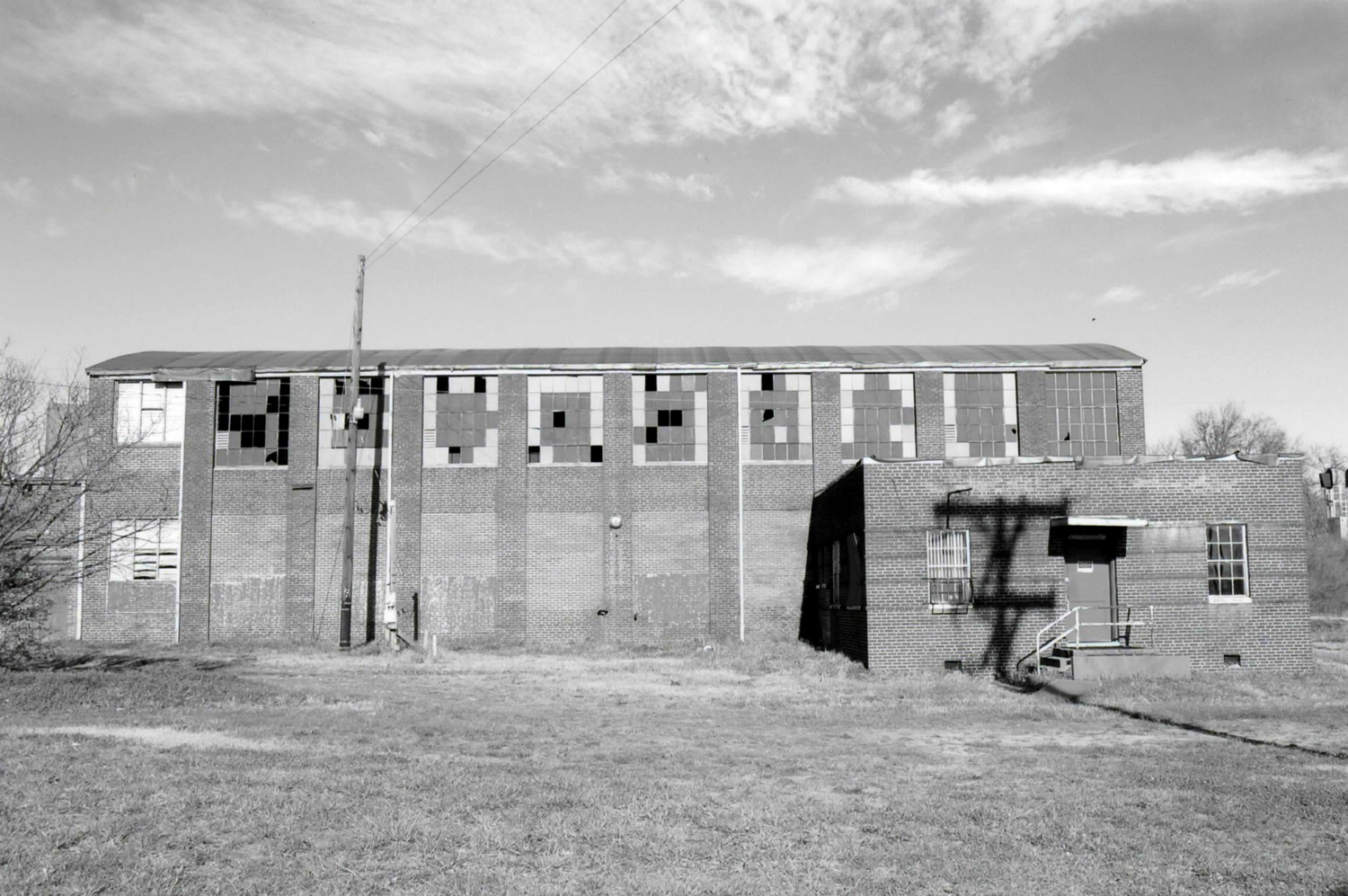
The easternmost building was constructed ca. 1940 as a hosiery yarn mill. Six bays wide and ten bays deep, the two-story, brick-veneered building has a tarred, bow-string truss roof and banks of steel-sash factory windows. The windows on the first floor of the building have been brick infilled, and vents have been added to the westernmost windows of the south elevation. A first-floor fire door near the center of the west elevation leads to the mid-1960s brick hyphen.
A one-story, flat-roofed office bay projects from the east end of the south elevation. The office has its own entrance in the south elevation that is flanked by six-over-six, double-hung, steel-sash windows. The two windows on the east and west elevations are boarded over. The single-leaf, two-panel door is capped by a transom and sheltered by a flat, metal canopy. Brick string courses embellish the window bays on all three elevations of the office ell.
There are two loading bays on the east elevation of the 1940 yarn mill and a single loading bay on the north elevation. One of the east-elevation docks is housed in a one-story, projecting, brick enclosure with a metal shed roof, to which a truck could be backed up for loading. A modern overhead door provides the only access. Next to this dock is a second bay that opens directly into the building. This bay, too, has a modern replacement overhead door and a concrete dock.
The east and west sections of the mill complex are connected by a one-story, flat-roofed, brick hyphen that was added in the mid-1960s. The hyphen has a utilitarian appearance with a single, pedestrian entrance and a large, overhead door on the south elevation.
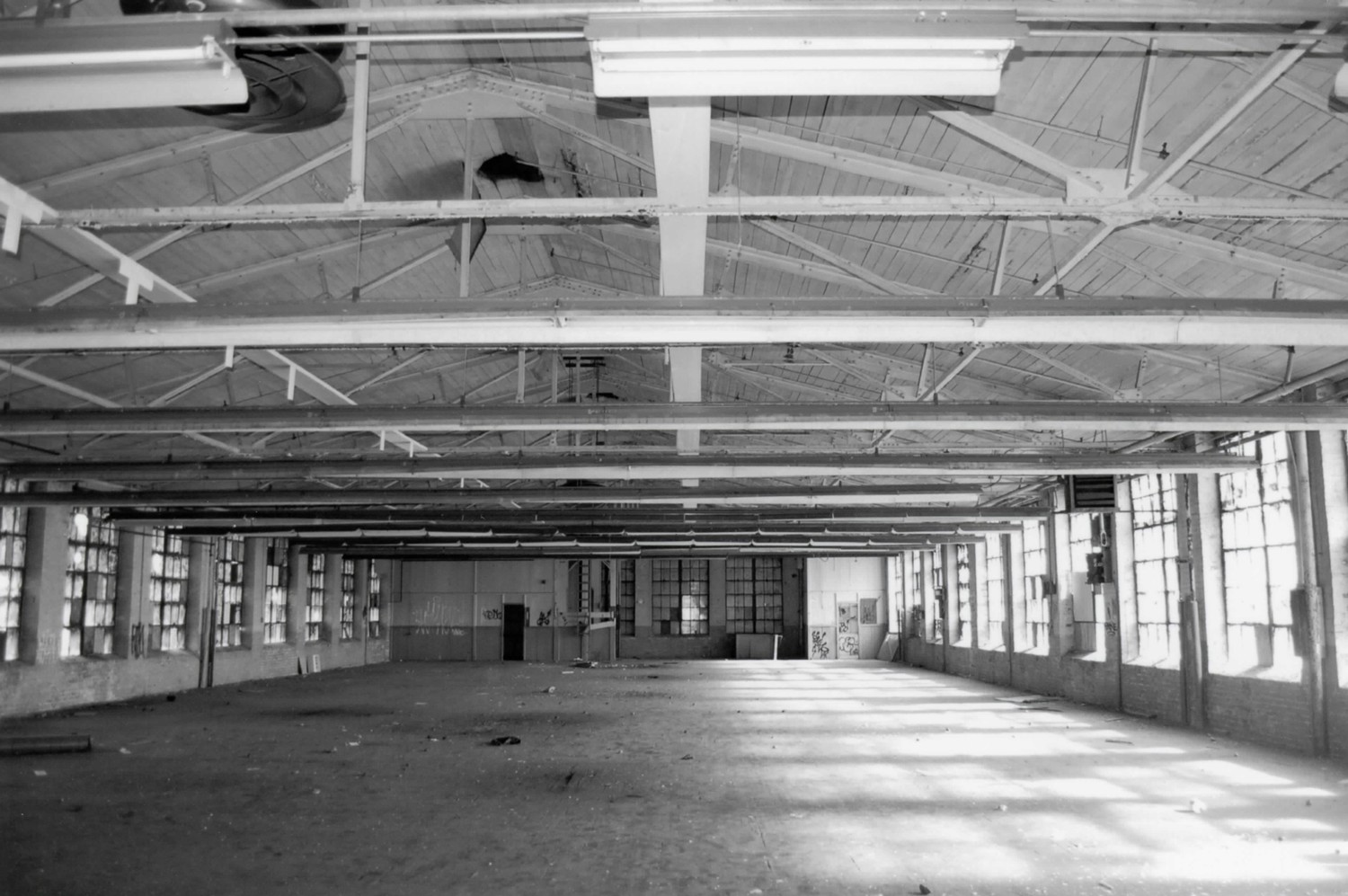
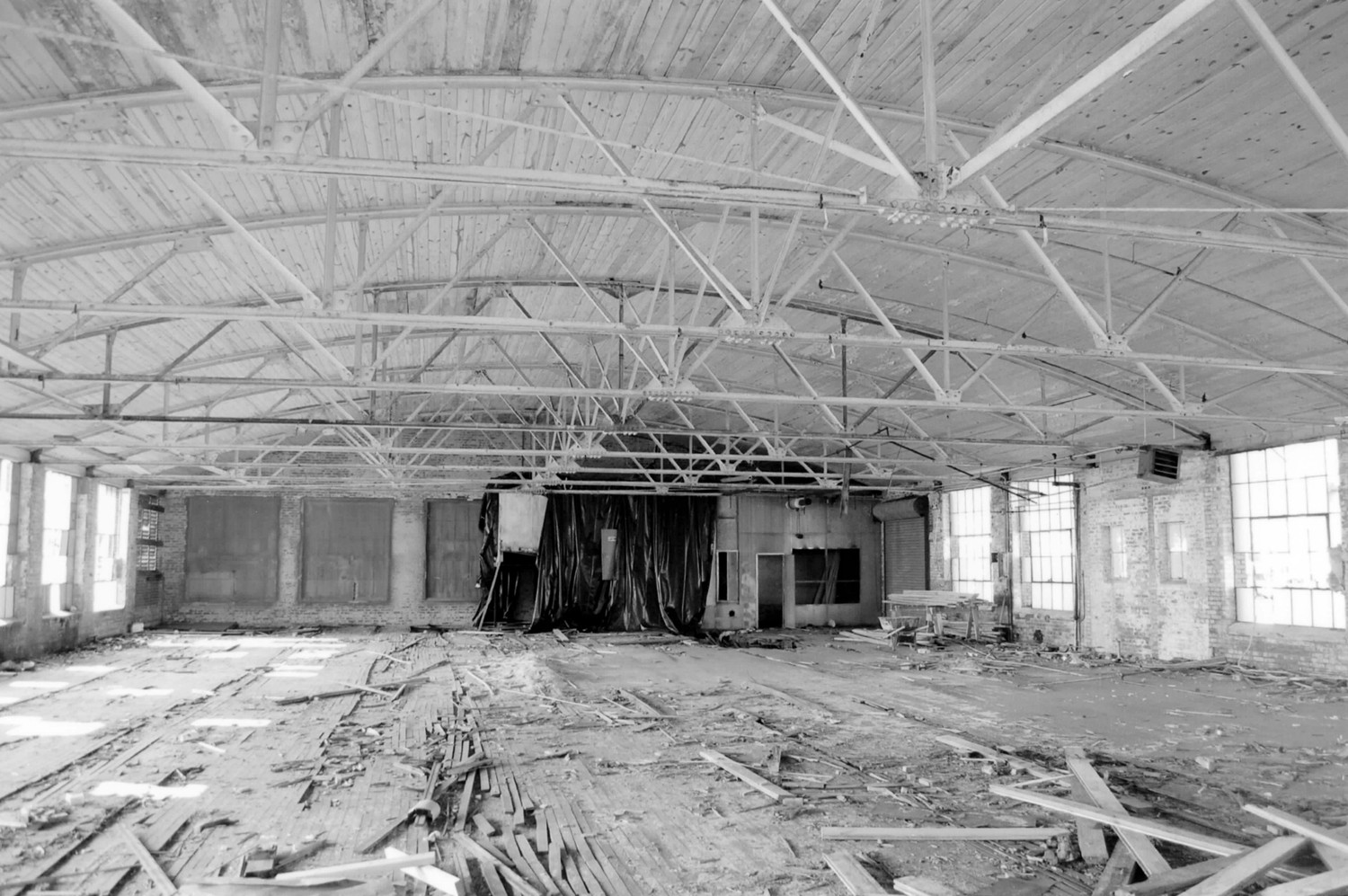
The interior of the ca. 1930 mill has a small front section for administrative offices on the main level and a large open production room in the rear. The office area is divided into a series of rooms off a central entrance. Although the walls were covered in replacement wood paneling, plaster-board walls are visible in places where the paneling has been removed. The doors and windows have molded surrounds, and portions of the molded ceiling cornice are visible. The open production area behind the office has riveted, metal roof trusses, brick walls, and a tongue-and-groove ceiling and floor. In the southeast corner is an original bathroom, partitioned off from the production area by tongue-and-groove walls with a horizontal-paneled door. Next to the bathroom is an interior frame staircase leading to the basement level. The basement has concrete floors, steel I-beam ceiling framing, and steel pole supports. A freight elevator is situated along the east wall, flanked by the staircase and two bathrooms, with tongue-and-groove walls and horizontal-paneled doors. Double-leaf, fire doors lead into the gap that adjoins the boiler room, which was inaccessible. Small offices are found on either side of the loading door in the southeast corner of the building.
The ca. 1940 mill is entered through the office which is divided into a series of small rooms. The office wing and the production areas on both floors have suffered water damage in recent years, including severely damaged and buckled wood flooring and ceilings. Damaged wood boards on the upper-floor ceiling have been replaced recently with boards that replicate the originals. The simply finished office interior on the first floor has asbestos tile ceilings, two paneled doors with frosted glass and molded surrounds, and plaster-board walls with molded baseboards. The first floor of the production area has steel I-beam ceiling framing, metal pole supports, a tongue-and-groove ceiling, and wooden floors. A staircase along the east wall leads to the upper floor which has an uninterrupted interior made possible by a series of steel, bowstring trusses. The open room is broken up only by a bathroom block that has been partitioned along the north wall.
The interior of the hyphen is a single room with no windows and a roof supported by a series of small metal trusses. An office has been partitioned into the room along the east wall, and a concrete ramp and dock is situated along the west wall. A sliding fire door on the south elevation opens onto the dock.
Photographs of Hollar Hosiery Mills