Closed Since 1964, this College Campus is being Restored into Interpretive Center and Field School
Jefferson College, Washington Mississippi


- Categories:
- Mississippi
- School

History of Jefferson College
Jefferson College, named in honor of President Thomas Jefferson, was incorporated by the Mississippi Territorial Legislature on May 13th, 1802. This was the first act of incorporation passed by the Legislature. The college was established on land donated by John Foster, James Foster, and Randal Gibson. Because of lack of funds, the college could not open its doors to students until January 1st, 1811. The school first operated in the frame buildings of Washington Academy, previously located on the campus site.Mississippi's first constitution was written and signed in the Old Methodist Church established by Lorenzo Dow on the Jefferson College campus, in the summer of 1817. Jefferson College is the birthplace of Mississippi's statehood.
Distinguished members of the College's Board of Trustees were Governors W. C. C. Claiborne, Robert Williams, David Holmes, Walter Leake, and George Poindexter, Senator Thomas Reed, and General Thomas Hinds. Among the noted faculty members were John James Audubon and Leonard Vale, who assisted Samuel F. B. Morse in the development of the telegraph. Jefferson Davis was a student at Jefferson College in 1818. Other outstanding Mississippians who were students there included Congressman J. F. H. Claiborne, Senator and Governor Albert G. Brown, and distinguished geologist B. L. C. Wailes.
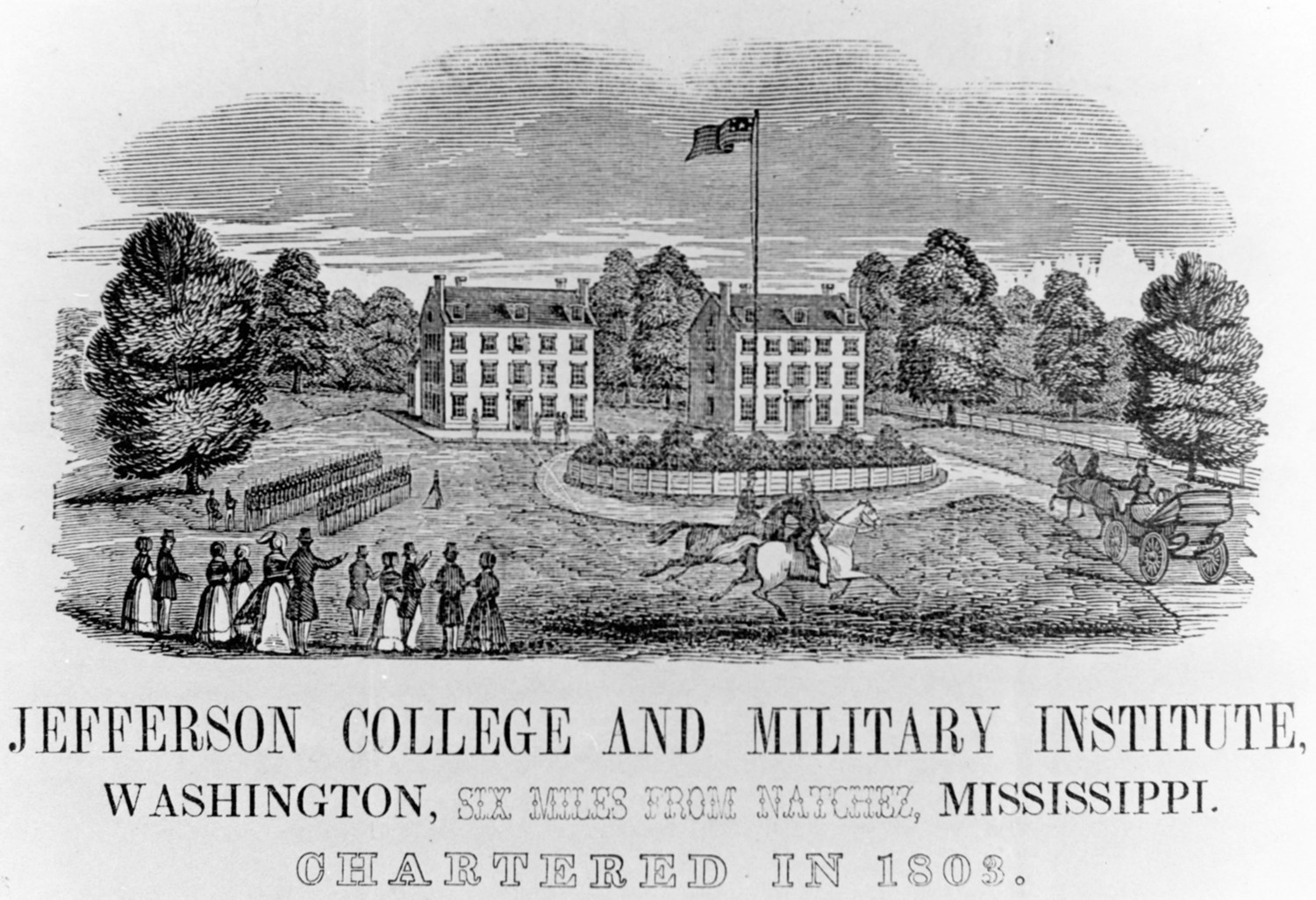
It was the desire of the founders that Jefferson College should become a southern West Point. In 1829 military science was added to the course of study. The school, however, never became more than a preparatory school for boys.
On February 4th, 1807, Aaron Burr was arraigned for treason in a court building which once stood near the giant oak trees that still stand on the Jefferson College campus.
In 1815 General Andrew Jackson visited the college, on his way to Nashville after the Battle of New Orleans. The Marquis de Lafayette may have visited the college when he was a visitor in nearby Natchez in 1825.
Following the 1963-64 session, Jefferson College, which had been a military high school for many years, closed its doors. The State of Mississippi acquired the Jefferson College property in 1965, by purchase authorized by the 1964 Mississippi Legislature.
The Mississippi Department of Archives & History now owns and operates the campus, with a complete restoration project underway in 2025.
Jefferson College Property Description
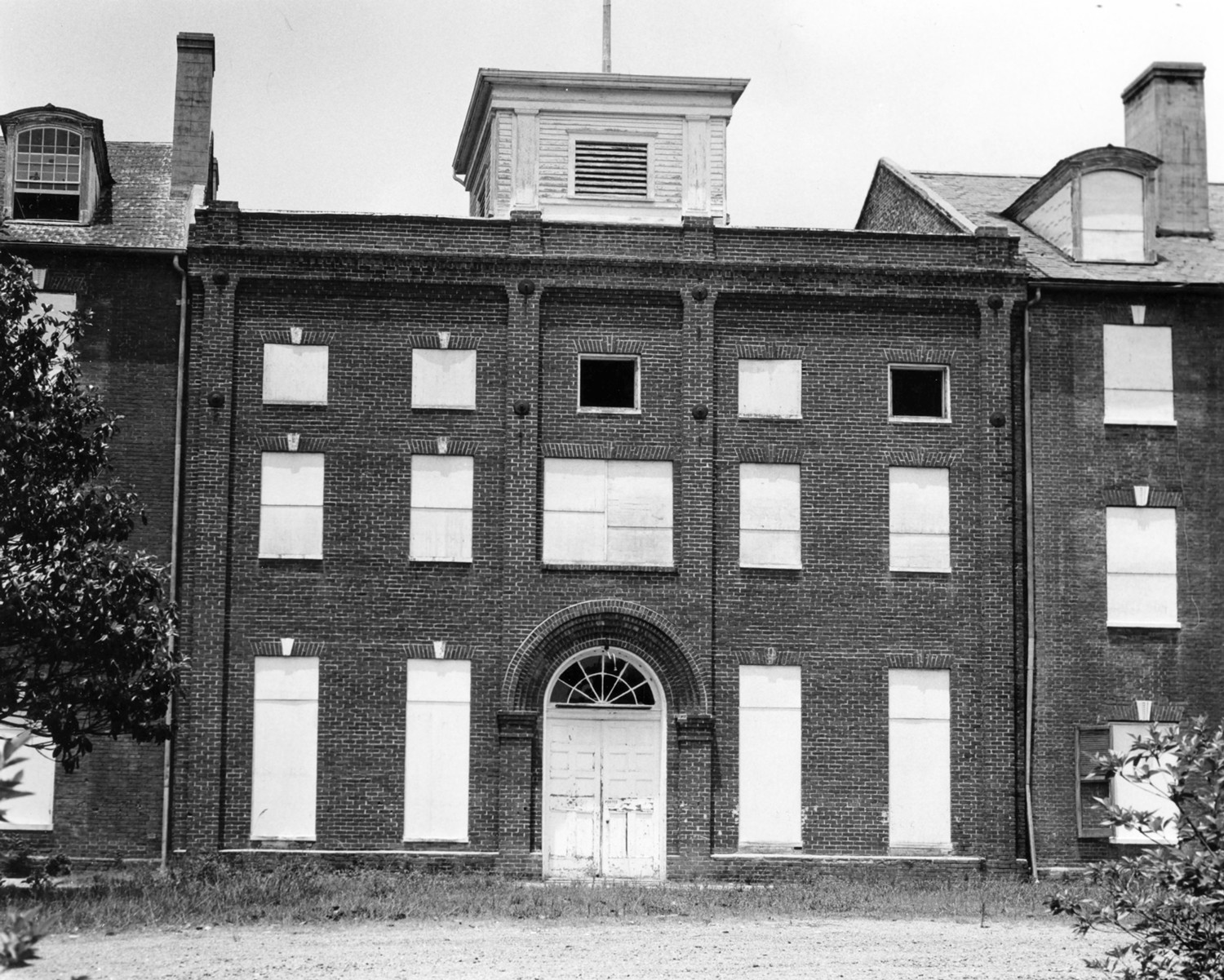
Jefferson College is located on a campus consisting of approximately 78.5 acres. Two original brick buildings, three stories in height, were joined by a third building a few years after their erection, giving the appearance of one large building constructed of three different types of bricks, in the federal style of architecture.The east wing was probably built in the 1820s, while the west wing was built in 1838-39. Each wing consists of three and a half stories, and each wing has three dormer windows and a hipped roof. The center section was built some time after 1851, and consists of three stories with a flat roof and a small wooden bell tower.
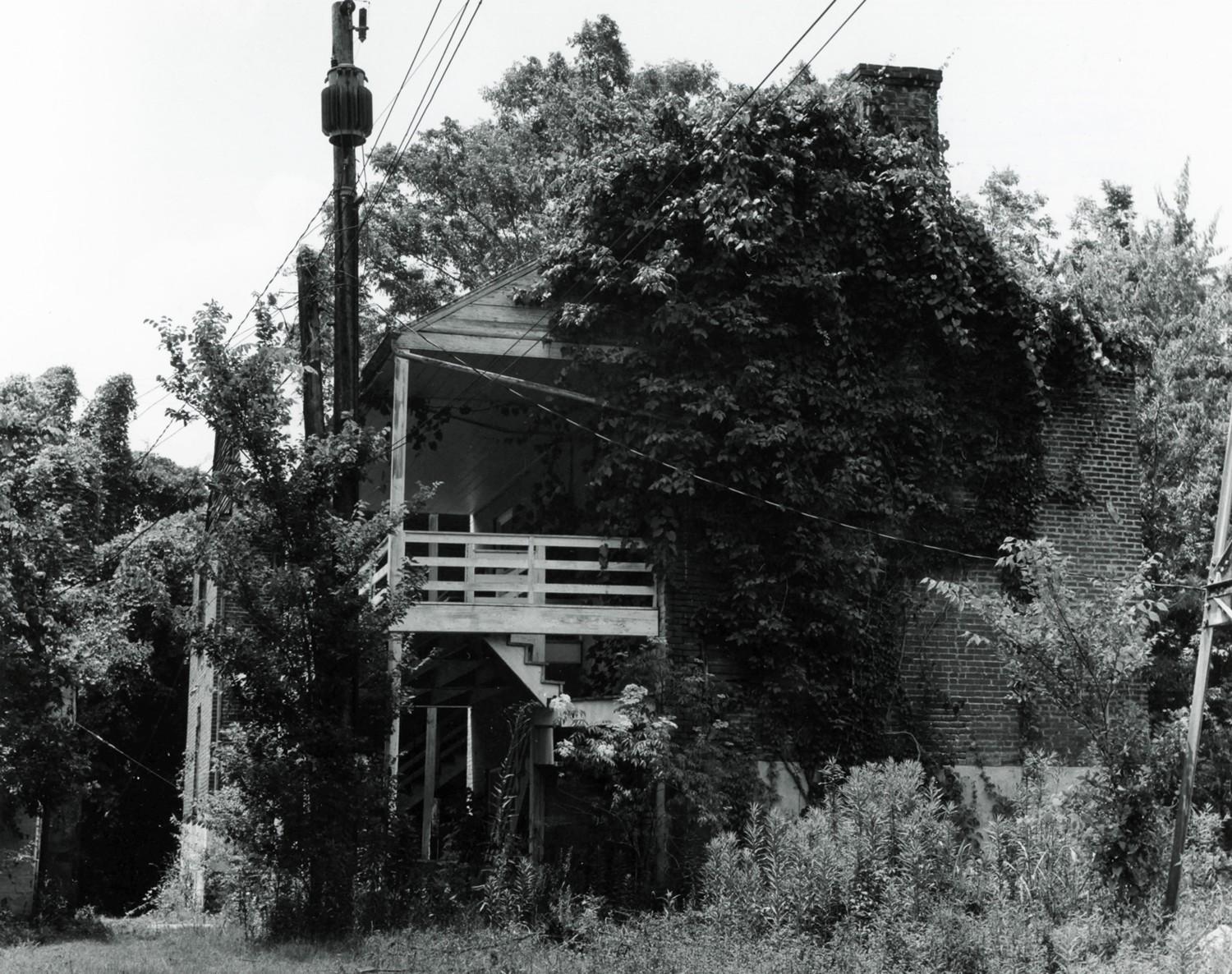
Located behind the main buildings are two smaller out buildings of similar construction and architecture. These buildings consist of two stories and a basement or ground floor.
Also located on the campus is the President's House, a wooden two story structure built in the early 19th century.
It is not known what alterations from the original design may have been made in the interior of the buildings.
In 1972, as part of the effort to restore the Jefferson College Campus as nearly as possible to its 1840 appearance, a structurally unsound, three-story gymnasium building which had been constructed in 1894-95 between the two primary original school buildings was removed.
Photographs of Jefferson College