Barnesville Depot, Barnesville Georgia


- Categories:
- Georgia
- Railroad Facility
- Passenger Station
The town of Barnesville was settled in 1826 in what was then Pike County and was named for an original settler, Gideon Barnes. It was located at the crossing of two Indian trails. Agriculture was the town's chief business, since it was on the frontier of an area of Georgia opened for settlement only five years earlier, in 1821. Although it was not the county seat, it prospered. In 1841, the Macon and Monroe (later the Macon and Western) Railroad (one of Georgia's first three railroads) was extended to Barnesville. This route was later acquired by the Central of Georgia Railroad. Barnesville was also on the stage line from Columbus. It became the shipping point for a large territory, and more merchants moved there and opened businesses.
Barnesville's days as a shipping center diminished once the railroad was extended to Atlanta and another route, the Southwestern and Muscogee, opened a route to Columbus. There was a depot as early as 1852.
After the Civil War, the town recovered and prospered, having a newspaper in 1867, new banks, and even an opera house. The local economy was largely supported by cotton agriculture. Barnesville was also noted for its two buggy companies. In the 1870s, the Gordon Institute was founded. Much of downtown near the railroad had to be rebuilt after a disastrous fire in 1884. In 1887, Jefferson Davis, the only president of the Confederacy, came through town, stopping at the then-existing depot.
As the 20th century dawned, the town continued to prosper. In 1906, it was selected as one of the eleven sites in Georgia for a district A&M School, another major educational achievement.
It was in this setting that a new passenger station, or depot, was requested from the railroad in 1912. The previous one was too tiny and insufficient for the passengers' needs. Passengers had complained of having to step out into the rain and mud to board a train. Due to local lobbying, it was announced on June 20th, 1912, that a new passenger depot would be built on the site of the existing tiny building and a new freight depot away from the center of town. This was to remove the dangers caused by the switching of trains. The new passenger depot was described as being "handsome and commodious." The freight depot was to be built first. Work on both was underway by late December 1912. The new passenger depot was completed in 1913, although the exact date is unknown.
The new passenger depot was in use from 1913 until 1971, when passenger service to Barnesville ceased.
Some major events that took place at the depot include the following. In 1918, local troops left for World War I from this depot. In 1919, 25,000 bales of cotton were produced in Pike County, much of which was shipped out of the county via the Barnesville depot, before the town, like the rest of Georgia, was hit by the boll weevil. In 1920, after a prolonged effort, the Georgia Legislature passed a constitutional amendment to the state constitution that created Lamar County, out of portions of Pike and Monroe, with Barnesville as its county seat. When news reached Barnesville of the victory "Barnesville itself broke loose in pandemonium." They demonstrated locally with the arrival of each passenger train at this depot, awaiting the legislators and the lobbyists who had demonstrated in Atlanta. Lamar County officially came into being on November 2nd, 1920, when the amendment was approved in the general election.
Another major event at this depot was the arrival there of President Franklin D. Roosevelt (1884-1945) on August 11th, 1938. He came from Athens by train to dedicate the newly completed unit of the R.E.A. (Rural Electrification Administration), the Lamar EMC (Electric Membership Corporation). It is said to be the only one he ever dedicated personally. The program was held at the stadium.
The famous passenger train, the "Nancy Hanks," covered the route from Macon to Atlanta, and is fondly remembered by many Barnesville residents. It was the last train to offer passenger service when it ceased operation in 1971.
After it ceased being used for passenger service, the depot was almost lost. Southern Railway (successor to the Central of Georgia) sought to tear it down in 1973. Citizens formed a "Save the Depot" campaign, the result of which was the creation of the Barnesville-Lamar County Historical Society. In 1973, they leased the land, and in July, 1974, the railroad deeded the building to the society. It was used briefly as a restaurant before undergoing restoration for use as a meeting space and a museum.
Building Description
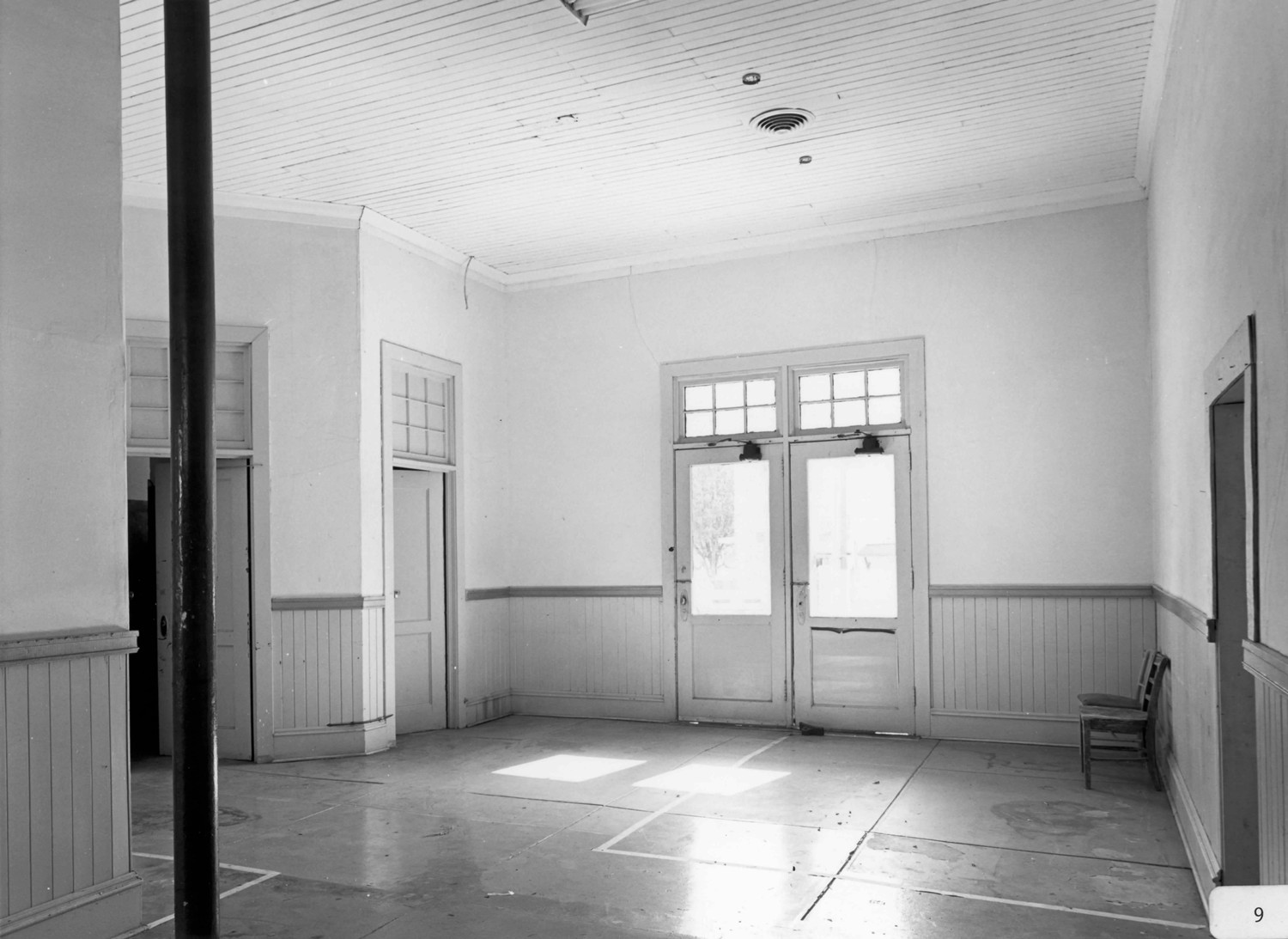
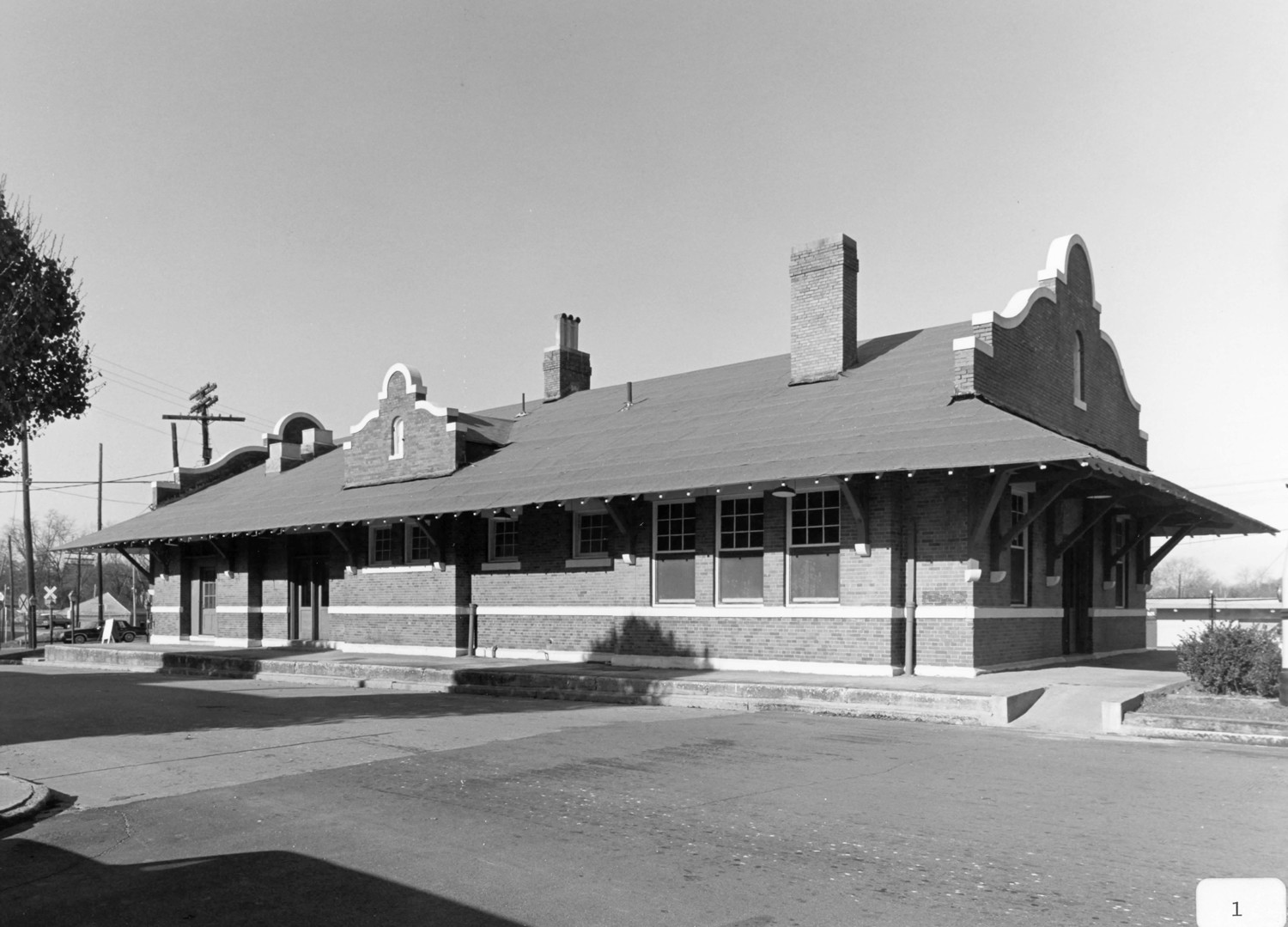
The Barnesville Depot is a good example of a railroad passenger depot built in 1913 to serve a functional purpose, that of being a passenger waiting area and ticket office, in a small agricultural and commercial center. It is made of brick with wood-framed windows and doors. The roof creates a fifteen-foot overhang to protect passengers and goods outside the building. The overhang is supported by large brackets. The most interesting exterior features are the scalloped gables. The interior consists of a large waiting room on one side, a center section for ticket sales, and office, a smaller waiting room, and a freight or baggage room on the end. The two distinct waiting rooms were originally created to provide separate rooms for whites and blacks. There were also separate bathrooms. There is wooden wainscoting throughout the interior, plastered original walls, paved concrete floors, doors with transoms, and tongue-and-groove ceilings. The depot is located in central Barnesville adjacent to the commercial area. It is surrounded by concrete, asphalt, lawn, and flowers, and a railroad track fifty feet from the building. There are no outbuildings. Changes to the depot include the rearrangement of interior partitions that expanded the original ticket area/office to its present configuration, relatively minor alterations for its use as a restaurant, and more recent efforts to undo these changes. The original tile roof has been removed.
Northeast view (1985)

Southeast view (1985)

West side entrance (1985)

West side entrance (1985)
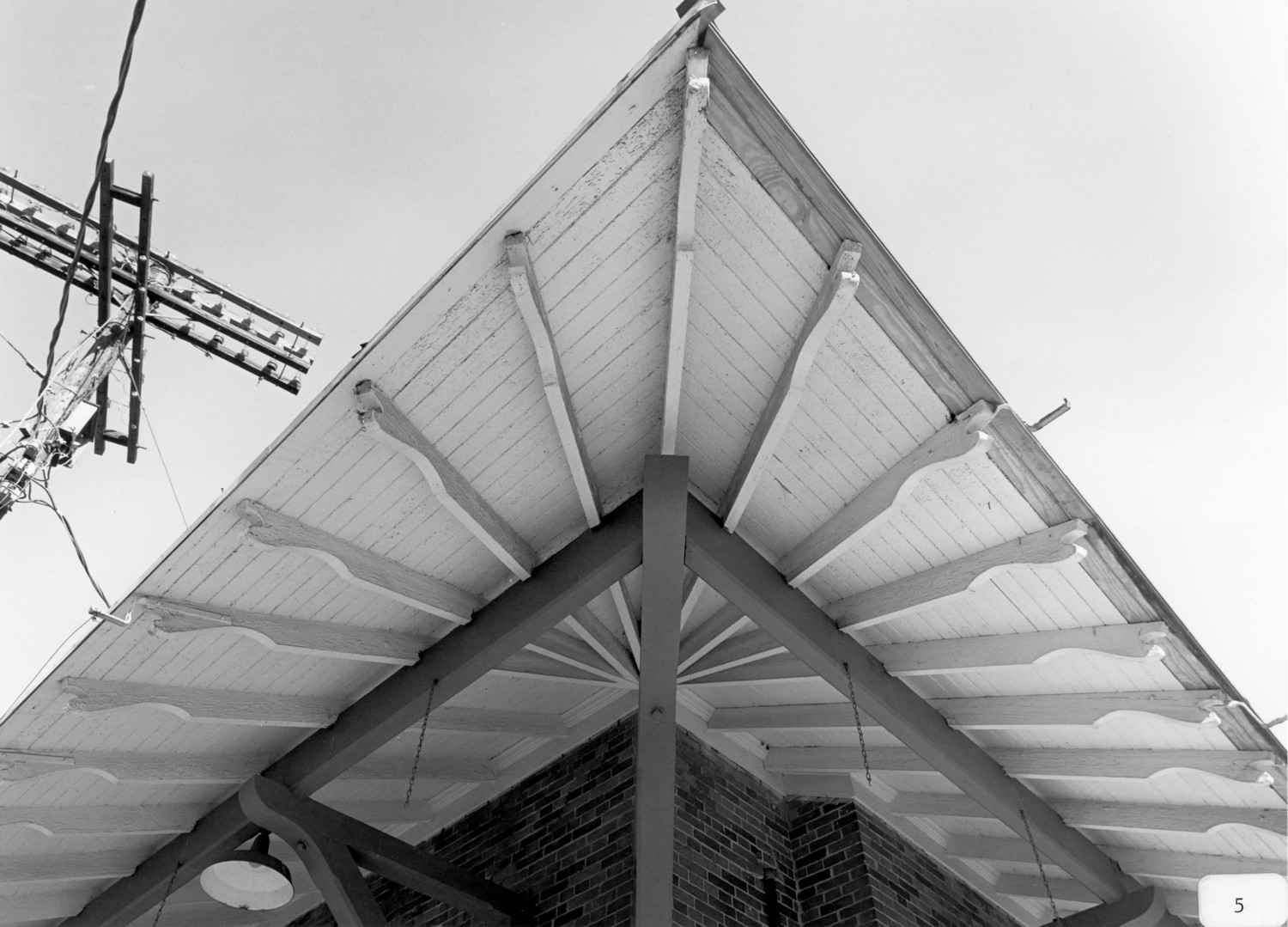
Soffit detail and rafters (1985)
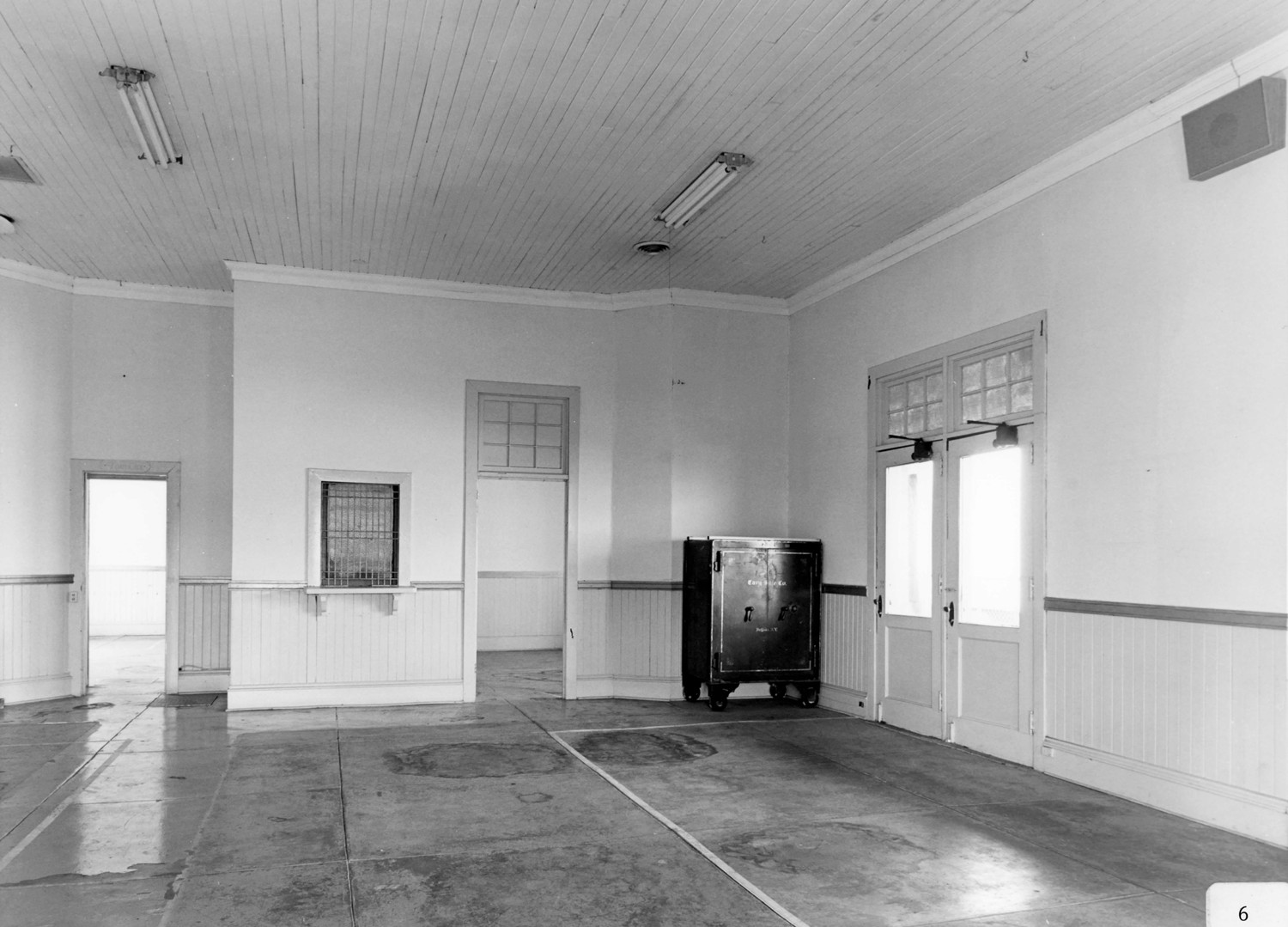
Waiting room including ticket window and safe (1985)
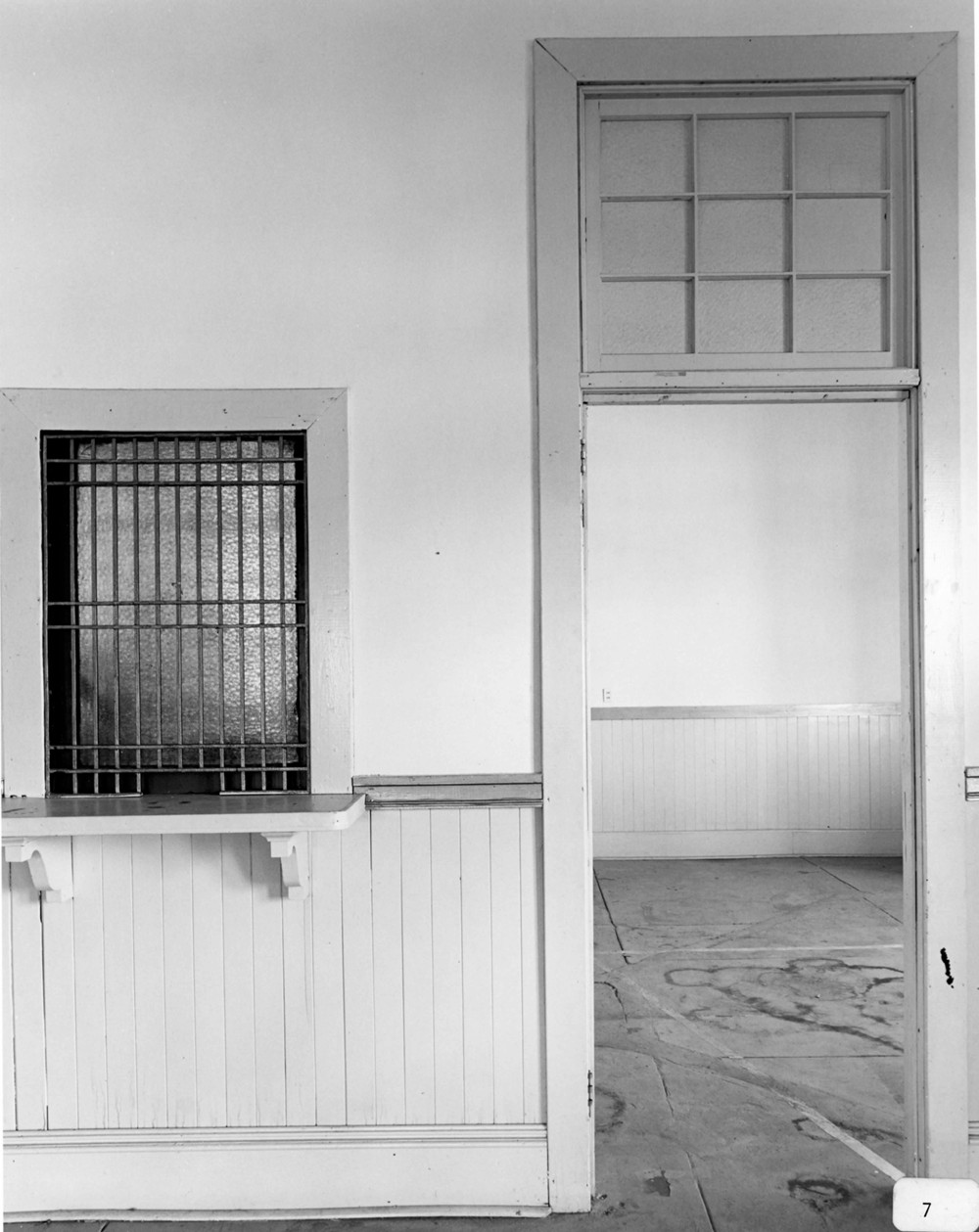
Waiting room, detail of ticket window and office (1985)
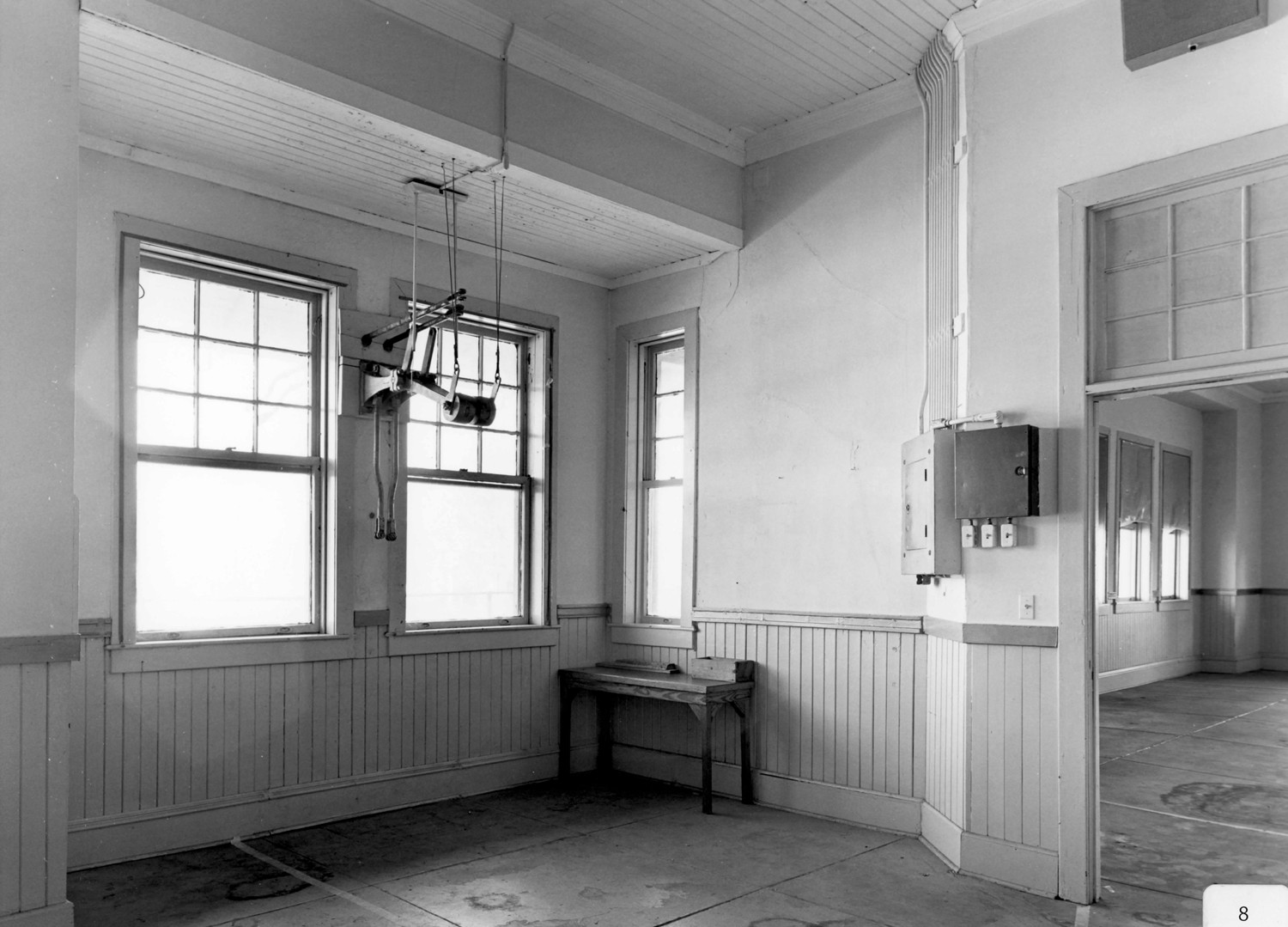
Switching mechanism, office interior looking back toward waiting room (1985)