Ohio

One of the city's leading architects during the early part of the 20th century, engaged in the planning and execution of many important projects. He was born in Delaware, Ohio, acquired an early education there, and entered the local office of F.A. Gartner as an architectural student, afterward received supplementary training at the Ohio State University and the Massachusetts Institute of Technology in Boston.
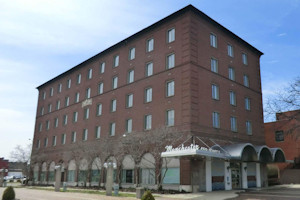
Mr. Packard opened his first office in Columbus in 1896, and after two years of independent practice was associated for a subsequent period with Joseph Yost under the firm name of Yost & Packard. In 1900 he established an independent office and in designing many public and commercial buildings in the city, acquired a high professional reputation. His most important works were Memorial Hall, 1905; Elks Hall; Savings Bank & Trust Company; Huntington National Bank; the City Club; three hotels, the Chittenden, Seneca, and the Virginia. Later works were the Baker Art Gallery, and the New North School, plans for the latter being prepared at the time of his death.
In addition to his work in Columbus, he designed the Ohio State Building at the Louisiana Purchase Exposition held in St. Louis, 1904; Annex to the State Capitol, Charleston, West Virginia; Girls' Industrial School, Delaware, Ohio; State Hospital at Lima; several buildings at the Ohio State University, including Orton Hall, School of Mines, Hays Hall, Biology and Botany Building. He was associated Leon Obewarth on work at the Capital Hotel in Frankfort, Kentucky, and during President Harding's Administration was appointed architect in charge of the design and erection of the U.S. Embassy Building at Rio de Janeiro, Brazil.
An early member and Fellow of the American Institute of Architects, he was a past-president of the Columbus Ohio Chapter, also participated actively in civic matters, at one time president of the City Chamber of Commerce.
