
Florida

Dwight James Baum (1886-12/14/1939) New York, New York (F.A.I.A.)
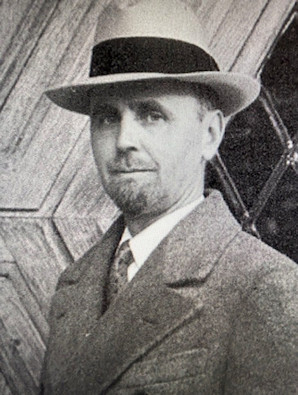 A noted designer of large country homes and estates, Mr. Baum won many
honors in the field of domestic architecture. Born in Little Falls, New York,
he entered Syracuse University as a student in Architecture, and after he
graduated in 1909, and continued his training in draftsmanship while employed
in successive periods with a number of New York firms. In 1914, he
began professional practice with an office in New York City, and early in
his career designed a number of buildings at Syracuse University, including
the School of Medicine, Hendricks Memorial Chapel (in association with
John Russell Pope) and the School for Citizenship, also a number of buildings
at smaller colleges. In addition, he was the architect of several public structures,
among which were the Memorial Hospital at Syracuse, New York, the
Court House and Hotel El Verona at Sarasota, Florida; the Federal Building
at Flushing, New York, and the Westside Y.M.C.A. Building in New York.
A noted designer of large country homes and estates, Mr. Baum won many
honors in the field of domestic architecture. Born in Little Falls, New York,
he entered Syracuse University as a student in Architecture, and after he
graduated in 1909, and continued his training in draftsmanship while employed
in successive periods with a number of New York firms. In 1914, he
began professional practice with an office in New York City, and early in
his career designed a number of buildings at Syracuse University, including
the School of Medicine, Hendricks Memorial Chapel (in association with
John Russell Pope) and the School for Citizenship, also a number of buildings
at smaller colleges. In addition, he was the architect of several public structures,
among which were the Memorial Hospital at Syracuse, New York, the
Court House and Hotel El Verona at Sarasota, Florida; the Federal Building
at Flushing, New York, and the Westside Y.M.C.A. Building in New York.
In the field of domestic architecture, Baum won nationwide renown in designing large suburban homes and country estates for a clientele which included many wealthy and prominently known persons. Among the most notable examples of his residential work, designed in a variety of styles, American Colonial, Tudor, French, and Italian, should be named the following: Venetian Palace for John Ringling in Sarasota, Florida; estate of Robert Law at Portchester, New York; Wildflower, the country home of Arthur Hammerstein at Whitestone, Long Island; Pippa Passes, estate of George Mathews Adams, at Riverdale-on-Hudson, New York; Count Alphonso's Italian Villa at Newport Rhode Island; the country estate of Frank A. Sullivan, Westerly, Westerly, Rhode Island; residence of the Honorable Ernest E. Roberts, New London, Connecticut, and his own beautiful summer estate at Riverdale-on-Hudson, New York.
Elected to the New York Chapter, A.I.A. in 1918, and advanced to Institute Fellowship in 1932. He was also a member of the Architectural League of New York, the National Sculpture Society, Beaux Arts Institute of Design and American Federation of Arts. At one time he served as Architectural Consultant for Good Housekeeping magazine, in 1930 was the recipient of the Bronze Medal Award of the Better Homes of America Association, and two years later won the Gold Medal Award of the Architectural League of New York.